How to Make Puff pastry, brik and samosa

Imagine the buttery aroma filling your kitchen on a quiet Saturday morning. There’s something magical about pulling a golden, flaky creation out of the oven. You made it with your own hands. You might feel a bit nervous about those delicate layers, but mastering this craft is much simpler than you expect.
Pinterest shows these versatile doughs are a hit for both savory dinners and sweet treats. Whether you’re folding a crisp brik or stuffing a spicy samosa, that first crunch is incredibly rewarding. We’ll explore how to achieve that perfect texture using the right tools and techniques.
Using this easy puff pastry recipe, you can create a homemade masterpiece in your own kitchen. You can impress your guests with professional-looking appetizers without relying on frozen alternatives. This approach covers traditional methods and modern twists to ensure every bite is light, airy, and full of flavor.
Key Takeaways
- Master the art of creating light, buttery layers at home.
- Explore versatile uses for both sweet and savory dishes.
- Learn the specific folding methods for brik and samosas.
- Identify the essential equipment for consistent results.
- Discover tips for achieving the ultimate crispy texture.
- Transition from traditional methods to modern kitchen twists.
What Makes These Pastries Special
Ever wondered why some pastries get all the attention at parties or bakeries? A puff pastry is a key ingredient in many dishes. It’s great for both savory snacks and sweet desserts.
Their appeal comes from their textures and flavors. From the buttery crunch of croissants to the spicy kick of snacks, there’s something for everyone. Making puff pastry from scratch is incredibly rewarding, unlike store-bought versions.
Each dough type has its own special technique. Mastering these basics opens up a world of possibilities in your kitchen. Let’s explore what makes each one unique.
Unique Ingredients and Techniques
The beauty of these pastries lies in their ingredients and methods. For instance, a flaky puff pastry recipe relies on lamination. This involves folding cold butter into dough to create layers.
When heated, the butter in the dough creates steam. This steam makes the dough rise, giving it that airy texture. Finding the best puff pastry recipe means balancing quality flour and chilled fat. Patience is key as the dough needs time to rest.
Brik and samosas use different techniques for their crunch. Brik uses a thin dough that becomes crispy when fried. Samosas, with a sturdier dough, can hold heavy fillings without breaking.
“The art of pastry making is a balance of temperature, timing, and touch.”
Knowing these differences helps you pick the right dough for your meal. You can experiment with fats and folding styles to customize your pastry. Many agree that a best puff pastry recipe is one you can tailor to your taste.
When you make puff pastry from scratch, you control every layer. This attention to detail makes a big difference. Use the table below to compare these three pastry styles quickly.
| Pastry Type | Main Fat Source | Primary Technique | Final Texture |
|---|---|---|---|
| Puff Pastry | Unsalted Butter | Folding and Turning | Light and Flaky |
| Brik | Oil (for frying) | Hand-stretching | Crispy and Thin |
| Samosa | Ghee or Oil | Rubbing in Fat | Crunchy and Solid |
Essential Tools and Equipment You’ll Need
Before you start making dough, make sure your kitchen is ready. You need the right tools to get that perfect crunch and flake. You don’t need a fancy bakery setup, but a few key items will help.
Having the right tools is key for easy pastry recipes. It lets you focus on the technique, not the struggle. Most of these items are probably in your kitchen already, waiting for your next baking adventure.
If you’re missing something, don’t fret. Many kitchen items can do double duty. But, investing in quality pieces will make your homemade dough recipes better and your time in the kitchen more efficient.
Basic Supplies for Dough Preparation
A heavy rolling pin is your best friend. It helps you flatten the dough evenly. A chilled marble or granite surface is also great, as it keeps the fat from melting too fast.
You’ll also need a sharp knife or pizza cutter. These tools help you cut edges and shapes without squashing the dough. A simple pastry brush is essential for applying egg washes, giving your brik or samosas a golden look.
Lastly, get a set of sturdy mixing bowls and a fine-mesh sieve. Sifting your flour removes lumps, which is crucial for how to make puff pastry from scratch step by step. Clean hands and patience are all you need to start.
Extra Gadgets for Professional Results
While basic tools work well, some extra equipment can elevate your baking. A digital kitchen scale is highly recommended. It ensures accurate measurements for consistent homemade dough recipes every time.
A stand mixer can also save you effort. It handles the initial dough work quickly, which is helpful when learning how to make puff pastry from scratch step by step and keeping the dough cool.
“Good equipment is not a substitute for skill, but it makes the journey to culinary perfection smoother.”
Using a pastry blender helps mix cold butter into flour without overworking it. This tool keeps the dough cool. This small step is crucial for easy pastry recipes that turn out light and airy.
| Tool Name | Primary Function | Necessity Level |
|---|---|---|
| Rolling Pin | Flattening and layering dough | Essential |
| Digital Scale | Precise ingredient measurement | Highly Recommended |
| Pastry Brush | Applying egg wash or butter | Essential |
| Pastry Blender | Cutting fat into flour | Optional |
Homemade Puff Pastry Recipe Ingredients
Puff pastry might seem magical, but it’s made from simple, quality ingredients. The key to a great puff pastry recipe for beginners is using the best ingredients. This ensures your dough turns into hundreds of thin, crispy layers.
Each ingredient plays a role in making the pastry light and flavorful. Choosing the right ones is crucial. Let’s explore what you need before you start.
Choosing the Right Flour
Flour is the base of your dough, and its protein content is key. Most bakers use unbleached all-purpose flour. It’s strong enough to hold the butter layers but not too tough.
Some experts mix bread flour for extra height. But, avoid cake flour because it lacks protein. Always sift your flour for a smooth dough.
Butter Selection and Temperature
Butter is crucial for the “puff” in your pastry. Choose high-quality, unsalted butter with high fat content. This type of butter has less water, preventing dough from getting soggy.
Butter temperature is a challenge. It must be cold enough to stay solid but soft enough to roll out. If it melts, you’ll lose the flaky layers.
“The success of a puff pastry depends on the contrast between the cold dough and the hot oven air.”
Additional Ingredients for Perfect Puff Pastry
For your dough, you need a few more things. Ice-cold water binds the flour without melting butter. Adding a teaspoon of salt enhances the flavor.
Some bakers add lemon juice or vinegar to the water. This relaxes the gluten, making the dough easier to roll. While traditional brik recipe or crispy samosa recipe might differ, puff pastry relies on this balance.
| Ingredient | Primary Role | Best Choice | Pro Tip |
|---|---|---|---|
| Flour | Structure | All-Purpose | Sift before using |
| Butter | Leavening | European-Style | Keep it very cold |
| Water | Hydration | Filtered Ice Water | Add slowly |
| Salt | Flavor | Fine Sea Salt | Dissolve in water |
| Acid | Texture | Lemon Juice | Relaxes the gluten |
How to Make Puff Pastry from Scratch Step by Step
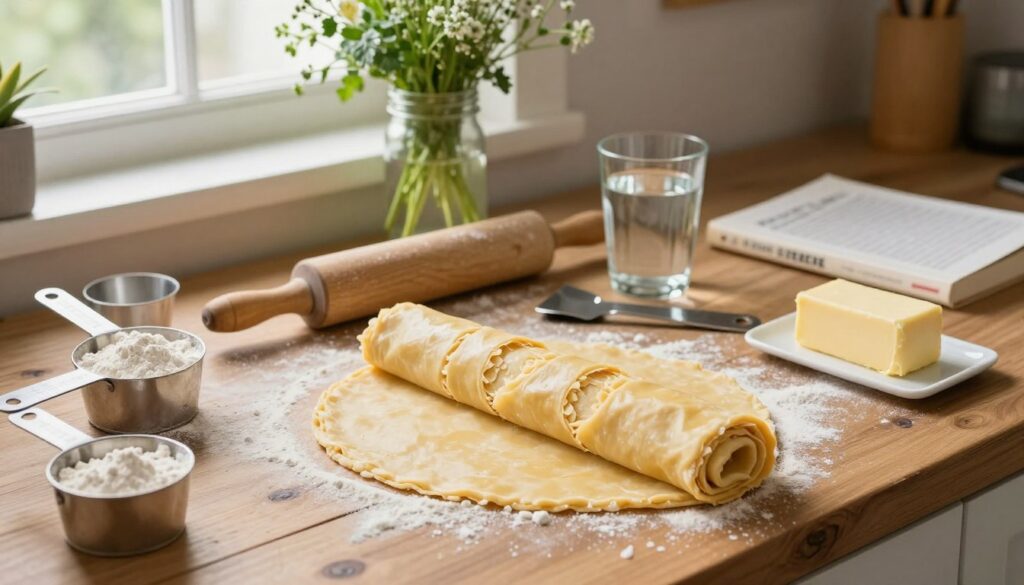
Making easy puff pastry recipe from scratch gives you a taste that store-bought can’t match. The effort is worth it when you see your pastry turn golden and flaky. Making puff pastry from scratch can be tricky, but with the right techniques, you can get perfect results.
Success comes from patience and keeping your kitchen cold. You need to keep the butter cold to prevent it from melting into the flour. Mastering this process will impress your friends and family.
Preparing Your Dough Base
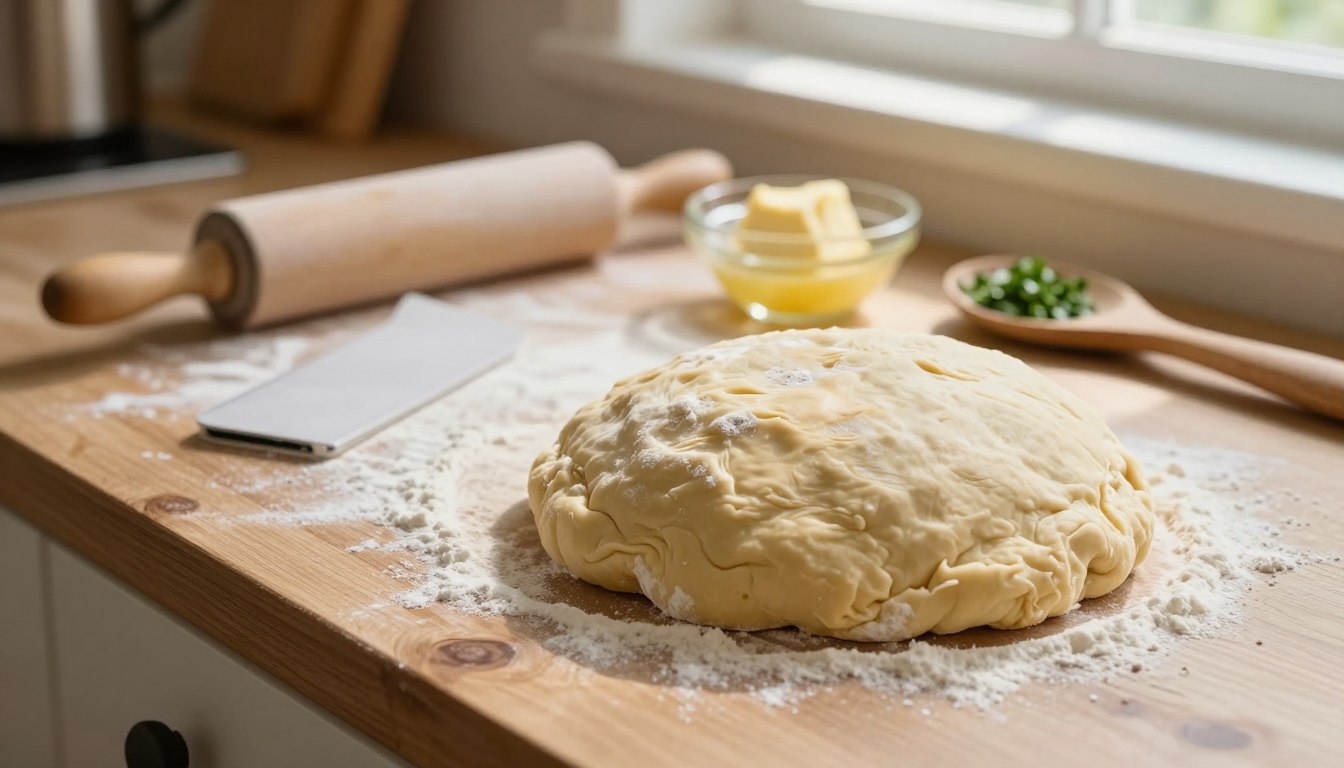
Start with the “detrempe,” a simple flour and water dough. Mix high-quality flour, a pinch of salt, and cold water in a large bowl. Use your hands or a spatula to mix until it forms a ball.
Don’t over-knead the dough. Just make sure it’s fully hydrated and holds its shape. Wrap it in plastic wrap and chill in the fridge for at least thirty minutes.
The Butter Block Technique
The “beurrage,” or butter block, makes the flaky layers. Place cold, unsalted butter between parchment paper. Roll it until it’s a flat, flexible square.
The butter should be pliable but cold. If it’s too soft, it will leak out during rolling. Consistency is key, so aim for a butter block half the size of your dough base.
Laminating Your Puff Pastry
Lamination involves enclosing the butter in the dough. Roll your dough into a square twice as large as your butter block. Place the butter square in the dough’s center at a diagonal.
Fold the dough’s corners over the butter like an envelope. Seal the edges tightly to keep the butter inside. This step is crucial for creating the layers in your pastry.
Folding and Turning for Maximum Flakiness
Now, it’s time for the “turns” in your easy puff pastry recipe. Roll the dough into a rectangle and fold it into thirds. This triples the layers in your pastry.
Turn the dough 90 degrees and repeat the rolling and folding. This process is more involved than the best homemade brik recipe crispy and easy. It also requires more chilling time, like when making how to make samosa dough and filling at home.
“Patience is the secret ingredient in every flaky pastry.”
| Process Step | Key Action | Chilling Time |
|---|---|---|
| Detrempe | Mix flour and water | 30 Minutes |
| Beurrage | Flatten butter block | 15 Minutes |
| Lamination | Enclose butter in dough | 20 Minutes |
| Folding | Perform six turns | 30 Minutes per turn |
Traditional Brik Recipe Ingredients and Preparation
Many people enjoy a traditional samosa recipe with potatoes and spices. But the North African brik offers a unique texture. It’s a favorite in Tunisian and Middle Eastern kitchens for its crunchy feel.
Brik is often filled with tuna, eggs, and capers. These ingredients make every bite a burst of flavor. It’s a quick and easy savory pastry recipe to learn.
The dough, called malsouka, is key to a great brik. Making thin pastry sheets like brik takes practice. But the effort is worth it for the thin, delicate sheets.
To make the filling, mix tuna, parsley, and harissa. Place a small amount on the dough and crack an egg on top. Fold it fast to keep the egg inside before frying.
“The beauty of brik is its simplicity; it transforms humble pantry staples into a gourmet experience.”
Brik dough is unlike the thick dough in traditional samosa recipes. It’s almost see-through. This makes the pastry light and crispy when fried, contrasting with the soft egg yolk inside.
You can find these ingredients at specialty markets. Having them ready makes these quick and easy savory pastry recipes perfect for any weeknight dinner.
| Ingredient | Purpose | Flavor Profile |
|---|---|---|
| Malsouka Sheets | Provides the crispy outer shell | Neutral and light |
| Canned Tuna | Acts as the main protein base | Savory and meaty |
| Fresh Egg | Creates a rich, creamy center | Rich and velvety |
| Capers | Adds a sharp, vinegary punch | Salty and tangy |
| Harissa Paste | Adds a smoky, spicy kick | Bold and hot |
Best Homemade Brik Recipe Crispy and Easy
Making the perfect brik takes patience, but the results are worth it. Unlike a puff pastry samosa, brik has a unique, crunchy texture. These easy savory pastry recipes bring Mediterranean flavors to your kitchen.
Working with brik dough can be tricky because it’s so delicate. You need to control moisture and work surface temperature to avoid sticking. Once you get the hang of it, making brik becomes a calming and rewarding process.
Making Thin Pastry Sheets Like Brik
The key to real brik is the dough, called malsouka. It should be stretchy but not tear easily. Unlike a homemade samosa recipe, this dough starts soft, almost like a paste.
To make a thin layer, apply the dough to a warm pan with a dabbing motion. This method cooks the dough fast. If this is hard, use a high-hydration dough and roll it between parchment paper.
Rolling Techniques for Ultra-Thin Dough
Rolling the dough requires a heavy pin and lots of flour. Aim for a sheet that’s almost invisible, like in a detailed homemade samosa recipe. This makes the pastry light and crispy, not chewy.
Work with small dough pieces to prevent drying. Keep the rest covered with a damp cloth. Precision and speed are crucial when handling thin pastry.
Filling Your Brik Pastry
The classic way to enjoy brik is with egg and herbs, like in the Tunisian brik pastry with egg. Place dough in a pan, add filling, and fold it. The oil cooks the pastry while keeping the egg yolk runny.
You can also try other easy savory pastry recipes like tuna, capers, or spiced potatoes. Use the table below to compare brik with other snacks you might make.
| Pastry Type | Texture Goal | Cooking Style |
|---|---|---|
| Brik | Paper-thin and brittle | Shallow frying |
| Samosa | Crispy and bubbly | Deep frying |
| Puff pastry samosa | Flaky and light | Baking |
How to Make Samosa Dough and Filling at Home
Making samosas at home is a fun way to explore Middle Eastern and Indian cooking. These triangular snacks are loved for their crunchy texture and flavorful filling. Making them yourself lets you adjust the spice and quality of each ingredient.
Many people fill their samosas with potatoes, green peas, and onions. You can add your favorite spices like cumin and coriander. You can fry or bake them for a lighter snack.
To get the real deal, learn how to make samosa dough from scratch. Mix flour with oil or ghee for a crisp crust. Adding carom seeds gives it a special aroma.
For quick snacks, try an easy samosa recipe. Use samosa recipe using puff pastry for a flaky, buttery exterior. This is great for parties when you need lots of snacks fast.
“The secret to a perfect samosa is a cold dough and a warm heart; the dough ensures the crunch, while the filling provides the soul of the dish.”
Start with the right ingredients for a classic potato and pea filling. Check your pantry with the table below before cooking.
| Ingredient | Quantity | Purpose |
|---|---|---|
| All-purpose Flour | 2 Cups | Provides the dough structure |
| Boiled Potatoes | 3 Medium | Acts as the hearty base |
| Green Peas | 1/2 Cup | Adds color and sweetness |
| Ghee or Oil | 4 Tablespoons | Creates the signature crispness |
With your ingredients ready, follow these steps for the filling. Let it cool before folding the pastry.
- Sauté the onions and ginger until soft and fragrant.
- Mash the potatoes lightly and mix with peas and spices.
- Cool the filling completely to prevent the pastry from becoming soggy during assembly.
Traditional Samosa Recipe with Potatoes and Spices

Starting with a puff pastry recipe for beginners is common. But, making traditional samosas is a rewarding challenge. These crispy triangles are a key part of South Asian cuisine. They offer a satisfying crunch that goes well with spicy fillings.
By making samosas at home, you can choose the ingredients and spice levels. You can adjust the spices to fit your family’s taste. With practice, your homemade snacks will be better than store-bought ones.
Making samosas is an art form that rewards patience and precision in the kitchen.
Preparing the Perfect Samosa Dough
The secret to great samosas is the “moin,” or rubbing fat into the flour. This is different from an easy puff pastry recipe. You want a sturdy, crisp shell, not thin layers. Use all-purpose flour, carom seeds, salt, and oil or ghee.
Mix the dry ingredients first. Then, slowly add the fat until the flour looks like breadcrumbs. Add water little by little to make a stiff dough. Let it rest for thirty minutes to relax the gluten.
Creating Authentic Potato and Spice Filling
Your filling should be bold and flavorful. Boil potatoes until they’re tender but still firm. Samosa fillings are known for their strong spices like cumin, coriander, and garam masala.
- Sauté ginger, green chilies, and whole cumin seeds in a pan.
- Add peas and your diced potatoes to the aromatic oil.
- Finish with a generous sprinkle of fresh cilantro and a squeeze of lime.
Folding Samosas into Triangle Shapes
Folding can seem daunting, but it’s easy to learn. Start by dividing the dough into small balls and rolling each into an oval. Cut the oval in half to make two semi-circles.
Moisten the straight edge and fold the ends to form a cone. Fill the cone with your potato mixture, but don’t overfill it. Seal the top edge with water to keep oil out during frying.
| Feature | Samosa Dough | Puff Pastry |
|---|---|---|
| Texture | Crispy and Sturdy | Light and Flaky |
| Fat Content | Integrated into flour | Layered between dough |
| Primary Cooking | Deep Frying | Baking |
Cooking Methods for Each Pastry Type
Now that you have your dough ready, it’s time to focus on cooking techniques. Whether you’re working with easy pastry recipes or complex layers, the heat source matters. You want that satisfying crunch and beautiful color every single time.
The way you apply heat determines if your hard work in the kitchen pays off. Different doughs react uniquely to oil and air. Understanding these differences helps you master homemade dough recipes from various cultures.
Baking Puff Pastry to Golden Perfection
High heat is your best friend when baking laminated dough. If you followed the guide on how to make puff pastry from scratch step by step, you have many layers of cold butter. The oven must be hot enough to turn that moisture into steam almost instantly.
This steam pushes the thin layers of flour apart, creating the height you love. Set your oven to at least 400°F for the best results. Always bake until the pastry is a deep golden brown to ensure the center is fully cooked.
“The secret to a perfect puff is never opening the oven door too early, as the sudden drop in temperature can cause your layers to collapse.”
Frying Brik Until Crispy
Brik requires a much faster cooking process than puff pastry. You usually shallow fry these thin sheets in a pan with about half an inch of oil. The goal is a light, shattering crispness that protects the soft filling inside, making these easy pastry recipes a favorite for quick meals.
Many traditional versions include a whole egg in the center of the dough. You must work quickly to brown the pastry while keeping the yolk runny. Use medium-high heat to get that signature sizzle the moment the dough hits the pan.
Deep Frying or Baking Samosas
Samosas offer you two great choices for finishing your meal. Deep frying is the traditional method that creates those iconic tiny bubbles on the crust. It provides a rich, savory flavor that is hard to beat for homemade dough recipes.
If you prefer a lighter version, you can bake them in a hot oven. Just be sure to brush the surfaces generously with oil or melted ghee. This helps them achieve a strong crunch without the heavy oil of a deep fryer.
| Pastry Type | Best Method | Cooking Temp | Key Texture |
|---|---|---|---|
| Puff Pastry | Baking | 400°F – 425°F | Flaky and Airy |
| Brik | Shallow Fry | Medium-High | Paper-thin Crisp |
| Samosa | Deep Fry | 350°F (Oil) | Bubbly and Crunchy |
Common Mistakes and How to Fix Them
Figuring out what went wrong is the first step to getting better at home baking. Even with a perfect puff pastry recipe, small mistakes can affect your results. Don’t worry if your first try isn’t perfect.
Most baking mistakes come from small changes in the environment or timing. Knowing what to look for can help fix these issues. This guide will show you how to turn a kitchen “fail” into a tasty success with your next easy puff pastry recipe.
Troubleshooting Puff Pastry Issues
A common problem with homemade puff pastry is it not rising enough. If your dough doesn’t get tall and flaky, your oven might be too cool. The heat needs to be high to turn the butter’s water into steam quickly.
Another issue is “leaking” butter, where a yellow puddle forms around your pastry in the oven. This usually happens if the dough was too warm before baking. Make sure your pastry is firm and cold before baking.
| Problem | Likely Cause | Quick Fix |
|---|---|---|
| Pastry is flat | Oven temperature too low | Preheat to at least 400°F |
| Butter leaked out | Dough was too warm | Chill for 30 minutes before baking |
| Layers are uneven | Uneven rolling pressure | Use steady, light strokes with the pin |
| Tough texture | Overworked the dough | Let dough rest between turns |
Preventing Soggy or Tough Pastries
No one likes a soggy bottom on their brik or samosa. This often happens when your filling has too much moisture. Always drain your vegetable or meat fillings well before placing them on your homemade puff pastry or brik sheets.
If your pastry feels tough or rubbery, you likely overworked the dough. This happens when you mix the flour and water too hard. Use a light touch and follow an easy puff pastry recipe that emphasizes resting the dough.
Resting is not optional for tender, crunchy pastry. When you let the dough sit in the fridge, the gluten relaxes. This prevents the dough from shrinking when you roll it out thin.
Temperature Control Tips
Temperature is key when working with any puff pastry recipe. You’re managing a delicate balance between solid fat and pliable dough. If your kitchen is too hot, the butter will melt into the flour, ruining your layers.
“The secret to great pastry is cold hands, a cold marble slab, and an even colder heart for the timer.”
If the homemade puff pastry gets sticky or soft, stop immediately. Wrap the dough in plastic and freeze it for ten minutes. This quick pause will save your easy puff pastry recipe from becoming greasy.
Keep your tools cool too. You can even chill your rolling pin or work surface if it’s too warm. Consistent temperature control is key to achieving those beautiful, shattered-glass layers every baker dreams of.
Storing and Freezing Your Homemade Pastries
You’ve worked hard to make beautiful pastries. Now, let’s talk about keeping them perfect. The right storage is key to keeping the layers you created when making how to make puff pastry from scratch step by step. Whether it’s raw dough or baked treats, the right place prevents them from getting stale or soggy.
For dough you plan to use in a day or two, the fridge is best. Wrap your homemade dough recipes tightly in plastic wrap. This keeps air out and prevents a hard skin from forming. For brik and samosa wrappers, cover them with a damp paper towel to keep them flexible.
Freezing is the best way to store your easy puff pastry recipe for a long time. First, flash-freeze individual items on a baking sheet. Then, once they’re firm, put them in a freezer-safe bag. This stops them from sticking together.
Storing dough correctly preserves the butter’s integrity, which is vital for that signature rise.
To freeze homemade puff pastry, remember moisture is the enemy. Use airtight containers to avoid freezer burn. Most homemade dough recipes will stay fresh for months if sealed right. Always label your bags with the date so you know how long they’ve been stored.
Before baking frozen items, thaw them slowly in the fridge. This keeps the fat cold, which is key for how to make puff pastry from scratch step by step success. Use this easy puff pastry recipe guide to manage your kitchen inventory well.
| Pastry Type | Fridge Life | Freezer Life | Storage Tip |
|---|---|---|---|
| Puff Pastry | 2 Days | 3 Months | Wrap in plastic wrap |
| Brik Sheets | 5 Days | 2 Months | Use parchment layers |
| Samosas | 1 Day | 4 Months | Flash freeze first |
Conclusion
Learning to make traditional doughs opens up a world of flavors in your kitchen. You now know how to make flaky snacks and crispy appetizers. Using a good puff pastry recipe makes baking at home even better.
Store-bought versions just can’t compare to what you can make at home. Your family will love the homemade puff pastry you create.
The techniques for brik and samosas add variety to your meals. You can try different fillings like King Arthur flour or Land O’Lakes butter. An easy puff pastry recipe makes it simple and fun.
Creating homemade puff pastry from scratch is rewarding. You’ll be proud of the golden layers you achieve. Using the best ingredients ensures your pastry is top-notch.
Keep working on your folding and frying skills. These will help you impress at parties or enjoy meals with your family. Your pastry-making journey starts with these basic steps.
Make homemade puff pastry today and fill your home with delicious smells. This easy recipe will be a favorite in your kitchen for years.