How to Make Thousand-Hole Crepe and Moroccan
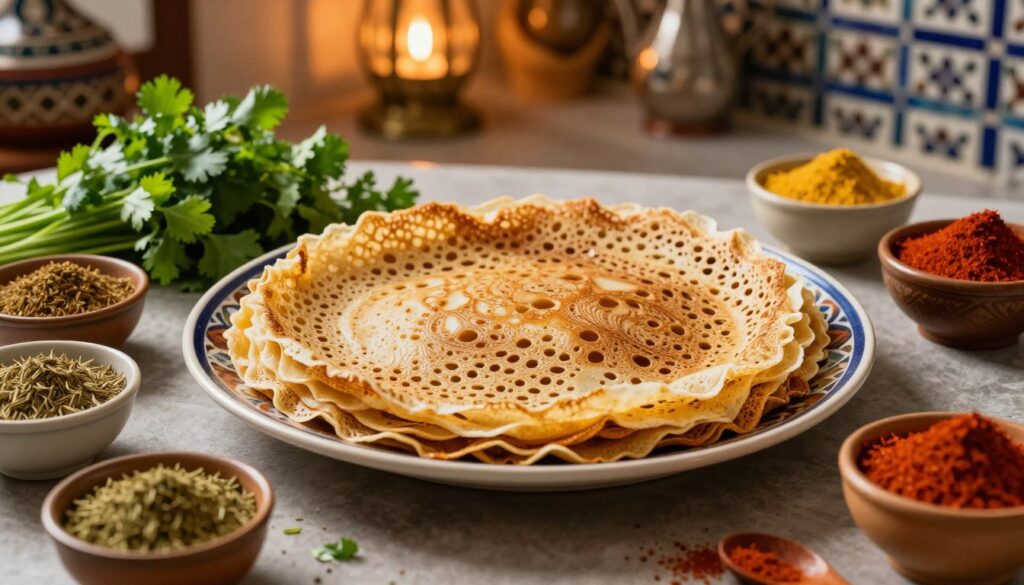
Do you remember a breakfast that felt like a celebration? Warm, honeyed bread and steam curling from a plate. It was a moment of quiet comfort. You can recreate this at home with a thousand hole crepe.
This guide will show you how to make a thousand hole crepe step by step. You’ll bring an authentic touch of Morocco to your table.
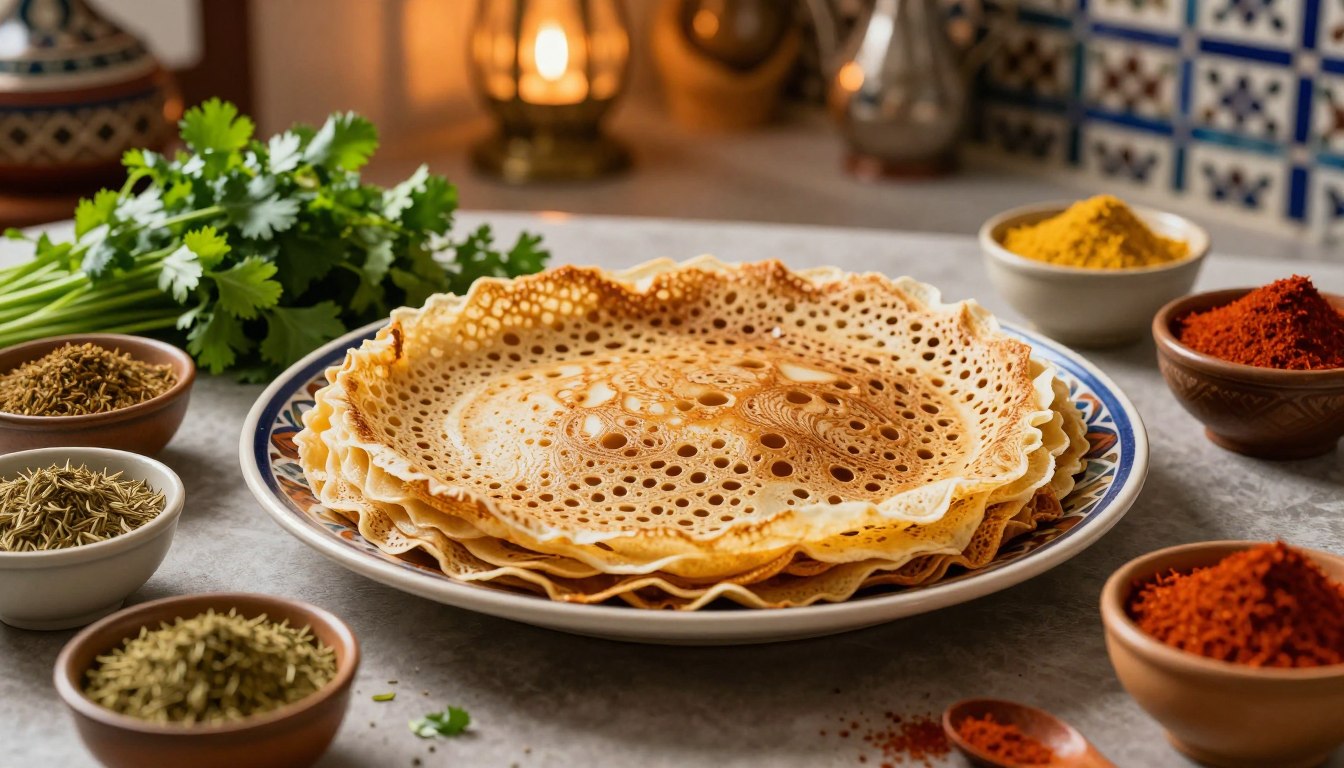
Baghrir is a Maghrebi yeasted pancake known for its lacy surface and single-side cooking. You’ll find clear instructions on making an authentic Moroccan breakfast baghrir recipe. This includes ingredients, equipment, batter prep, and cooking technique.
I’ll share tested guidance. A semolina-forward batter blended for smoothness is key. The batter should be watery but slightly viscous. It needs short fermentation or rest and is cooked on one side until holes set.
This article is for home cooks in the United States. You’ll learn how to make a Moroccan crepe recipe with semolina. It’s designed to be kitchen-friendly and encourages steady hole formation. You’ll also learn how to keep the crepes chewy without being mushy.
Plus, there are practical storage and freezing tips. Classic topping ideas like salted butter and floral honey are included. Your first batch will taste unmistakably like an authentic morning in Casablanca.
Key Takeaways
- Baghrir is a yeasted Maghrebi pancake celebrated for its lacy, hole-filled surface.
- This guide teaches how to make thousand hole crepe step by step, focused on home kitchens.
- Use a semolina-forward batter blended smooth and kept watery-but-viscous for best holes.
- Cook baghrir on one side until holes set; rest and fermentation affect texture and chewiness.
- The best moroccan crepe recipe with semolina pairs beautifully with salted butter and floral honey.
What Is the Thousand-Hole Crepe (Baghrir) and Why It’s Popular
Baghrir is a favorite at family breakfasts and in cafes across North Africa. It’s known for its delicate, lace-like surface and soft texture. Food experts love it for its simple ingredients and stunning presentation.
Origins and Maghrebi tradition
Baghrir comes from the Maghreb and Berber kitchens of Morocco, Algeria, and Tunisia. Its recipe has been passed down through communities and markets, long before modern borders.
It’s a staple at weddings, holiday breakfasts, and daily teatime. It brings regional pride and a sense of shared culinary history.
Names and regional variants across Morocco, Algeria, and Tunisia
The crepe is known by many names: baghrir, beghrir, baghir, and local terms like ghreyef. The spelling and pronunciation vary from place to place.
Recipes differ slightly, with some adding baking powder and others using only yeast. Yet, each version keeps the same lacy look, offering unique textures and flavors.
What gives baghrir its unique texture and why foodies love it
The crepe’s unique texture comes from fermentation and careful batter hydration. Yeast creates air pockets that burst at the surface as it cooks on one side only.
This process makes Maghrebi lacy pancakes with a spongy, absorbent crumb. Soaking them in salted butter, honey, or syrup traps flavor in the bubbles.
| Characteristic | Why It Matters | What You’ll Notice |
|---|---|---|
| Fermentation | Creates carbon dioxide for holes | Thousands of tiny, even bubbles |
| Hydration | Controls batter flow and pore formation | Thin, slightly viscous batter that spreads easily |
| One-side cooking | Sets the top while keeping underside soft | Lacy surface, tender base |
| Simple toppings | Showcases the pancake’s absorbency | Butter and honey melt into the holes |
| Regional tweaks | Reflect local grain choices and methods | Subtle shifts in chew and flavor across regions |
Essential Ingredients for an Authentic Moroccan Baghrir
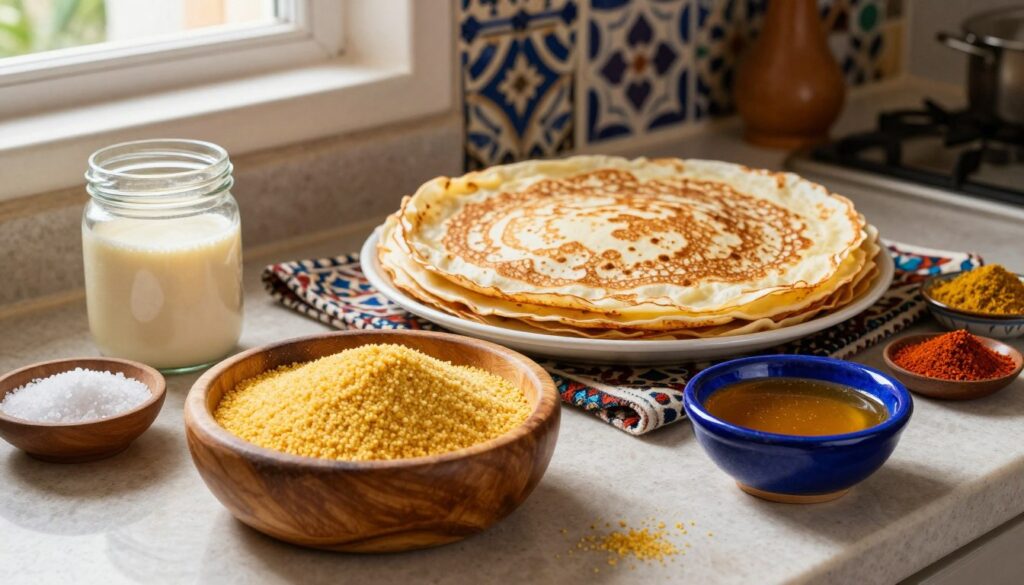
For a perfect baghrir, you want a lacy surface, soft crumb, and a mild aroma. Start with semolina as your base. The choice between fine semolina vs extra-fine matters: extra-fine gives a silkier mouthfeel and more delicate bubbles, while fine semolina keeps a bit of grainy texture that many home cooks enjoy.
Mixing semolina with wheat flour adds structure. For chew and spring, choose bread flour baghrir style by using higher-protein flour. If you prefer a lighter crumb, use pastry or cake flour such as French T45. All-purpose flour works when you need a middle ground, but expect slightly less chew.
Yeast is the engine behind those tiny bubbles. Active dry or instant yeast ferments the batter, producing CO2 that forms pockets on the surface. That answers why does baghrir have holes: fermentation creates gas that pushes through the thin batter and leaves the characteristic thousand-hole pattern.
Some cooks add a pinch of baking powder to increase lift. Use baking powder sparingly. Too much promotes large, moon-like holes that break the delicate pattern. For overnight cold fermentation, reduce the yeast so the batter develops flavor without overproofing.
Water is the main liquid and controls batter viscosity. Hot or lukewarm water helps hydrate semolina and can speed activation. Salt balances flavor. Optional flavorings lift the aroma; a splash of orange blossom water is traditional and pairs well with honey and butter. A teaspoon of sugar helps yeast activation if you prefer a slightly sweeter profile.
Below is a compact comparison to help you decide on ingredient choices for your best moroccan crepe recipe with semolina.
| Ingredient | Effect on Texture | When to Use |
|---|---|---|
| Extra-fine semolina | Silky crumb, fine dense bubbles | Traditional, delicate baghrir; best moroccan crepe recipe with semolina |
| Fine semolina | Subtle grain, slightly rustic texture | Home cooking where a bit of bite is desired |
| Bread flour | More chew and structure | bread flour baghrir approach for sturdier pancakes |
| Pastry/cake flour (T45) | Very light, tender crumb | When you want the airiest surface and softest mouthfeel |
| Yeast (active/instant) | Creates thousands of small holes through fermentation | Essential for authentic hole pattern; reduce for long cold rests |
| Baking powder | Extra lift; can form large holes | Optional, use sparingly to avoid moon-like bubbles |
| Water (hot/lukewarm) | Determines batter viscosity and hydration | Hot for quicker hydration; lukewarm for gentle yeast activation |
| Salt, sugar, orange blossom water | Flavor balance and aroma | Essential salt; sugar for activation; orange blossom water for fragrance |
Tools and Equipment You Need to Make Baghrir at Home
Great baghrir starts with the right gear. You need a good pan, a reliable blender, and accurate measuring tools. These tools help shape the texture and hole formation.
Best pans for even heat and tiny bubbles
Look for a thick-based nonstick skillet or a small crepe pan. These pans distribute heat well, creating even bubbles. Avoid thin pans as they can cause hot spots.
Preheat your pan and then set it to medium-low. This keeps the surface steady.
Blender vs. whisking: pros and cons
A high-speed blender, like a Vitamix or NutriBullet, makes batter smooth and frothy quickly. It reduces semolina grit. Use it for one to five minutes to add air and bubbles.
An immersion blender or whisking works too. But you’ll need to work harder to get the same smoothness. Be careful not to overload a small motor with thick mix.
Thermometers, measuring tools, and preserving texture
A kitchen thermometer helps you check water at 105°F (40°C). Use gram weights and measuring cups for accurate results. Many bakers prefer measuring semolina by weight.
Use cooling racks and trays lined with a clean tea towel to prevent sticking. Don’t stack hot crepes as they will stick together and lose their surface.
Keep a small set of measuring tools handy. A digital scale, a 1-cup measure, and a reliable teaspoon set are essential. These tools help you avoid mistakes and keep batter consistency steady.
How to Make Thousand-Hole Crepe: Step-by-Step Batter Preparation
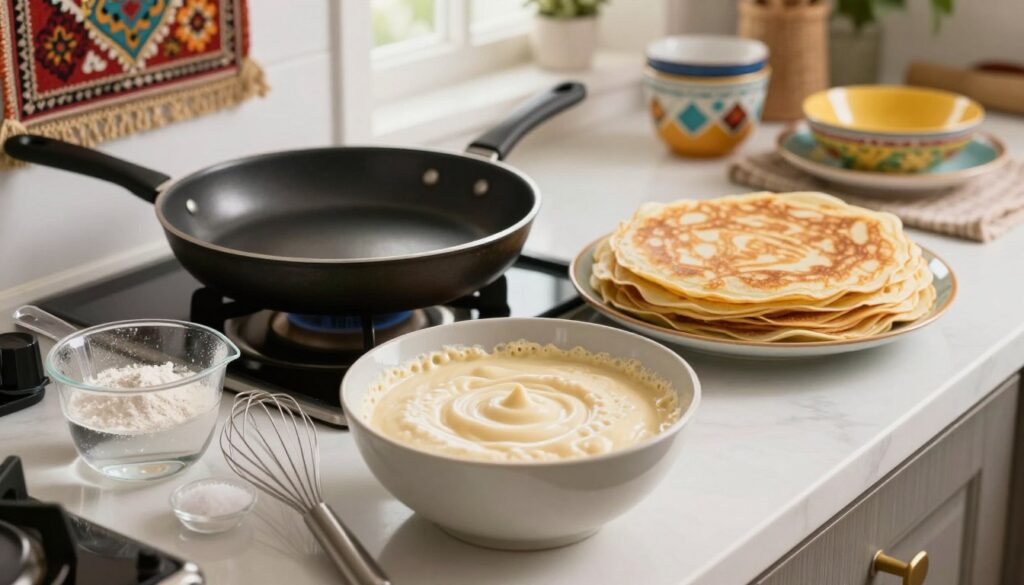
Start by making a smooth batter for baghrir’s famous holes. Follow these steps and adjust as needed for your kitchen.
Blending semolina and flour with water is the first step. Use fine semolina, flour, a pinch of salt, and yeast. Add hot or lukewarm water, depending on the yeast type. Blend at high speed for 1–5 minutes until it’s smooth.
For a guide on batter consistency, aim for a thinner mix than American pancake batter. It should flow easily and spread when poured. If it’s too thick, add water slowly. If too thin, add semolina or flour.
Fermentation is key for flavor and holes. For a quick method, rest the batter at room temperature for 1–1.5 hours with 1/2 teaspoon of yeast. For deeper taste, refrigerate overnight with 1/4 teaspoon of yeast. After refrigeration, stir gently and rest five minutes before cooking.
Watch the proofing time to avoid overproofing. Overproofed batter makes large holes instead of tiny bubbles. Adjust yeast or proofing time based on your kitchen’s temperature.
Blend, test, and adjust as needed. Aim for even hydration, tiny air pockets, and a steady stream of bubbles when cooking. Mastering these steps ensures consistent results in making thousand hole crepes.
Cooking Technique: How to Cook Baghrir Without Flipping
First, heat a thick nonstick skillet over medium-high heat. Then, lower it to medium-low. You need a surface that makes a faint sizzle when batter hits it. If it’s too hot, the bottom will brown before holes form.
Pan temperature and the faint sizzle test when batter hits the skillet
Test the heat with a drop of water. Then, pour a small amount of batter. A soft hiss and bead formation mean it’s ready. If bubbles take too long, adjust the heat or let the batter rest.
Pouring and spreading to form a thin 6–12″ pancake
Use the thin pancake technique. Pour about 1/4 cup for a 6″ pancake. Pour in the center and swirl to spread it evenly. The batter should bubble up with thousands of tiny holes.
Recognizing when the surface is fully cooked and holes have set
Cook the baghrir on one side only. Watch for tiny holes to open fully and the surface to look matte. It usually takes 1 to 1.5 minutes. Remove it to a cooling rack and don’t stack while hot.
If holes are sparse or the surface stays wet, the batter might be too thick. Add lukewarm water and let it rest longer. For tips on achieving the classic lace pattern, check this guide here.
Use cool water to reset a thin nonstick pan between batches. This helps cook evenly and avoids dense patches.
Let cooked pancakes cool for 30–60 minutes before stacking or serving. Cooling keeps the texture chewy and prevents it from becoming gummy. For a different recipe, try this simple pan-fry method here.
Troubleshooting and Why Does Baghrir Have Holes
The holes in baghrir are a sign of good fermentation and the right batter texture. They come from yeast making gas and the batter’s fast setting. Small changes in proofing, hydration, or pan heat can change the hole pattern.
Role of yeast and fermentation in hole formation
Yeast makes CO2 during fermentation, creating the bubbles in the batter. Use the right amount of yeast and let the batter rest for 30 minutes at room temperature. If you chill it overnight, use less yeast to avoid big holes.
Common problems: large moon-like holes, sparse bubbles, or dense patches
Large holes mean the batter was overproofed or had too much baking powder. These big gaps ruin the lacy pattern. Sparse bubbles suggest underproofed batter, a thick mix, or a cold skillet.
Dense patches come from not blending semolina well or uneven batter hydration. These issues stop bubbles from forming evenly, leaving chewy spots instead of the desired sponge.
Practical fixes: adjust hydration, reduce yeast or proofing time, regulate pan heat
To fix large holes, use less yeast or proof for less time. Cut back on baking powder if you use it. For sparse bubbles, rest the batter longer, thin it out, or heat the pan a bit more.
To fix dense patches, blend longer or strain the batter to remove grit. Use finely milled semolina. For consistent results, let the pan cool slightly between batches or use a thicker skillet. A trick is to quickly rinse the pan under cold water every few pancakes to keep the heat steady.
For a detailed guide on batter texture and resting, check this reliable recipe guide for baghrir: baghrir recipe and tips. Use these tips to improve your baghrir until it has even tiny holes and no dense patches.
Serving Suggestions and Traditional Toppings for Baghrir
Baghrir is best when served warm and simple. You can make it even more delicious with a few quality ingredients. Here are classic pairings, regional twists, and storage tips to keep your batch fresh.
Classic pairing: salted butter and floral honey
Spread softened salted butter over a fresh baghrir. It will soak into the tiny holes. Then, drizzle floral honey on top for a syrupy flavor.
Choose a floral, unprocessed honey and flaky sea salt for contrast. This combination tastes rich, balanced, and unmistakably Moroccan.
Regional variations: spiced apricot compote, jams, or melted chocolate
For a North African twist, try a spiced apricot compote. Fruit jams or marmalades are great for casual breakfasts. Melted dark chocolate makes a modern dessert.
Some people serve baghrir with olives, labneh, or alongside stews and tagines for savory contrast.
How to store, reheat, and freeze baghrir for make-ahead breakfasts
To keep texture, cool each pancake on a rack before stacking. Wrap cooled pancakes in parchment and place them in an airtight container or freezer bag for long-term storage.
If you plan to freeze, a three-month window is safe. To reheat, microwave frozen baghrir for about thirty seconds per stack. Or, wrap them in a clean dish towel and warm in a low oven to restore chewiness.
Avoid stacking while hot. Let the pancakes cool thirty to sixty minutes to avoid sogginess. Pack chilled stacks with parchment between layers for easy portioning at breakfast or parties.
Variations and Recipes: Best Moroccan Crepe Recipe with Semolina and Easy Moroccan Baghrir Recipe for Beginners
These recipes guide you from a simple batter to a chewy, authentic crepe. You’ll find a beginner-friendly formula for classic baghrir and a traditional method for deeper flavor and texture.
Simple beginner-friendly recipe
Mix 1 cup (168g) fine semolina, 1/4 cup (35g) bread flour or all-purpose, 1/2 tsp fine sea salt, and 1/2 tsp instant dry yeast with 1 1/2 cups + 2 tbsp (385g) hot water at 105°F. Blend until smooth. Rest 1–1.5 hours at room temperature until foamy.
Cook on a warmed nonstick skillet without flipping until holes set. This easy moroccan baghrir recipe for beginners gives consistent texture and is perfect for quick results.
More authentic, chewy recipe
For a chewier crepe, use 250g fine semolina, 125g bread or pastry flour, 5g active dry yeast, and 600g lukewarm water. Add 14g baking powder or 15g orange blossom water if desired. Activate yeast separately, blend, then strain for extra smoothness.
Rest briefly at room temperature, or reduce yeast and cold-ferment overnight for stronger fermentation notes. This is the best moroccan crepe recipe with semolina for chewiness and complex flavor.
Adjustments for dietary needs and batch size changes
Authentic baghrir uses wheat semolina for structure. Gluten-free swaps will change the result. Fine cornmeal and starch blends can be used, but expect a different feel from the soft and spongy moroccan pancakes recipe you know.
When scaling, weigh ingredients and keep roughly a 2:1 semolina-to-flour ratio. Maintain high hydration and reduce yeast proportionally for long ferments. For example, double the recipe by weight and cut yeast slightly for overnight proofing. These batch size adjustments preserve texture across small and large quantities.
| Recipe Type | Semolina | Flour | Water | Yeast | Rest | Notes |
|---|---|---|---|---|---|---|
| Beginner Quick | 168g (1 cup) | 35g (1/4 cup) | 385g (1 1/2 cup + 2 tbsp) hot 105°F | 1/2 tsp instant | 1–1.5 hours at room temp | Fast, consistent, easy moroccan baghrir recipe for beginners |
| Authentic Chewy | 250g | 125g | 600g lukewarm | 5g active (or less for cold ferment) | 15–30 min short rest or overnight cold | Best moroccan crepe recipe with semolina for chewiness |
| Dietary Adaptation | Variable (fine cornmeal blends) | Starches or gluten-free flour | Increase hydration by 5–10% | Reduce or omit yeast as needed | Test small batches | Will differ from soft and spongy moroccan pancakes recipe; requires trials |
| Scaling Guidance | Scale by weight | Maintain ~2:1 ratio | Keep hydration high | Proportionally reduce for long ferments | Adjust by batch size | Follow batch size adjustments to retain texture |
Comparisons: Thousand-Hole Crepe Versus Japanese Pancake and Fluffy Desserts
When you try baghrir next to a Japanese soufflé pancake, you notice big differences. The debate often focuses on texture and how they look. Baghrir has a lacy top that’s perfect for soaking up honey and butter. Japanese pancakes, on the other hand, are tall, fluffy, and keep their shape.
Texture
Baghrir is light and slightly chewy, thanks to its tiny holes. These holes are great for syrups and spreads. Japanese pancakes, made with whipped egg whites, are airy and soft. This comparison helps you know what to expect in terms of texture and how well they hold sauces.
Cooking methods
Baghrir uses a thin, fermented batter cooked on one side in a hot skillet. This method creates the signature holes and saves time. Japanese pancakes, cooked slowly on both sides over low heat, often under a lid, keep their airy structure.
Why you might choose each
Choose baghrir if you love flavors and a honey-and-butter ritual. For a jiggly, cloud-like bite, go for Japanese pancakes. Both offer unique textures and striking looks that food lovers enjoy.
Trendy food and foodie favorite positioning
Baghrir is a hit with foodies, thanks to its visual appeal and cultural story. Serve it with coffee at a market stall or on a brunch menu to attract trendy eaters. Pair it with spiced compote or labneh for a sweet and savory treat.
| Feature | Baghrir (Thousand-Hole Crepe) | Japanese Soufflé Pancake |
|---|---|---|
| Key texture | Porous, lacy surface that soaks syrups | Thick, airy, and pillowy internal structure |
| Main leavening | Yeast fermentation in a thin batter | Whipped egg whites (meringue) and folding |
| Cooking style | Hot skillet, cooked on one side only | Low heat, cooked on both sides, often covered |
| Sauce handling | Excellent absorption due to holes | Holds toppings on surface; less soak-in |
| Serving occasions | Traditional breakfasts, street food, brunch menus | Trendy brunches, dessert cafes, patisseries |
| Appeal to foodies | High for texture-focused diners and cultural storytelling | High for visual impact and novelty of height |
Conclusion
You now know how to make a thousand hole crepe at home. Start with fine or extra-fine semolina and choose the right flour for your taste. Mix it into a smooth, slightly watery batter.
Choose between a short room-temperature rise or an overnight cold proof. Cook the baghrir on one side over steady heat until the holes set. For a classic touch, serve with salted butter and floral honey. Or, try different toppings from around the world. A guide is available at Baghrir basics.
When you run into problems, focus on hydration, proofing time, and keeping the pan temperature steady. If the holes are too big, reduce the yeast or shorten the proofing time. If there are few bubbles, make the batter thinner or let it proof longer. These tips are key to mastering the thousand hole crepe.
Begin with a simple Moroccan baghrir recipe to get the hang of it. Then, try longer-fermented versions for more flavor and chew. Remember, practice makes perfect. You’ll learn to judge the pan heat and batter thickness with each batch.
Enjoy your soft and spongy Moroccan pancakes with butter and honey. Freeze any leftovers for a quick breakfast. This popular dessert is a simple, authentic treat that’s easy to make at home.