“How to Make Oyster: Choosing It, Opening It, Fresh”
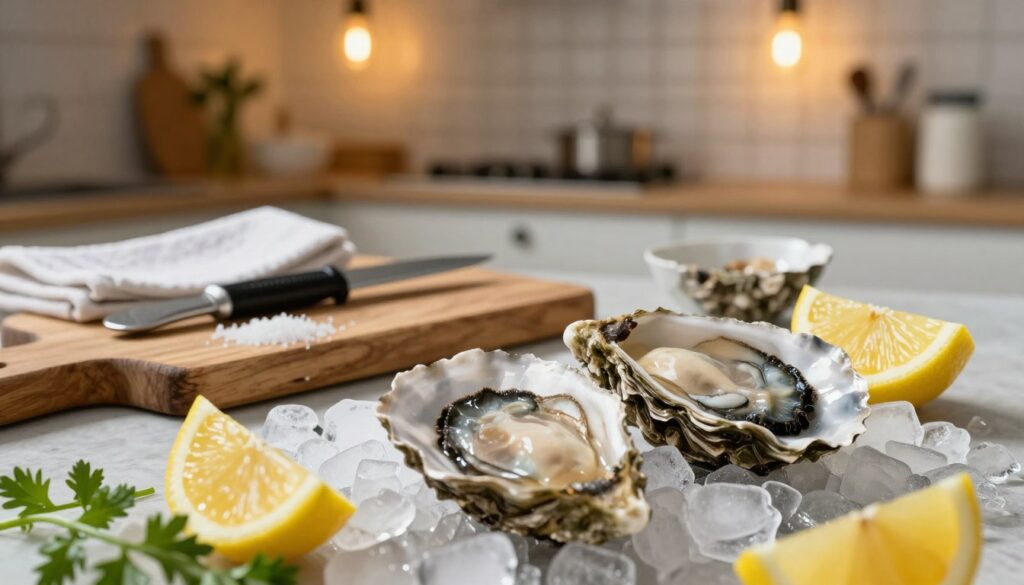
Opening your first oyster at home is magical. The shell cracks, and you smell the sea. It’s more satisfying than eating out. You can make restaurant-quality oysters at home easily and affordably.
Places like Aquagrill in New York charge $2.15 per oyster for shucking. But, buying from farmers costs about $1 per piece, including shipping. Chef Ralph Bello from Primo Waterfront in Newburgh says preparing oysters at home is worth it.
Preparing oysters is easier than you think. This guide shows you how to do it step by step. Whether you’re new or experienced, the right tools and knowledge make a big difference. You’ll learn how to pick, shuck, store, and serve oysters like a pro.
Discovering how to prepare oysters at home is a skill that saves money and impresses guests. Let’s begin your oyster adventure.
Key Takeaways
- Buying oysters directly from farmers saves you 50% or more compared to restaurant prices, with costs between $1.25–$2.50 per piece
- Fresh oysters should feel heavy, glisten in their shells, and contain plenty of liquor for the best taste and quality
- Proper storage at 32–39 degrees Fahrenheit keeps your oysters alive for several days without freezing them
- A quality oyster knife and hand protection are the only essential tools you need to start shucking safely
- Learning oyster preparation step by step helps you recognize spoiled oysters and enjoy them raw or cooked with confidence
- Serving oysters at home with fresh accompaniments like mignonette sauce rivals any restaurant presentation
Why Preparing Oysters at Home Is Easier Than You Think
Many people feel scared when they first learn to prepare raw oysters. Shucking a shell seems dangerous and hard. But, with the right tools and practice, it’s easier than you think.
Professional chefs say the learning curve is gentle. You don’t need to be a pro or have special talent. All you need is the right tools and a bit of practice.
To start, get protective gear like a mesh glove. Use a special oyster knife. And practice on a few oysters before serving them.
Shucking oysters gets easier with each try. After shucking a few, you’ll feel more confident. Your hands will get used to it, making it fun.
For more tips, check out guidance on how to prepare oysters at. You’ll find it’s affordable and fun, starting with the right oyster size.
- Start with medium-sized oysters that fit comfortably in your hand
- Practice your shucking technique on five oysters before serving guests
- Wear protective gloves to build confidence and stay safe
- Remember that each oyster you open makes the next one easier
The fear of oyster preparation often comes from not knowing how. But, thousands of home cooks do it every week. You’ll feel more confident once you try it.
Selecting Quality Oysters at the Market
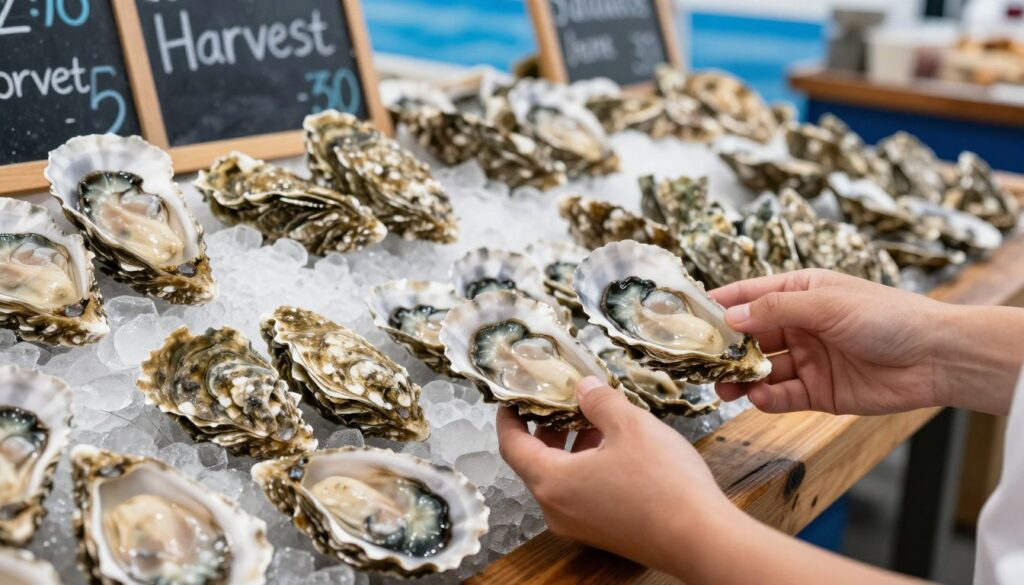
Getting the best oysters starts at the market. You need to know what to look for and what questions to ask. Your seafood counter staff can help, but knowing yourself makes a big difference. Learning how to choose fresh oysters turns you into a savvy shopper.
Buying directly from oyster farmers is the best approach. You’ll pay between $1.25 to $2.50 per piece and get the freshest products. At seafood counters, always ask to see the bag tag with the harvest date. Request permission to handpick your oysters rather than accepting pre-selected ones.
The Weight and Sound Test for Freshness
Here’s a simple trick professionals use: hold an oyster shell to your ear and shake it gently. A heavy oyster with no rattling sound means it’s alive and full of liquor. When you hear rattling like a burnt-out lightbulb, that oyster is dried out and nearly dead. Fresh, live oysters feel substantial in your hand and glisten in their shells.
Understanding Harvest Dates and Bag Tags
Every bag of oysters comes with a tag showing the harvest date. This information tells you how long the oysters have been in storage. Fresher dates mean better quality. Ask your seafood counter to explain what you’re seeing on the tag. This traceability is your guarantee of knowing exactly when and where your oysters came from.
Handpicking the Best Oysters
When how to choose fresh oysters at the market, handpicking gives you control. Look for these qualities:
- Select the heaviest oysters, indicating more meat and liquor inside
- Avoid any with shells that are already open
- Tap closed shells—they should snap shut immediately
- Look for a glossy appearance and sheen on the shell
- Reject any oysters with cracks or damage
Dead oysters won’t respond to tapping—their shells stay open. This is your biggest red flag when selecting quality oysters. Take your time walking through each specimen. Your effort at the market saves you from disappointment at home.
How to Store Fresh Oysters Before Opening
Getting your oysters home safely is just the start. Knowing how to store them before cooking or eating is key. Open the package as soon as you get it and check the gel packs. If they’re still frozen or very cold, your oysters made it well and are ready for storage.
The secret to keeping oysters fresh is the right temperature. Store them in the fridge between 32°F and 39°F. This keeps them alive and fresh without freezing them. Freezing can damage oysters and ruin their texture, so don’t freeze them.
Proper positioning is important when storing oysters. Always keep the cup side down. This keeps them moist and alive. You can cover them lightly with a damp paper towel or kitchen towel to keep humidity up, but avoid soaking them. Too much moisture can cause problems.
Here’s a critical tip: Don’t store oysters directly on melting ice. The freshwater from melting ice can kill them if they’re submerged for too long. They may open up and spoil. If you use ice, keep it in a separate container beside your oysters, not underneath them.
| Storage Factor | Correct Practice | What to Avoid |
|---|---|---|
| Temperature | 32°F to 39°F in the refrigerator | Freezer compartment or room temperature |
| Position | Cup side facing down | Cup side facing up or on their side |
| Covering | Damp paper towel or kitchen towel | Plastic wrap that traps moisture |
| Ice Contact | Ice in separate container nearby | Oysters sitting directly on melting ice |
| Duration | Several days to a few weeks | Longer than 3-4 weeks without checking |
When stored properly, oysters can stay fresh for several days or weeks. This gives you time to plan when to enjoy them. Check on your oysters every few days to ensure they’re cold and the covering is damp but not waterlogged. Following these guidelines keeps your oysters in top condition from the moment you bring them home until you’re ready to serve them.
Essential Tools for Shucking Oysters Safely
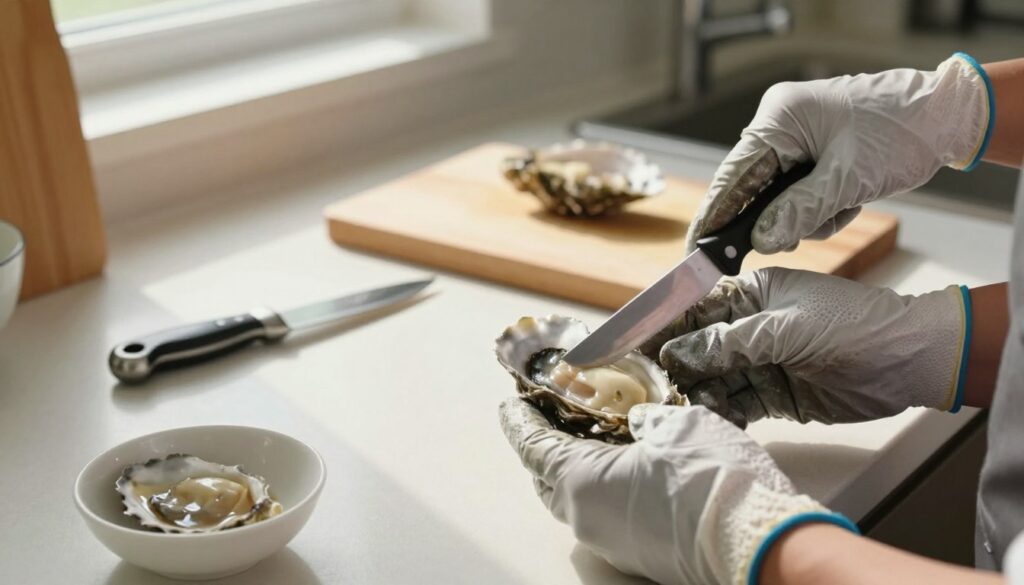
Learning to shuck oysters safely starts with the right tools. Many beginners use kitchen knives, which are not good for this task. You need special tools designed for oyster shucking. These tools protect your hands and make the job easier.
When working with oysters, safety is key. Injuries from slipping blades can be serious. Using the right tools helps you learn how to shuck oysters safely and enjoyably.
Choosing the Right Oyster Knife
Your oyster shucking knife is crucial. Don’t use clam knives, kitchen knives, santoku knives, or butter knives. They can slip and cause accidents. A proper oyster knife has a short, sturdy blade for prying open shells.
There are two main types:
- Boston knife — Long and narrow, great for finding the hinge point
- New Haven knife — Short and stout, perfect for twisting motions
Your choice depends on your hand size and preference. The Dexter-Russell Sani-Safe 4 Inch Boston “Stabber” Knife is a popular choice. Its sharp point helps you find the oyster’s muscle attachment without too much force.
| Knife Type | Blade Length | Best For | Control Level |
|---|---|---|---|
| Boston “Stabber” | 3-4 inches | Finding hinge points quickly | Moderate |
| New Haven | 2-3 inches | Precise twisting motions | High |
Hand Protection Options for Beginners
Protecting your hand is key for safe oyster preparation. Your non-knife hand holds the shell and is at risk of blade slips. Proper hand protection lets you focus on mastering your oyster shucking technique without worry.
Several effective options exist:
- Mesh safety glove — Kevlar-coated gloves offer puncture resistance without limiting movement. They’re affordable and widely available.
- Thick kitchen towel — Fold a towel several times and wrap it around your non-knife hand for budget-friendly protection
- Littledeer Half Sheller — This elegant maplewood egg-shaped board stabilizes the shell while protecting your hand and catching precious oyster juice
“A punctured hand from an oyster knife is not a pretty injury,” warns professional chefs about the importance of hand protection when learning this skill.
While some experienced shuckers work barehanded, this is risky for beginners. The best technique to shuck oysters without injury always includes a protective barrier. Choose whichever option feels most comfortable for your hands and shucking style.
How to Prepare Oysters: Step-by-Step Shucking Technique
Learning to shuck oysters can make your oyster experience at home better. It’s all about knowing the shell’s shape and using the right method. Think of your oyster as a teardrop, with the narrow tip at the hinge where you start.
To open oysters safely at home, start by setting up right. Place your oyster flat on a table or cutting board with the cup side down. This keeps the oyster stable and prevents it from rolling or slipping while you work. Beginners should always use a table instead of holding the oyster in their hand—your safety matters more than speed.
The Right Angle Makes All the Difference
Success in opening oyster shells isn’t about force. Insert your oyster knife at the hinge with a gentle angle, then apply steady twisting pressure. The shell should pop open cleanly without you having to pry hard. This is the real secret to shucking oysters at home without frustration.
Once the shell cracks, slide your knife along the inside of the top shell to cut the muscle that holds it closed. Remove the top shell carefully, then run your knife under the oyster meat to free it from the bottom shell while keeping it intact.
Setting Up Your Shucking Station
Preparation makes opening oyster shells faster and easier. Arrange your workspace with:
- A shell bucket nearby for empty shells
- Your oyster serving tray ready for display
- A damp towel to wipe away mud and shell bits
- A small bowl of clean water for rinsing
- Enough space to work without crowding
Plan how many oysters you’ll open before you start. This prevents you from running out of display space and keeps your presentation looking fresh and appetizing.
| Stage of Shucking | Key Action | Common Beginner Mistake |
|---|---|---|
| Initial Setup | Place oyster flat on table, cup side down | Holding oyster in hand, risking injury |
| Knife Insertion | Insert knife tip at hinge with gentle angle | Forcing knife straight in with brute force |
| Opening Motion | Apply steady twisting pressure | Prying instead of twisting |
| Muscle Cutting | Slide knife along inside of top shell | Rushing and breaking shell pieces |
| Bottom Release | Slide knife under oyster meat to detach | Leaving oyster stuck, losing liquid |
Building Your Skills Through Practice
Shucking oysters gets easier with every oyster you open. After shucking dozens, the motion becomes natural. After shucking hundreds, it turns into a rhythm that feels almost fun. Stick with oysters that are medium-sized with regular teardrop shapes—these respond best to the technique.
Your hands will develop muscle memory. Your confidence will grow. Soon, opening oysters will feel like second nature rather than a challenging task.
Recognizing When Oysters Are Bad or Spoiled
It’s important to know if oysters are bad or spoiled for your safety and enjoyment. Bad oysters can make you sick. Learning the warning signs helps protect you and your guests. You should spot problems before eating, not after.
Your senses are great at catching spoiled oysters. Your nose and eyes tell you a lot about oyster quality. Fresh oysters smell clean and briny, like the ocean.
The Smell Test Every Oyster Lover Should Know
When you shuck an oyster, smell it. Fresh oysters should have a mild, pleasant ocean aroma. You’re looking for that clean, salty seaweed scent. Rotten or fishy smells mean the oyster is spoiled.
A strong, foul odor means the oyster is spoiled. Don’t taste it. Discard it right away. Your sense of smell is reliable and protects you from foodborne illness.
Visual Signs of Fresh Versus Dead Oysters
Before opening oysters, tap any that sit partially open. Live oysters will slowly close their shells when you tap them. Dead oysters stay open and don’t react. This simple test helps you spot problems early.
Once shucked, examine the oyster closely:
- Fresh oysters glisten with a plump, shiny appearance
- They sit in a generous pool of clear or slightly cloudy liquid called liquor
- The flesh should look moist and firm
- Any dark spots, discoloration, or cloudy appearance signals spoilage
Test the oyster’s vitality with a fork. Gently scrape a fork prong along the oyster’s mantle (the frilly edge). Fresh oysters pull back slightly when touched. No reaction means the oyster is dead.
If you hear a rattle when you shake the oyster, it has lost moisture inside. This drying out indicates the oyster is dying or already dead. Understanding how to know if oysters are bad or spoiled keeps you eating only the best specimens.
Serving Raw Oysters with Classic Accompaniments
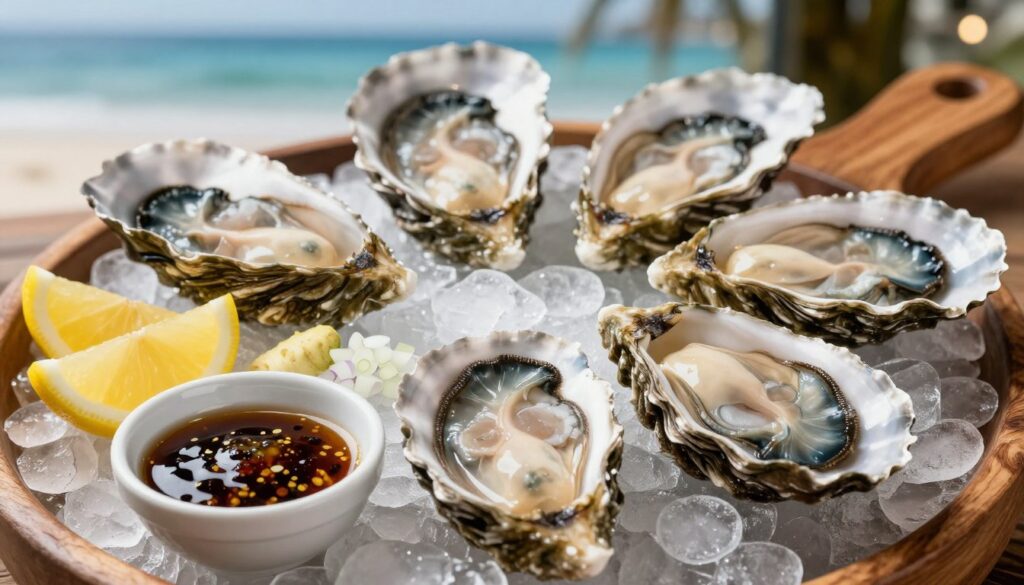
After cleaning and opening oysters, it’s time to serve them. Serving raw oysters is about making an experience where these delicate shellfish can shine. Your guests will love the natural flavor and the chance to customize their dish.
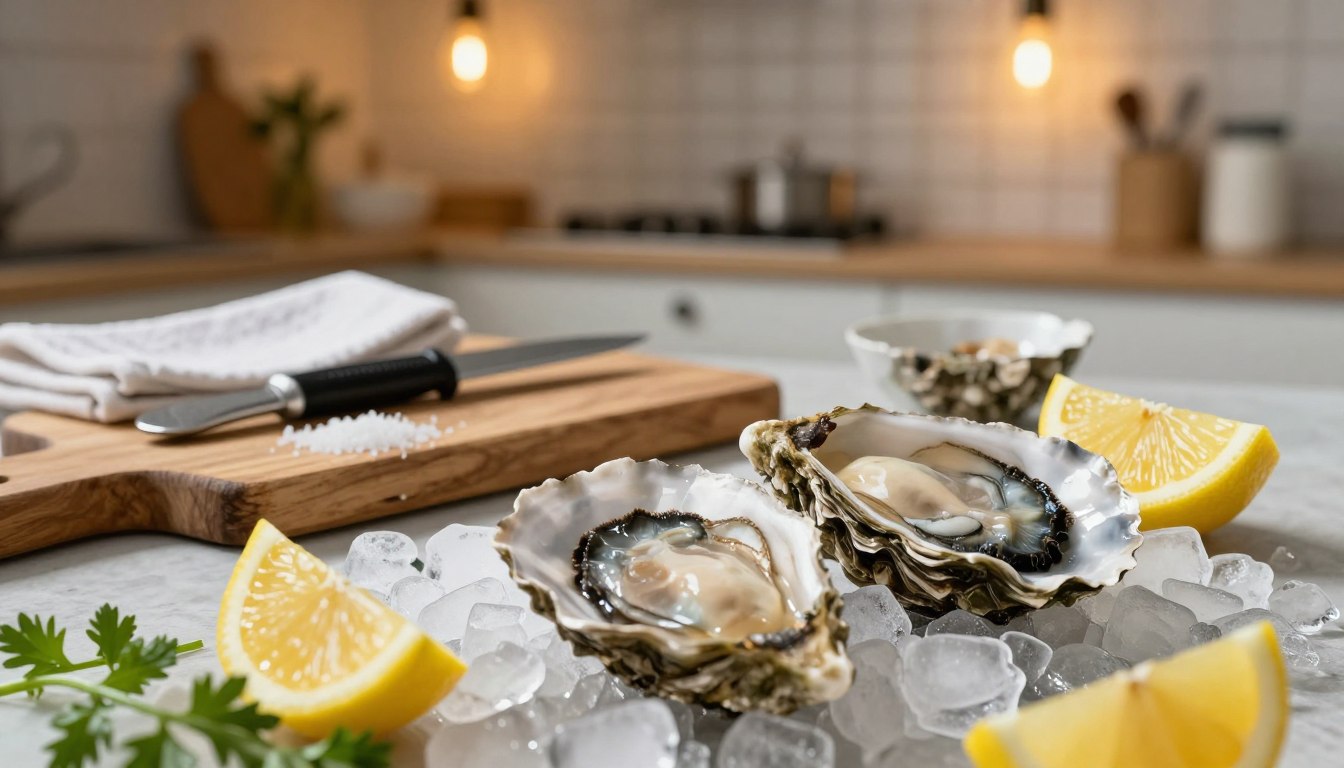
Start by making a beautiful presentation bed with crushed ice or rock salt. This keeps the oysters level, chilled, and looks great. Place your freshly shucked oysters on a deep platter or plate, arranged in a circle or pattern. This simple setup shows care and makes your oyster work look like it’s from a restaurant.
Classic accompaniments let the oyster’s true taste shine without overpowering it. Set up small bowls and dishes around your platter with these options:
- Fresh lemon or lime wedges for bright, citrusy notes
- Mignonette sauce—a tangy blend of vinegar, shallots, and cracked pepper
- Hot sauce for those who enjoy heat
- Freshly ground black pepper
- Grapefruit wedges for a unique twist
Before adding anything, encourage your guests to try one oyster plain. This lets them taste the pure, briny sweetness and understand each variety’s unique character. A quality oyster tastes buttery with a clean aftertaste and mineral notes that reflect where it grew.
For appetizers, serve six oysters per person. Enthusiasts often enjoy twelve or more. Your thoughtful setup creates a memorable meal that celebrates these remarkable shellfish.
Grilling and Roasting Oysters for Cooked Preparations
Learning to cook oysters can open up a world of flavors. Grilling and roasting make oysters warm and luxurious. They’re perfect for cold weather or when you want something different.
Choosing the right oysters and cooking methods is key. Whether you grill over an open flame or use your broiler, it’s easy and rewarding. You’ll enjoy a new side of oysters.
Using BBQ Racks for Perfect Grilled Oysters
A BBQ oyster grill rack makes grilling oysters easy. It keeps them upright, so juices don’t spill. The rack’s design fits oysters of any size.
Grill oysters open or closed for great results. Closed ones open naturally, releasing their liquid. The rack keeps the liquid in, avoiding spills.
Choose big oysters for grilling. They stay juicy longer. Place them on the rack and wait for them to open.
- Keep grill temperature medium-high for optimal results
- Watch for shell separation as your timing indicator
- Remove oysters as soon as they open
- Use tongs to safely handle hot shells
- Allow brief cooling before serving
Butter Sauces and Toppings for Roasted Oysters
Butter sauces make oysters special. Garlic butter is a classic, adding warmth and richness. Mix melted butter with garlic and lemon juice for a simple sauce.
Roasting is great for indoor cooking. Place oysters on a pan, add butter, and broil until browned. Try apple or garlic butters for a fancy touch.
| Sauce Type | Main Ingredients | Best For | Flavor Profile |
|---|---|---|---|
| Simple Garlic Butter | Butter, garlic, lemon juice | All oyster sizes | Classic, clean, bright |
| Hog Island Bourbon BBQ Chipotle Butter | Butter, bourbon, chipotle, spices | Large grilled oysters | Bold, smoky, spicy |
| Apple-Flavored Butter | Butter, apple cider, fresh thyme | Roasted preparations | Sweet, aromatic, elegant |
| Uni Butter | Butter, sea urchin roe, garlic | Premium grilled oysters | Rich, oceanic, luxurious |
Bolder butters are great for big oysters. Make sauces ahead and spoon them on hot oysters. This makes entertaining easy and delicious.
Safety Tips for Eating Oysters at Home
To eat oysters safely, start by knowing where they come from. Buy from trusted oyster farmers or seafood markets. They should keep oysters cold and provide tags for traceability.
Storage is key. Keep oysters between 32-39°F from the start. Don’t freeze unless cooking later. They stay fresh for days to weeks, depending on when they were harvested.
Before shucking, check if shells close tightly. A living oyster will respond. After opening, smell and check for freshness. Fresh oysters should shine and have plenty of liquor. Any with a strong smell or dry appearance should be thrown away.
Protect your hands while shucking to avoid serious injuries. Use a mesh glove or a thick towel. For more on safe shucking techniques, check out this guide.
Some people should not eat raw oysters. Pregnant women, those with weakened immune systems, and liver disease patients face risks. They can carry Vibrio bacteria. If you’re in these groups, talk to your doctor.
Your Oyster Safety Checklist
- Verify the source and harvest date on bag tags
- Tap shells to confirm oysters are alive before opening
- Store at 32-39°F from purchase to consumption
- Smell and visually inspect each oyster after shucking
- Discard any oysters that seem questionable
- Consume oysters promptly after opening
By following this guide, you’ll feel confident in preparing oysters. You’ll enjoy your oyster experience, knowing you’ve taken steps to avoid foodborne illness.
Conclusion
You now know how to prepare oysters in your kitchen. From picking them at the market to serving them, it’s easier than you think. You’ve learned how to check their quality and store them properly.
Cleaning fresh oysters is quick and easy. Just wipe away shell bits and mud. With practice, what seemed hard becomes easy.
Preparing oysters at home saves money. Farmers sell them for about $1 each, while restaurants charge more. You’ll impress your guests with your skills.
You can serve oysters raw or grilled with garlic butter. This way, you get restaurant-quality food at home. Always check for spoilage to serve the freshest oysters.
Start your oyster journey today. Every expert began as a beginner. With each oyster you shuck, you’ll get faster and more confident.
Try different oyster types and experiment with recipes. Share your love for oysters with friends and family. Your home can become your own oyster bar.