How to Make Soupe au Potiron
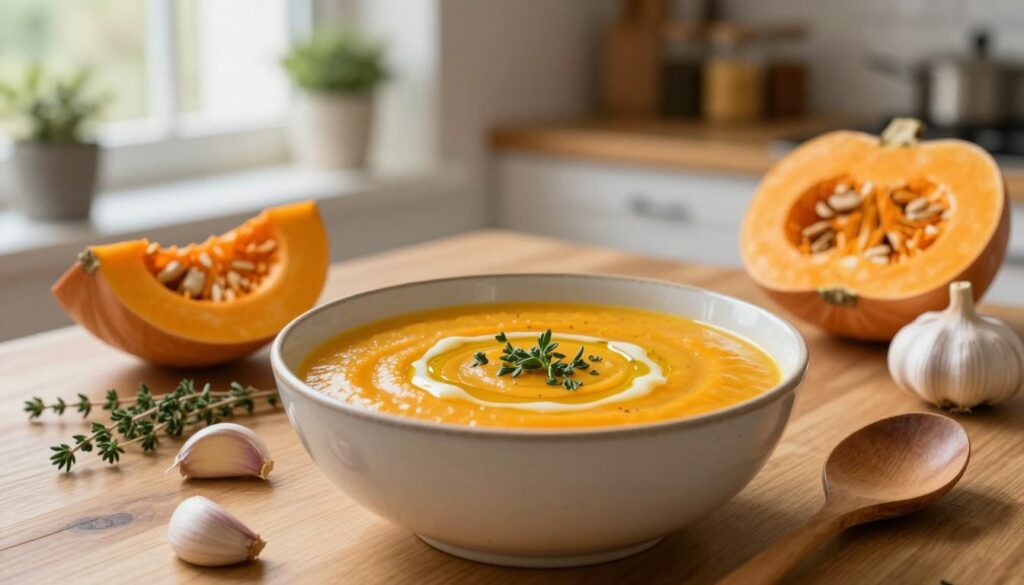
Autumn brings a special magic with it. The leaves change colors, the air gets cooler, and we all crave warmth. For many, this craving is met in the kitchen.
The smell of roasted pumpkin fills your home. A steaming bowl of soup soothes your soul. This recipe invites you to make a French classic with simple elegance and great taste.
This guide is here to help you. We’ll go through each step, from picking the perfect pumpkin to making a silky-smooth soup. You’ll see that making a delicious homemade soup is quite simple.
Key Takeaways
- Choosing the right pumpkin or squash is key for the best taste.
- Roasting the pumpkin makes it sweeter and more complex.
- Onions and broth add flavor to the soup.
- Blending well is the secret to a creamy texture.
- This soup is great for making ahead, perfect for busy weeknights.
- Adding simple garnishes like croutons or cream can make it look fancy.
- Learning this recipe adds French bistro charm to your meals.
What is Soupe au Potiron?
Soupe au Potiron is a special pumpkin soup from France. It’s not just any pumpkin soup. The name itself hints at a unique French dish made with a specific pumpkin.
The potiron pumpkin is key to this soup. It’s smaller, sweeter, and nuttier than common pumpkins. Its flesh is denser, making the soup rich and flavorful.
This soup is also known as ‘potimarron’ in some places. The potimarron comes from Brittany and has a deep orange flesh. It tastes like chestnuts, adding depth to the soup.
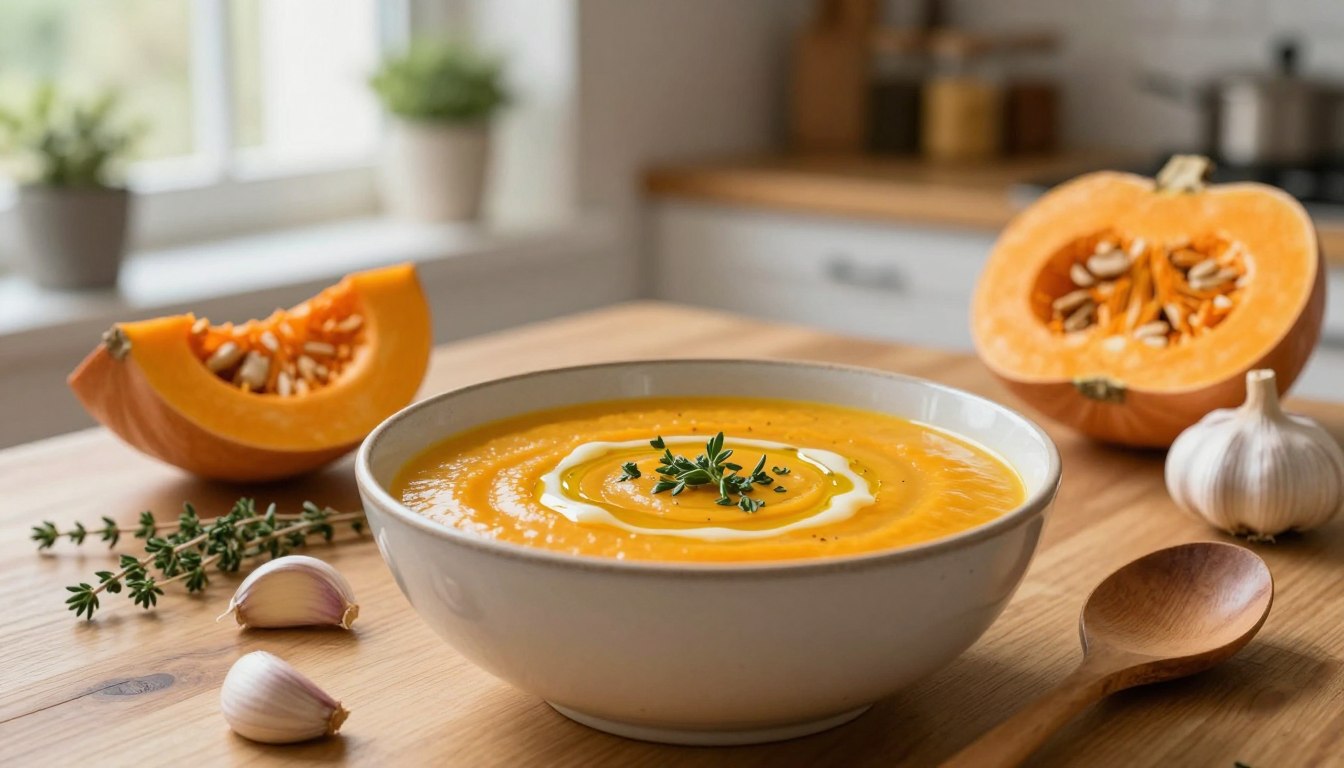
The soup is a creamy puree, seasoned to bring out the pumpkin’s taste. It’s finished with cream for extra richness. It’s a dish that feels like autumn and French cooking at its best.
To make a true Soupe au Potiron, you need the right pumpkin. It’s a celebration of a special ingredient. Want to try it? Here’s a step-by-step guide to making the perfect French pumpkin soup.
Gathering Your Ingredients for the Perfect Soup
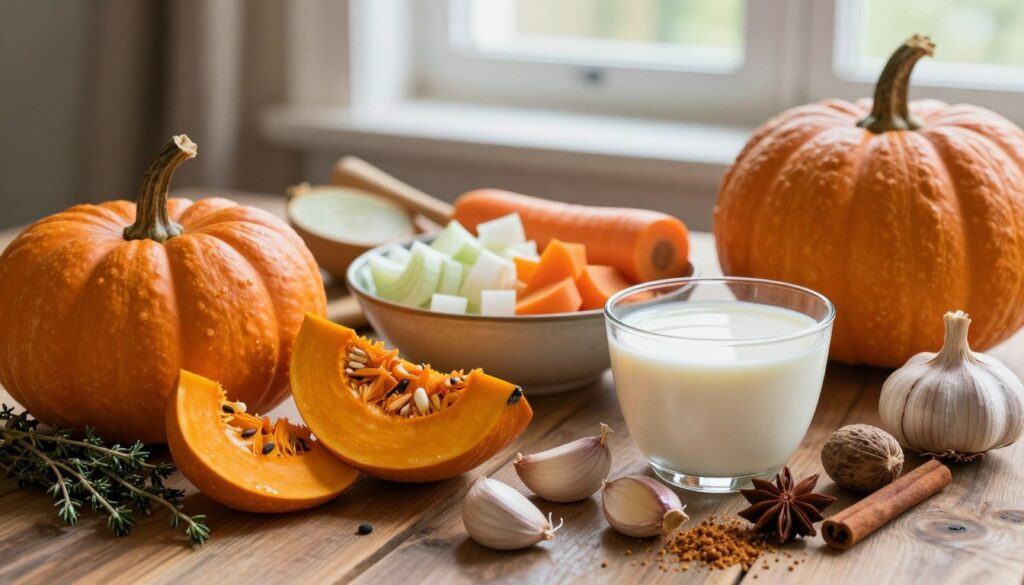
Your ingredient list is key to a great soup. A top-notch pumpkin soup recipe starts with fresh, quality ingredients. Think of this as your guide to making a comforting, homemade soup.
The Essential Pumpkin: Choosing the Right Variety
Not all pumpkins are good for soup. You need a dense, sweet flesh that purees well. Avoid big, fibrous pumpkins—they’re watery and tasteless.
The classic French potiron is perfect, but it’s hard to find. Common options like butternut squash are great. Sugar pumpkins are smaller, sweeter, and less stringy than big pumpkins.
For a unique taste, try potimarron (red kuri squash). It has a rich, chestnut-like flavor. Choose a firm, heavy fruit with no soft spots.
| Variety | Best Qualities | Best For |
|---|---|---|
| Butternut Squash | Easy to peel, very sweet, creamy texture | Most accessible and reliable choice |
| Sugar/Pie Pumpkin | Classic pumpkin flavor, less fibrous | Traditional pumpkin soup recipes |
| Potimarron (Red Kuri) | Rich, nutty flavor, no need to peel | Gourmet, deeply flavorful soups |
| Acorn Squash | Mild, slightly sweet, readily available | A good substitute when others are out of season |
Aromatics and the Flavor Base
These veggies create the savory base of your soup. Sautéing them brings out deep, complex flavors.
- Onion or Leek: Offers a sweet, aromatic base. Leeks are milder and more delicate.
- Carrots: Add sweetness and color.
- Garlic: Essential for a warm, savory taste. Fresh garlic is best.
Some recipes, like potage, include potatoes for extra thickness. Don’t skip these aromatics—they make your soup rich and complex.
Cream, Seasonings, and Finishing Touches
This is where you make your pumpkin soup recipe your own. The liquid, dairy, and spices let you customize it to your liking.
Liquid Base: Use quality vegetable or chicken broth for the best taste. Water is okay if you’re in a pinch.
Dairy & Creaminess:
- Heavy Cream or Crème Fraîche: Adds classic, luxurious richness when stirred in at the end.
- Coconut Milk: A great dairy-free option that adds a subtle tropical sweetness.
- Plain Yogurt: For a lighter tang.
Key Seasonings:
- Cumin: A warm, earthy spice that pairs well with pumpkin.
- Nutmeg: Just a pinch enhances the squash’s natural sweetness.
- Salt & Black Pepper: Season in layers, tasting as you go.
- Lemon Juice or Vinegar: A splash brightens the dish and balances the cream.
The Final Flourish: Garnishes add texture and freshness. Try toasted pumpkin seeds, crunchy croutons, a drizzle of cream, or fresh herbs like chives or parsley.
Remember, your pantry and preferences guide you. Whether you want it vegan with coconut milk or extra-indulgent with heavy cream, you can make your perfect soup.
The Right Tools for the Job
Let’s talk tools! You need just a few kitchen items for easy pumpkin soup. Having the right equipment makes cooking smooth. It helps from start to finish.
A large, heavy-bottomed soup pot or Dutch oven is key. It should hold 5 to 6 quarts. This size ensures even heat, preventing scorching during cooking.
For cutting a whole pumpkin, a sharp chef’s knife is essential. A dull knife is dangerous. Use a sturdy, non-slip cutting board and a vegetable peeler for easy skin removal.
Blending turns vegetables into smooth soup. You have two great options. Your choice impacts texture and cleanup.
| Tool | Best For | Pros | Cons |
|---|---|---|---|
| Immersion Blender (Stick Blender) | Pureeing directly in the cooking pot. | Minimal cleanup, less risk of hot splatters, great for chunkier textures. | May not achieve an ultra-silky smoothness, can be awkward for very large batches. |
| Countertop Blender | Getting the smoothest, most restaurant-quality consistency. | Unmatched power for a perfectly silky puree. | Requires transferring hot soup in batches, more parts to clean, caution needed with heat. |
For roasting, a rimmed baking sheet or roasting pan is needed. A wooden spoon and ladle are great for stirring and serving.
With these tools, you’re ready for success. The process is easy and intuitive. Now, think about what to serve with your soup. A warm bread is classic, or try one of our easy desserts for any skill level. You’re all set to start prepping your pumpkin.
Preparing Your Pumpkin and Vegetables
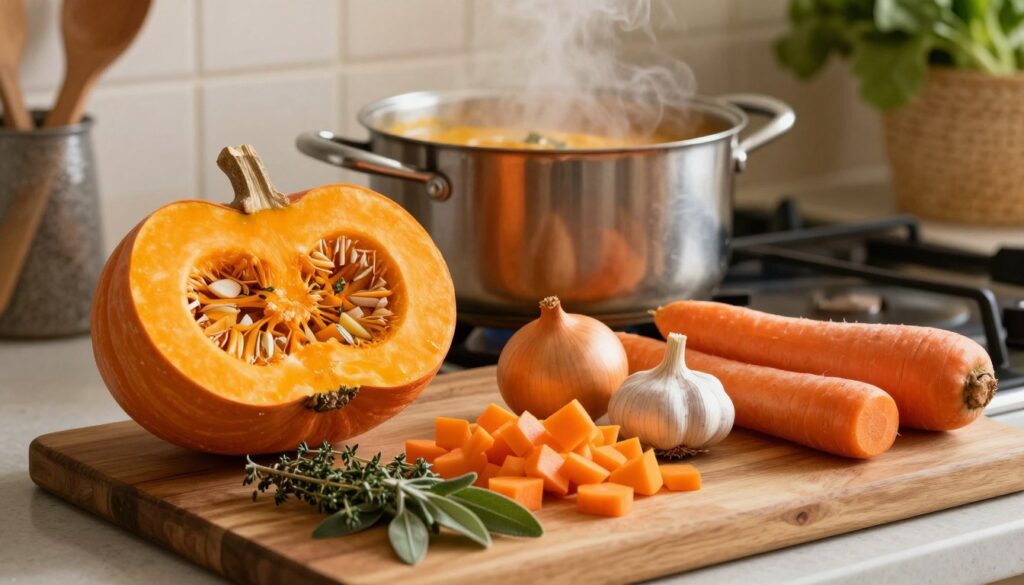
A great healthy pumpkin soup begins with careful knife work. This step is crucial for success. It ensures every vegetable cooks perfectly, enhancing flavor and texture.
How to Safely Cut, Peel, and Cube a Whole Pumpkin
Working with a whole pumpkin is easier than you think. Use a sharp chef’s knife and a stable cutting board. Follow these steps for safe and efficient prep.
- Stabilize: Place the pumpkin on a damp towel on your counter to prevent slipping.
- Cut: Carefully slice the pumpkin in half from stem to base using a rocking motion with your knife.
- Scoop: Use a sturdy spoon to scrape out all the seeds and stringy fibers from each half.
- Peel: Lay each half flat on the cut side. Use your knife to remove the tough outer skin, working from top to bottom.
- Cube: Slice the peeled halves into planks, then cut those planks into evenly sized cubes, about 1-inch pieces.
Prepping Your Aromatics
While your pumpkin cubes are ready, focus on the flavor builders. Clean and chop aromatics to create a deep, savory base.
For leeks, slice off the dark green tops and the root end. Slice the white and light green stalk in half lengthwise. Rinse under cold water to remove any grit hiding between the layers. Then, slice them thinly.
Peel your onion, cut it in half, and make horizontal and vertical cuts before dicing it finely. For the carrots, a simple peel and slice into thin rounds is perfect. They will soften quickly during cooking.
Chef’s Tip: The Importance of Uniform Pieces
This simple rule is a game-changer for any soup, including a healthy pumpkin soup. When your pumpkin cubes, carrot slices, and onion pieces are all roughly the same size, they cook at the same rate.
You avoid ending up with mushy carrots while your pumpkin is still firm. Uniform pieces mean every vegetable reaches its ideal tenderness at the same moment. This balance is what creates a harmonious, well-textured soup where every flavor shines through.
Taking a few extra minutes during prep pays off with a perfectly cooked, velvety smooth result.
Cooking Your Soupe au Potiron: A Step-by-Step Guide
Whether you prefer the classic stovetop method or a deeper roasted flavor, making homemade pumpkin soup is easy and rewarding. This guide will show you two great ways to achieve a delicious result.
Step 1: Building the Flavor Foundation with Sautéed Aromatics
This step is crucial for a rich-tasting soup. In a large pot or Dutch oven, heat oil or butter over medium heat. Add chopped onion, carrot, and celery. Stir them often.
They should become soft and fragrant but not brown too fast. This process, called sweating, releases their natural sugars. It sets the flavor base for your soup.
If you’re roasting the pumpkin, start this step while the pumpkin is in the oven. The timing is perfect.
Step 2: Combining the Main Ingredients
Now, your chosen method guides the next step.
For the Traditional Stovetop Method: Add raw, cubed pumpkin (or squash) to the pot with the softened aromatics. Stir to mix. Then, pour in broth or water, covering the pumpkin.
For the Roasted Pumpkin Method: Your pumpkin cubes should be tender and slightly caramelized. Add them to the pot with the aromatics. Stir, then add liquid. The roasted flavor will enrich the soup from the start.
Step 3: The Gentle Simmer
Bring the pot to a lively bubble over high heat. Then, reduce the heat to low or medium-low. Aim for a gentle simmer.
Let the soup cook uncovered. It’s done when the pumpkin cubes are tender and mash easily. This takes 20 to 30 minutes. The slow heat brings out the sweetness and blends the flavors beautifully.
Common Mistake to Avoid: Boiling vs. Simmering
A rolling boil is too harsh for this soup. It cooks the vegetables too fast and unevenly. A violent boil can also make the purée cloudy or grainy.
A gentle simmer, with just a few small bubbles, is key. It cooks the pumpkin perfectly without losing its texture. Your patience ensures a smooth, restaurant-quality homemade pumpkin soup.
Once you master the gentle simmer, you’re just minutes away from a perfect blend.
Blending and Perfecting Your Soupe au Potiron
Blending is key to making your soupe au potiron creamy and elegant. It combines texture and flavor beautifully. You’ll turn the cooked veggies into a smooth puree and fine-tune the taste.
How to Achieve a Silky Smooth Puree: Blending Methods Compared
Your goal is a smooth, velvety soup. Mashing won’t get you there. You need a blender for the best results. Let’s look at the two main options.
| Method | Best For | Pros | Cons | Key Safety Tip |
|---|---|---|---|---|
| Immersion Blender (Hand Blender) | Convenience & minimal cleanup. | Blend directly in the pot. Less risk of hot splatters. Easy to control. | May leave tiny bits for a less perfectly smooth texture. | Keep the blade fully submerged to avoid splashing. |
| Countertop Blender | Superior, restaurant-quality smoothness. | Creates the most velvety, uniform puree. Powerful motors break down all fibers. | Requires transferring hot soup in batches. More parts to clean. | Never fill more than halfway. Hold the lid firmly with a towel. |
For a countertop blender, blend in batches and cool the soup a bit first. Hot liquid can expand and blow the lid off! For the smoothest soup, strain it through a fine-mesh sieve, but this is optional.
The Final Taste Test: Balancing Seasonings Like a Pro
Seasonings change when soup is blended. This final adjustment makes all the difference. Always taste your soup after blending and follow this simple process.
1. Adjust Salt and Pepper: Start here. Salt enhances all other flavors. Add in small pinches, stir well, and taste after each addition.
2. Add a Touch of Acidity: A squeeze of fresh lemon juice or a dash of apple cider vinegar brightens the rich pumpkin flavor. It makes the soup taste fresher and less heavy.
3. Warm it Up with Spices: Now is the time to adjust spices. A pinch more ground cumin, nutmeg, or ginger can add wonderful depth. Stir and let it warm through for a minute.
4. Enrich with Cream (Optional): For extra richness, stir in a splash of heavy cream or crème fraîche. Do this off the heat to prevent curdling.
Trust your palate. The perfect bowl of creamy pumpkin soup should taste balanced—savory, slightly sweet, and warmly spiced, with a smooth texture that feels luxurious on the spoon.
Creative Variations on Classic Soupe au Potiron
Think of your soupe au potiron as a delicious blank canvas, ready for your creative culinary brushstrokes. The foundational classic pumpkin soup recipe is wonderfully satisfying, but its true magic lies in its incredible versatility. Once you’re comfortable with the basics, feel free to experiment and tailor it to your cravings, dietary needs, or what you have in the pantry.
Adding a Sweet or Savory Twist
A simple shift in spices or a single added ingredient can take your soup in a completely new direction. For a sweet and aromatic profile, consider adding diced apple or pear to sauté with your onions. A tablespoon of fresh grated ginger or a pinch of nutmeg will also add wonderful warmth.
If you’re leaning savory and robust, try these ideas:
- Curry Powder: Add a teaspoon or two when you sauté the aromatics for a deeply spiced, golden-hued soup.
- Smoked Paprika: A half-teaspoon stirred in at the end lends a subtle, smoky depth.
- Rosemary or Sage: A sprig of either herb added during simmering infuses a woodsy, savory note.
Making it Vegan or Dairy-Free
Transforming this into a completely vegan or dairy-free vegetarian pumpkin soup is remarkably easy. The changes are minimal, but the result is just as creamy and luxurious.
Start by ensuring you use a good-quality vegetable broth as your liquid base. For the fat, simply swap the butter for an equal amount of olive oil when sautéing your onions and garlic. The most impactful swap is replacing the heavy cream.
Full-fat coconut milk is a fantastic alternative that adds a rich body and a very slight, pleasant sweetness. Stir it in at the end, just like you would with dairy cream. For a more neutral flavor, unsweetened oat milk or cashew cream are excellent choices.
Transforming it into a Heartier Meal
Sometimes, you want your soup to be the main event. With a few additions, this light puree becomes a substantial and satisfying meal.
The easiest way is to stir in a can of drained and rinsed white beans (like cannellini or navy) or a cup of cooked brown or green lentils after you puree the soup. They add protein, fiber, and a pleasing texture.
Don’t underestimate the power of the perfect pairing. Serving a bowl with a thick slice of crusty, buttered bread is a classic for good reason. For the ultimate comfort, pair it with a crispy grilled cheese sandwich for dipping. It’s a surprisingly delightful combination that turns soup night into a feast.
The best part? These variations are just a starting point. This soup is a forgiving and flexible template. Trust your taste buds and make it your own.
Serving and Storing Your Homemade Masterpiece
A great bowl of pumpkin soup is even better with the right garnishes and a smart plan for leftovers. This final stage is where you add personal flair and ensure none of your delicious effort goes to waste. Let’s make your soup look and taste incredible, from the first serving to the last reheated bowl.
The Perfect Garnishes and Accompaniments
Think of garnishes as the jewelry for your soup. They add texture, color, and bursts of flavor that make each spoonful special. A simple drizzle of cream or crème fraîche creates beautiful swirls and adds richness.
Fresh herbs are always a winner. Try chopped chives for a mild onion note, dill for a grassy freshness, or cilantro for a bright, citrusy kick. For crunch, nothing beats homemade garlic croutons or a sprinkle of toasted pumpkin seeds.
Don’t forget a final crack of black pepper or a pinch of smoked paprika. These small touches elevate your soup from homemade to restaurant-worthy.
| Garnish Type | Description & Effect | Best For |
|---|---|---|
| Fresh Herbs | Adds color and a fresh aroma. Chives, parsley, or dill work beautifully. | Light, bright finishing touch. |
| Toasted Seeds | Pumpkin or sunflower seeds add a nutty, crunchy texture. | Providing contrast to the smooth soup. |
| Creamy Swirl | A dollop of sour cream, crème fraîche, or plain yogurt. | Adding visual appeal and a cool, tangy note. |
| Savory Croutons | Small, crispy bread cubes, optionally garlic or herb-infused. | Adding substance and a satisfying crunch. |
| Spice Dusting | A light sprinkle of paprika, nutmeg, or cracked pepper. | Enhancing depth of flavor and aroma. |
The classic and utterly perfect partner for this soup is warm, crusty bread. A loaf of French baguette, sourdough, or a hearty country bread is ideal for dipping and soaking up every last bit. Serving your pumpkin soup with crusty bread turns a simple meal into a comforting feast.
How to Store and Reheat Leftovers Properly
Proper storage keeps your soup tasting fresh. Follow these steps to enjoy your masterpiece for days.
Cooling Down: Let the soup cool to room temperature before storing. Do not leave it out for more than two hours. To speed up cooling, you can transfer the soup to a shallow, wide container.
Refrigerating: Pour the cooled soup into airtight containers. It will keep well in the refrigerator for 3 to 4 days.
Freezing for Later: This soup freezes beautifully. Use freezer-safe bags or containers, leaving about an inch of space for expansion. It can be frozen for 2 to 3 months for best quality. Thaw overnight in the refrigerator before reheating.
Reheating Gently: The key is low and slow to prevent separation or scorching. Reheat your soup in a saucepan over medium-low heat, stirring frequently. If it seems too thick, add a splash of vegetable broth or water to thin it.
Avoid boiling the reheated soup, as this can compromise the creamy texture. Once hot, give it a final taste and adjust the seasonings if needed. Now you can enjoy another perfect bowl of your pumpkin soup with crusty bread, just as good as the first day.
Conclusion
You’ve gone from market to kitchen, making your own Soupe au Potiron. This journey connects you to a tradition of simple, seasonal cooking.
You now know how to pick a pumpkin, mix flavors, and make the soup smooth. These skills lead to that first delicious spoonful of pumpkin soup.
The soup’s true value is in its comfort. Its recipe is just a starting point. You can adjust spices, try vegan cream, or add roasted apples to make it your own.
These techniques, like slow simmering, work for other soups and stews too. Your confidence in cooking grows with each dish you make.
For more ideas, check out a classic Soupe au Potiron recipe. A dry Chardonnay or toasted nuts can make your meal even better.
This homemade pumpkin soup is meant to be shared. It adds warmth to any autumn gathering. Serve it, gather your loved ones, and enjoy the fruits of your labor.