How to Make 42 Pastry Recipes
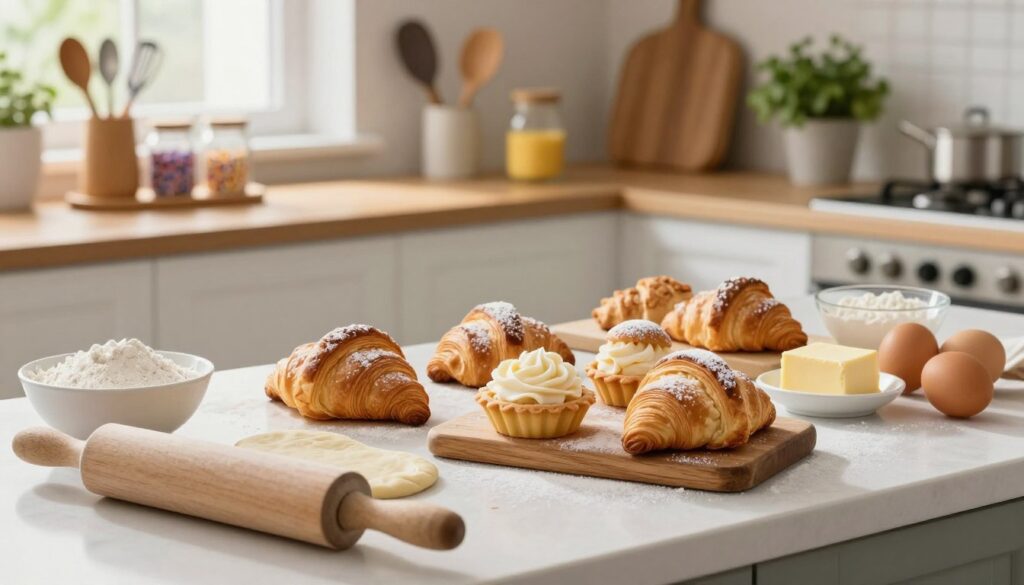
There’s magic in pulling a warm, golden pastry from your oven. The moment the buttery layers crack just right is special. Or when cream fills a perfectly baked shell, it feels like a miracle.
If you’ve ever felt scared to make pastry, thinking it’s only for pros, this guide is for you. Making beautiful, delicious pastries at home is easy. You can do it.
You’re about to learn that making easy pastries isn’t hard. The 42 best pastry recipes for every occasion in this guide show you can master these techniques. Whether for a weeknight dessert or a dinner party, you’ll find recipes that fit your skill and schedule.
You’ll learn about delicate choux pastry puffs, flaky puff pastry, rich viennoiserie, classic pie crusts, simple shortcrust tarts, and fried delights. Each recipe comes with step-by-step instructions, visuals, troubleshooting tips, and videos. These tools make what seems hard achievable.
What makes pastry so rewarding is that most recipes use the same basic ingredients. Yet, different techniques and ingredient ratios create different results. A simple change in method can turn a tender tart into a towering cream puff. Understanding these core techniques lets you explore endless possibilities.
By the end of this guide, you’ll be confident to tackle holiday desserts, comforting savory pies, and elegant appetizers. You’ll turn simple pantry staples into bakery-quality treats, right from your kitchen.
Key Takeaways
- Easy pastry recipes use basic ingredients like flour, butter, eggs, and liquid to create amazing results.
- The 42 best pastry recipes for every occasion cover choux, puff, shortcrust, pie crust, viennoiserie, and fried pastries.
- Step-by-step instructions and visual guides make pastry making less intimidating for home bakers.
- Mastering a few core techniques opens the door to countless pastry creations.
- Troubleshooting tips help you fix common problems and bake with confidence.
- Make-ahead options fit pastry baking into busy schedules.
Understanding the Basics of Easy Pastry Recipes
Before diving into pastry recipes, it’s key to know what makes them work. Pastry isn’t magic; it’s a mix of ingredients and technique. Learning the basics shows that making homemade pastry is easy for anyone. You likely have most of what you need in your kitchen already.
The secret to great pastry lies in a few key ingredients working together. Each plays a specific role. Knowing this helps you make better choices and get better results every time.
Essential Ingredients for Perfect Pastry
You don’t need a long list to make homemade pastry. Most recipes start with flour, fat, liquid, and sometimes eggs.
- Flour gives your pastry structure and helps it hold its shape
- Fat (butter, shortening, or lard) creates the flaky texture you love. Butter adds rich flavor, shortening builds flakiness, and lard works for both
- Liquid (water or milk) brings the dough together into a workable ball
- Eggs add richness, color, and help your pastry brown beautifully in the oven
Using fresh, high-quality butter and flour makes a big difference. Good ingredients lead to better taste and texture in your treats.
Kitchen Tools Every Pastry Baker Needs
You don’t need fancy equipment to start baking. A few basic tools will get you started.
| Tool | Purpose | Why It Matters |
|---|---|---|
| Rolling Pin | Flatten and shape dough | Helps you get even thickness for consistent baking |
| Pastry Cutter or Food Processor | Mix fat into flour | Creates the small fat pieces that make flaky layers |
| Measuring Cups and Spoons | Measure ingredients accurately | Precision leads to reliable results every time |
| Pastry Brush | Apply egg wash and glazes | Gives your pastry a beautiful, shiny finish |
| Parchment Paper | Line baking sheets and pans | Prevents sticking and makes cleanup easy |
| Kitchen Scale | Weigh ingredients for precision | Becomes essential as you move to advanced recipes |
As you get more confident, you might add a bench scraper and pastry bags to your tools. These aren’t needed at first, but they help with more complex recipes.
Having these basics means you’re ready to start your pastry journey. You have the knowledge and tools. Now, it’s time to create something delicious.
Mastering Choux Pastry for Light and Airy Creations
Choux pastry is a standout in French baking. It rises by steam alone, without any leavening agents. You fill these hollow shells with creams, custards, or savory mixtures. In the oven, moisture turns to steam, making the pastry puff up.
Learning to make choux pastry is a versatile skill. You start by cooking flour, butter, water, or milk on the stovetop. Then, you beat in eggs until it’s smooth and ready to pipe. This simple process makes impressive pastries for any event.
Getting the dough right is crucial. It should fall slowly from a spoon in a V-shape. If it’s too thick, it won’t puff. Too thin, and it spreads flat.
Popular Choux Pastry Creations You Can Master
Once you grasp the basic technique, you can make many treats. Here are some favorites:
- Cream puffs filled with light chantilly cream
- Chocolate profiteroles with vanilla pastry cream and chocolate sauce
- Chocolate eclairs with diplomat cream and chocolate glaze
- Paris brest with praline-flavored creme mousseline
- Chouquettes with pearl sugar topping
- Savory chicken bouchees for appetizers
- Earl grey eclairs with lavender-infused cream
- Strawberry cream puffs with fresh berries
Keys to Success With Your Choux Pastry
Success in pastry making comes from paying attention to details. Keep your oven temperature steady. Never open the oven door in the first 25 minutes of baking. This prevents the pastry from collapsing.
| Common Problem | Likely Cause | Solution |
|---|---|---|
| Pastry doesn’t puff | Insufficient eggs or low oven temperature | Add more egg slowly until batter reaches correct consistency and preheat oven fully |
| Soggy interior | Removed from oven too early | Bake until golden brown and dry to touch, about 35-40 minutes |
| Cracks in pastry | Temperature fluctuations | Keep oven door closed and maintain steady heat throughout baking |
| Flat shapes | Dough too thin or piping bag too high | Use correct consistency and hold piping bag close to baking sheet |
Mastering choux pastry takes practice and confidence. Start with simple cream puffs and then try more complex recipes like Paris brest or eclairs. Each attempt teaches you more about dough and oven behavior.
Choux pastry’s beauty lies in its versatility. You can change fillings, glazes, and toppings to create many unique treats from one dough. Mastering this skill opens doors to impressive desserts and elegant appetizers for any occasion.
Quick Puff Pastry Recipes for Beginners
Creating impressive pastries doesn’t need to take hours. Quick puff pastry makes it easy to make amazing treats at home. It’s perfect for dinner with guests or a special treat for your family.
Quick puff pastry is very versatile. You can make savory dishes, sweet treats, and more. It’s great for cheese and herb appetizers or chocolate desserts. Plus, it’s ready in 30 to 40 minutes, perfect for busy days.
Traditional Puff Pastry vs Rough Puff Pastry
Traditional puff pastry needs hours of folding butter into dough. This creates thin layers of butter and dough. It’s a bit tricky but the results are stunning.
Rough puff pastry is a quicker version. You mix butter into the dough and fold it a few times. It’s about 80 to 90 percent as good as traditional in less time.
| Pastry Type | Preparation Time | Number of Folds | Flakiness Level | Best For |
|---|---|---|---|---|
| Traditional Puff Pastry | 6-8 hours | 6 single or 3 double folds | Maximum flakiness | Professional bakeries, special occasions |
| Rough Puff Pastry | 30-40 minutes | 4-6 folds | Excellent flakiness | Weeknight dinners, last-minute entertaining |
How to Achieve Flaky Layers Every Time
For flaky layers, keep your ingredients cold. Your butter should be firm. Work fast to avoid warming it up.
Here are some tips for success:
- Keep all ingredients chilled before you begin working
- Use cold water or ice water when mixing your dough
- Roll your dough in one direction to maintain even layers
- Chill between folds if your kitchen feels warm
- Avoid overworking the dough, which makes it tough and dense
- Rest your dough for 15-20 minutes between each fold
Try making chocolate-stuffed poached pear tarts for a fancy dessert. They’re easy to make with quick puff pastry. They look great for dinner parties but are quick to prepare.
For savory treats, make cheesy mini chicken pies. They’re filled with chicken, leeks, sour cream, and cheddar. They’re perfect for appetizers and ready in under an hour.
Easy sausage rolls need just three ingredients: puff pastry, sausage meat, and jam or mustard. Pear and prosciutto tarts are another great option. They combine sweet and savory flavors with goat cheese, pears, prosciutto, and honey on flaky pastry.
Viennoiserie: Where Bread Meets Pastry
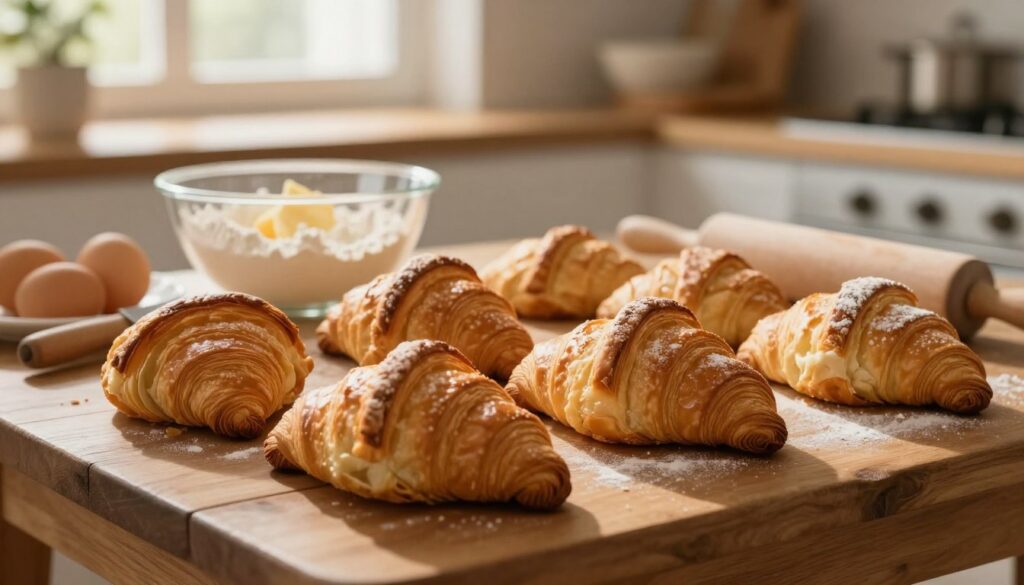
Viennoiserie is a world of elegant pastries you can make at home. These French-inspired treats mix bread-making with rich pastry elements. They become buttery, flaky wonders that seem hard to make.
By enriching yeasted dough with butter, eggs, and milk, you turn basic bread into something special. This magic transforms simple dough into extraordinary pastries.
Creating homemade pastry from scratch in the viennoiserie style is a mix of bread and pastry. It takes patience and detail, but the results are worth it. Your kitchen will smell amazing as these pastries bake to perfection.
- French Croissants – These use a lamination process with yeasted dough, creating honeycomb layers that shatter when you bite into them
- Pain au Chocolat – Chocolate croissants shaped around chocolate batons for an irresistible treat
- Brioche – An ultra-soft, rich bread made by kneading butter directly into enriched dough
- Bostock – French almond pastry made with brioche soaked in citrus syrup and topped with frangipane
- Strawberry Custard Brioche Tarts – Brioche dough baked with vanilla pastry cream and fresh fruit
The secret to success in these classic pastry recipes is knowing your dough. You need to knead until it’s smooth and elastic. Letting it proof properly lets the yeast work its magic, and lamination creates those signature layers.
| Viennoiserie Type | Main Technique | Key Ingredients | Best Served |
|---|---|---|---|
| Croissants | Lamination with butter folds | Yeast, flour, butter, milk, eggs | Fresh from the oven, mornings |
| Pain au Chocolat | Lamination with chocolate insertion | Yeast, flour, butter, chocolate batons | Warm, anytime |
| Brioche | Direct butter incorporation | Yeast, flour, eggs, butter, milk, sugar | Toasted with butter, for breakfast |
| Bostock | Soaking and baking with toppings | Brioche, citrus syrup, frangipane, almonds | Brunch or dessert occasions |
Many home bakers are intimidated by viennoiserie, thinking it needs professional skills. But it’s simpler than you think. With step-by-step guides, diagrams, and attention to timing, you can master homemade pastry at your own pace. Small-batch recipes make it easier for home bakers.
Your brioche is special because it’s so versatile. Enjoy it toasted with butter for breakfast, or make it fancier with day-old slices. Its rich dough is perfect for both sweet and savory dishes, making it a rewarding classic pastry to bake.
Simple Shortcrust Pastry and Tart Dough Techniques
Shortcrust pastry is special because it’s tender, not flaky. It has more flour than fat, making it crumbly like cookies. This dough is easy to make, even for beginners.
When making shortcrust pastry, mix cold butter into flour until it looks like breadcrumbs. Then, add just enough liquid to hold it together. Using a food processor makes it quick and easy.
For the best results, use cold ingredients. Freeze butter cubes for twenty minutes. Make ice-cold water by adding ice to a small amount of water. This keeps your pastry tender and flaky.
Sweet Shortcrust Pastry for Desserts
Sweet shortcrust pastry, or pâte sucrée, is perfect for desserts. It has sugar in the dough, making it cookie-like. This base is great with fruit and cream fillings.
There are many ways to use sweet shortcrust pastry:
- Strawberry tart with pastry cream and fresh berries
- Pineapple tart with pineapple curd and coconut whipped cream
- Chocolate tart dough filled with chocolate ganache
- Lemon tart with tangy custard filling
Savory Shortcrust Applications
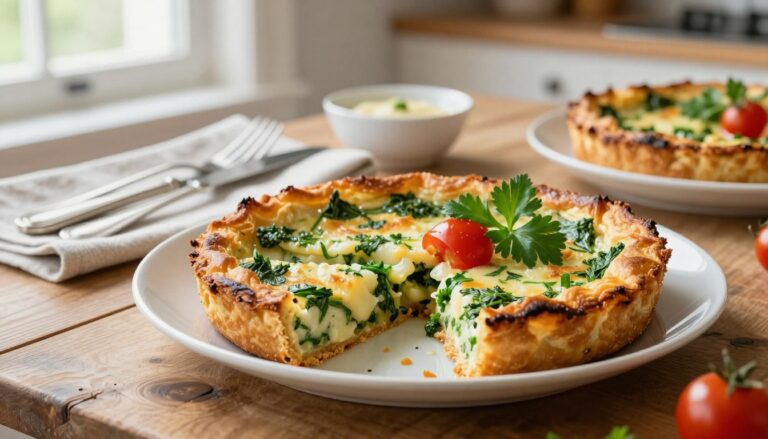
Savory dishes also love shortcrust pastry. A classic quiche lorraine is a great example. It has a buttery crust, bacon, chives, cheese, and egg custard.
Tuna melt mini quiches are another great option. They’re small, perfect for parties. They have canned tuna, egg custard, and are easy to eat.
| Shortcrust Application | Main Ingredients | Best For | Baking Temperature |
|---|---|---|---|
| Classic Quiche Lorraine | Bacon, chives, cheese, eggs | Brunch or light dinner | 375°F |
| Strawberry Tart | Pastry cream, fresh strawberries | Special dessert occasions | 350°F |
| Chocolate Tart | Cocoa powder, chocolate ganache | Elegant chocolate lovers | 325°F |
| Tuna Melt Quiche | Canned tuna, eggs, cheese | Party appetizers | 375°F |
| Heirloom Tomato Crostata | Seasonal tomatoes, herbs | Summer gatherings | 375°F |
Let your dough rest in the fridge for at least an hour before baking. You can also keep it in the fridge for up to three days or freeze it for a month. This makes it easy to bake when you want.
“The beauty of shortcrust pastry lies in its simplicity and reliability—once you master the basic technique, endless possibilities open up for both sweet and savory creations.”
Shortcrust pastry is great for both sweet and savory dishes. It’s easy to work with and lets you be creative. It’s perfect for building your baking skills.
Perfect Pie Crust Recipes from Scratch
Learning to make a basic pie crust recipe is a big step for home bakers. The key to making how to bake perfect pastry every time is understanding a few important principles. These principles turn simple ingredients into something truly magical.
Pie crust gets its flaky texture from having more fat than flour. This makes it different from shortcrust pastry. To make it flaky, cut cold butter into flour until you get pea-sized pieces. These pieces create steam pockets in the oven, making the crust flaky.
Getting the technique right is crucial. Here are the key steps to follow:
- Keep all ingredients cold, including butter and water
- Mix just until the dough comes together—overmixing makes crusts tough
- Chill your dough for at least one hour before rolling
- Work quickly with cold hands to keep butter pieces intact
- Roll to a 12-inch circle for a 9-inch pie dish
Many beginners struggle with pie crust issues. Shrinking happens if dough is overworked or not chilled enough. Soggy bottoms come from not blind-baking or using a hot oven. Tough texture is from too much gluten. Letting cold dough rest at room temperature for 10–20 minutes before rolling helps avoid cracking.
Once you get the hang of it, making a basic pie crust recipe opens up a world of possibilities. Try butterscotch apple pie, perfect pumpkin pie, or lemon meringue pie for delicious results.
For a more relaxed approach, stress-free dessert recipes like easy peach galette or strawberry galette are perfect. These rustic pies use the same flaky dough but skip the special pans. Fold the edges up over your fruit for a beautiful, free-form creation.
Unique variations can also expand your skills. Flaky graham flour pie crust combines traditional flakiness with nutty graham cracker flavor. Passion fruit pie offers tangy tropical filling, while strawberry rhubarb pie has thick, jammy filling. For a treat, layer caramel banana cream pie with caramel sauce, banana custard, fresh bananas, and whipped cream.
“The difference between a good pie and a great pie comes down to temperature and patience. Cold ingredients and proper chilling time aren’t shortcuts to skip—they’re the foundation of success.”
Store your dough in the refrigerator up to three days ahead. You can also freeze wrapped dough for up to three months. Thaw completely in the refrigerator before rolling. Each pie you make builds your confidence in baking perfect pastry every time.
Fried Pastries: Doughnuts, Churros, and Empanadas
Fried pastries might seem hard at first, but they’re rewarding to make at home. They have a golden, crispy outside that’s hard to get in an oven. Fried pastries use hot oil to get their special texture and taste.
They fall into two groups: yeasted doughs like doughnuts that need proofing, and chemically leavened doughs like churros that use baking powder or steam.
Success with fried pastries comes from knowing the science of frying. The right temperature and technique are key. With the right steps, your pastries will be as good as those from a bakery.
Getting the Perfect Golden Crust
The golden outside of fried pastries comes from the right oil temperature. Keep your oil between 350-375°F. A kitchen thermometer helps you check the temperature.
For yeasted doughs, like doughnuts, proofing is key. They should be puffy and slightly indented before frying. This makes them light and fluffy inside.
- Use a reliable instant-read thermometer to check oil temperature
- Allow yeasted doughs to proof until they’re puffy and springy
- Test oil temperature with a small piece of dough before frying the entire batch
- Fry in small batches to maintain consistent temperature
Avoiding Greasy Results
Greasy pastries are a common problem. To avoid this, keep your oil at the right temperature. Never overcrowd your pan, as this lowers the temperature and causes oil absorption. Fry in small batches for even cooking.
Drainage is also crucial. Remove fried pastries right after cooking and place them on paper towels or a wire rack. This helps excess oil drip off. Properly fried pastries should have a crisp outside with little oil inside.
| Pastry Type | Dough Category | Ideal Temperature | Key Characteristic |
|---|---|---|---|
| Glazed Doughnuts | Yeasted Dough | 350-365°F | Fluffy interior with vanilla or cardamom glaze |
| Easy Authentic Churros | Choux-Like Batter | 365-375°F | Crunchy crust with soft, delicious center |
| Fish Empanadas | Lard-Based Shortcrust | 350-365°F | Flaky, buttery crust with savory filling |
| Mini Rainbow Doughnuts | Yeasted Dough | 350-360°F | Small, colorful with unicorn glaze decoration |
Beginner pastry recipes can include blueberry glazed doughnuts or mini rainbow doughnuts for kids’ parties. Fish empanadas offer a different taste with their flaky crust and savory filling. Each recipe shows how to fry right when you follow temperature and drainage steps.
Start with one type of fried pastry to learn the basics. Once you get temperature control and proofing, making these treats will get easier. Your homemade fried pastries will soon be as tasty as those from professional bakeries.
Savory Pastry Ideas for Appetizers and Main Courses
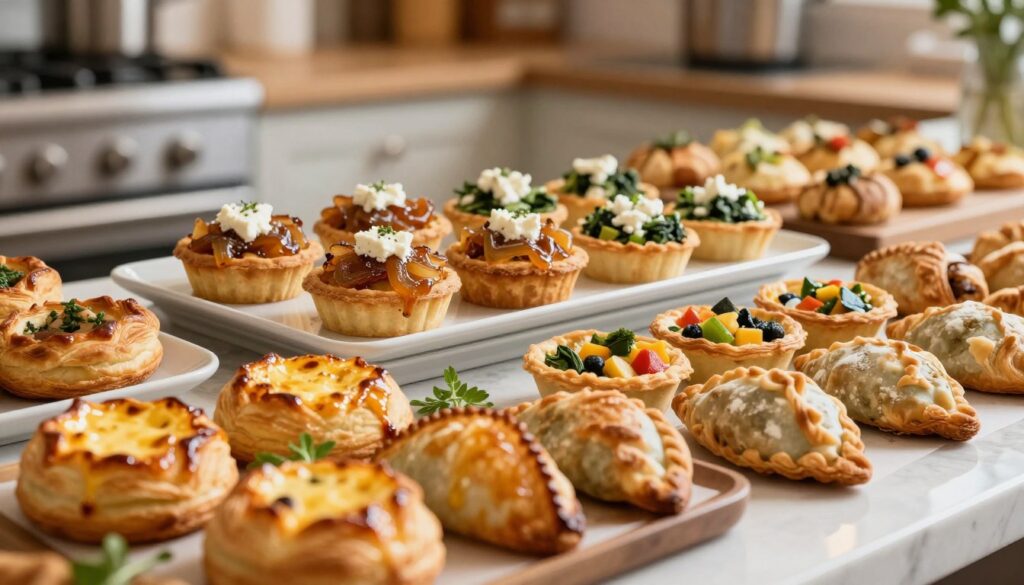
Savory pastry brings a world of tasty options to your kitchen. These recipes are not just for sweet treats. They can turn into amazing appetizers and hearty main courses. Baking pastry for savory dishes is just as fun as making sweet ones, with creative fillings in the same dough.
Savory pastries are very versatile. You can use puff pastry, shortcrust, or phyllo dough. Fill them with cheese, meats, veggies, and herbs for any occasion or diet.
Quick and Easy Savory Pastry Starters
Need impressive appetizers quickly? Simple mixes offer big flavors. Ham and cheese puff pastry, with just four ingredients, makes golden treats perfect for parties. Ham and cheese pinwheels offer the same taste in a spiral shape, great for making ahead.
Puff pastry cheese straws twisted into strips add elegance to any event. Crack chicken pastry puffs mix creamy chicken, cheddar, ranch, and bacon in flaky pastry. For quick ideas, check out 23 inspiring savoury puff pastry recipes that are quick to make.
| Recipe | Main Ingredients | Prep Time | Skill Level |
|---|---|---|---|
| Ham and Cheese Puff Pastry | Puff pastry, ham, cheddar, Dijon mustard | 15 minutes | Beginner |
| Puff Pastry Cheese Straws | Puff pastry, cheese, seasoning | 10 minutes | Beginner |
| Chicken Vol-au-Vent | Puff pastry shells, chicken, mushrooms, cream | 30 minutes | Intermediate |
| Spinach and Feta Bourekas | Phyllo pastry, spinach, feta, everything seasoning | 25 minutes | Intermediate |
| Mini Beef Wellington | Puff pastry, beef tenderloin, mushrooms, pâté | 45 minutes | Advanced |
Substantial Main Course Pastries
Make dinner special with savory pastries that are full meals. BBQ chicken puff pastry pizza brings pizza flavors to a flaky base in 30 minutes. Chicken alouette wraps tender chicken in buttery pastry with creamy filling, perfect for holidays.
For breakfast or brunch, bacon breakfast tart and sausage breakfast braid turn eggs, meat, and cheese into hits. Caramelized onion and Brie appetizers mix sweet onions with creamy cheese on pastry rounds. Tomato and herb tarts celebrate summer flavors.
- BBQ chicken puff pastry pizza—quick 30-minute weeknight meal
- Chicken vol-au-vent—elegant entertaining option with creamy filling
- Bacon breakfast tart—show-stopping brunch centerpiece
- Caramelized onion and Brie appetizers—sophisticated flavor combination
- Tomato and herb tarts—celebrates seasonal fresh produce
- Sausage breakfast braid—feeds a crowd effortlessly
Mastering basic pastry techniques opens up endless savory options. Your baking becomes a way to create dishes that fit your taste and style. Start with simple recipes and grow to more complex ones like mini beef Wellington or spinach and feta bourekas.
Sweet Pastry Desserts to Impress Your Guests
Easy dessert pastries are perfect for impressing your guests. You don’t need to be a pro to make elegant treats. With the right ingredients and techniques, simple doughs become stunning desserts. These pastries mix flaky textures with tasty fillings, making any event unforgettable.
These desserts show how simple ingredients can become amazing with the right touch. They’re great for dinner parties or just for yourself. You’ll find that mastering a few basic techniques boosts your kitchen confidence. From fruit-filled to chocolatey, these ideas add charm to your dessert table.
Fruit-Filled Pastries and Tarts
Fruit-filled pastries are a hit with seasonal fruits. They start with sweet pastry, filled with cream or frangipane, and topped with fresh fruit. Try a rhubarb mascarpone tart for a spring treat with tart rhubarb and rich mascarpone.
Blood orange caramel tarte tatin is a twist on the French classic, with sweet citrus and caramel. Honey pear bundles are elegant, resembling beehives. For quick treats, apple or blueberry turnovers are easy to make and serve with ice cream.
Caramel apple strudel is a classic European dessert that feels fancy. Puff pastry danishes with jam are quick and perfect for holidays. These desserts show how fresh fruits can shine with little effort.
| Pastry Type | Main Filling | Best Season | Prep Time | Difficulty Level |
|---|---|---|---|---|
| Rhubarb Mascarpone Tart | Mascarpone, honey, amaretto | Spring | 45 minutes | Intermediate |
| Blood Orange Tarte Tatin | Caramelized citrus, brown sugar | Winter | 50 minutes | Intermediate |
| Apple Turnovers | Cinnamon apples | Fall | 30 minutes | Beginner |
| Blueberry Turnovers | Fresh blueberries | Summer | 30 minutes | Beginner |
| Honey Pear Bundles | Pears, honey syrup | Fall | 40 minutes | Beginner |
| Caramel Apple Strudel | Spiced apples, caramel | Fall | 55 minutes | Intermediate |
Chocolate and Cream-Based Pastry Desserts
Chocolate and cream pastries satisfy sweet cravings with deep flavors. Nutella hand pies are small but pack a big punch. Chocolate hazelnut turnovers offer a similar treat in triangle form.
Banana and chocolate puff pastry bundles combine two favorites in elegant packages. Chocolate pear tarts are a showstopper, with puff pastry, frangipane, and poached pears in red wine sauce.
Puff pastry cinnamon rolls are quick and delicious, with flaky layers and cinnamon sugar. Palmier cookies are simple yet elegant, made with just two ingredients. Explore the best simple desserts to see how quality ingredients make a difference. These ideas show how versatile doughs can create many desserts by changing fillings and shapes.
- Use high-quality chocolate or cocoa for rich flavor depth
- Choose ripe, fresh fruit that complements your chocolate selections
- Don’t overcomplicate recipes—let quality ingredients shine through
- Keep timing precise for perfect texture and crispness
- Finish with small garnishes like nuts, chocolate drizzles, or powdered sugar
Sweet pastries show that versatile doughs open up endless dessert options. Your guests will love the bakery-quality treats from your kitchen.
Make-Ahead Pastry Recipes for Busy Schedules
Even with a busy life, you can still make homemade pastries. Quick and simple pastry recipes help you enjoy fresh treats without spending hours cooking. The key is knowing which parts you can prepare ahead and how to store them right.
Most pastry doughs improve with time. Making dough ahead lets gluten relax and flavors deepen. This makes your pastries taste better than if you made them right away. You can make rough puff pastry dough on the weekend and keep it in the fridge for up to three days. For longer storage, freeze it for up to three months—just thaw it overnight in the fridge before using.
Pie crust and shortcrust pastry follow the same rules. You can roll them out and fit them into pans before freezing. This makes assembly quick when you need it, perfect for unexpected guests or busy days.
Freezing Techniques for Success
Proper wrapping prevents freezer burn and keeps your doughs fresh. Double-wrap everything in plastic wrap, then place it in freezer bags with air pressed out. Label everything with the date so you know what you’re using.
- Wrap dough tightly in plastic wrap twice
- Place wrapped dough in freezer-safe bags
- Press out all air before sealing
- Label with the date and dough type
- Store at 0°F or below for best results
Assembly-Ready Pastries
Some pastries freeze beautifully unbaked. Hand pies, turnovers, sausage rolls, and pinwheels can go straight from freezer to oven. Just add a few extra minutes to the baking time. Spend a few hours on the weekend assembling multiple batches, freeze them, then pull out exactly what you need for quick weeknight dinners or last-minute entertaining.
| Pastry Type | Storage Method | Refrigerator Time | Freezer Time | Bake From Frozen? |
|---|---|---|---|---|
| Rough Puff Dough | Plastic wrap + bag | 3 days | 3 months | No, thaw first |
| Pie Crust Dough | Plastic wrap + bag | 3 days | 3 months | No, thaw first |
| Shortcrust Pastry | Plastic wrap + bag | 3 days | 3 months | No, thaw first |
| Hand Pies (assembled) | Parchment paper | 1 day | 2 months | Yes, add 5 minutes |
| Turnovers (assembled) | Parchment paper | 1 day | 2 months | Yes, add 5 minutes |
| Choux Shells (baked) | Airtight container | 1 day | 3 months | Crisp in 300°F oven |
Choux Pastry Strategy
Choux pastry is different. Bake the shells fresh, let them cool, then store in airtight containers at room temperature for a day or freeze for longer storage. When ready, crisp them in a 300°F oven for a few minutes to restore their texture. Fillings like pastry cream and whipped cream can be made a day ahead and refrigerated, making assembly quick.
You can find excellent quick pastry recipes that showcase frozen puff pastry at bakery-style puff pastry dessert recipes. This shows how store-bought and homemade options save time. Also, exploring best quick desserts for sweet cravings gives you more ideas for no-bake and quick-bake options that fit your make-ahead strategy.
Smart planning makes pastry-making easier. With doughs prepared ahead and assembled pastries ready to bake, you can enjoy impressive homemade pastries without stress, even during your busiest weeks.
Troubleshooting Common Pastry Problems
Even skilled bakers face pastry challenges. Knowing why problems happen turns frustration into learning opportunities. Your best pastry recipes for beginners step by step will work better when you know how to fix issues as they arise. Pastry problems often stem from technique, temperature, or timing rather than bad luck. Learning to diagnose these issues helps you improve with every batch you bake.
Why Your Pastry Shrinks or Cracks
Shrinking pastry frustrates many home bakers. This happens because gluten strands stretch when you roll out dough. Without proper resting time, those strands contract during baking and pull your pastry away from the pan edges. The solution is simple: refrigerate your shaped pastry for at least 30 minutes before baking.
Cracking occurs for different reasons. Cold dough that cracks while rolling needs a few minutes at room temperature. Dough that’s too dry requires a tiny bit of water. If cracks appear around the edges when fitting pastry into a pan, your dough is either overworked or rolled too thin. This flaky pastry tutorial teaches you to rest dough between steps.
- Cold dough—let sit at room temperature
- Dry dough—add water gradually
- Overworked dough—rest for 15-20 minutes
- Thin edges—roll more gently
Fixing Soggy Bottoms and Tough Crusts
Soggy bottoms ruin perfect pastries. Moisture from fillings seeps into unbaked crusts, preventing crisping. Several solutions work: blind bake your crust first, brush it with egg white to create a moisture barrier, start at high temperature to set the crust quickly, and use metal or dark pans that conduct heat better.
Tough crusts result from overworking dough, using too much liquid, or warm ingredients. The best pastry recipes for beginners step by step emphasize gentle handling. Mix just until dough comes together. Use cold ingredients. Avoid kneading unless your recipe calls for it.
| Problem | Cause | Solution |
|---|---|---|
| Soggy Bottom | Moisture from filling | Blind bake, egg white barrier, high initial temperature |
| Tough Crust | Overworked dough | Mix gently, use cold ingredients, avoid kneading |
| Choux Doesn’t Puff | Low oven temperature | Preheat oven fully, don’t open door early |
| Greasy Fried Pastry | Oil too cool | Maintain proper temperature, drain on paper towels |
Understanding pastry science helps you fix problems as they happen. Each issue has a specific cause and solution.
Conclusion
You’ve explored the world of pastry making, from choux puffs to flaky pastries. You’ve learned about viennoiserie, pies, tarts, and fried treats. Now, making easy pastry recipes at home is no longer scary.
Pastry making is a journey, not just a destination. Each batch teaches you about dough and oven performance. The joy of homemade pastry is in the process, not just the taste.
Don’t worry about failures. Even pros have bad batches. Use the guide’s tips to fix mistakes and improve next time. Start with simple recipes and build your skills.
These pastry recipes are perfect for any occasion. Stock up on quality ingredients like King Arthur flour and European butter. Keep butter cold and be patient. Have fun in the kitchen.
Try quick puff pastry recipes for kids or no-oven desserts to grow your skills. Soon, you’ll be the go-to pastry maker for friends and family. Your baking journey begins now. Pick a recipe, gather ingredients, and start baking.