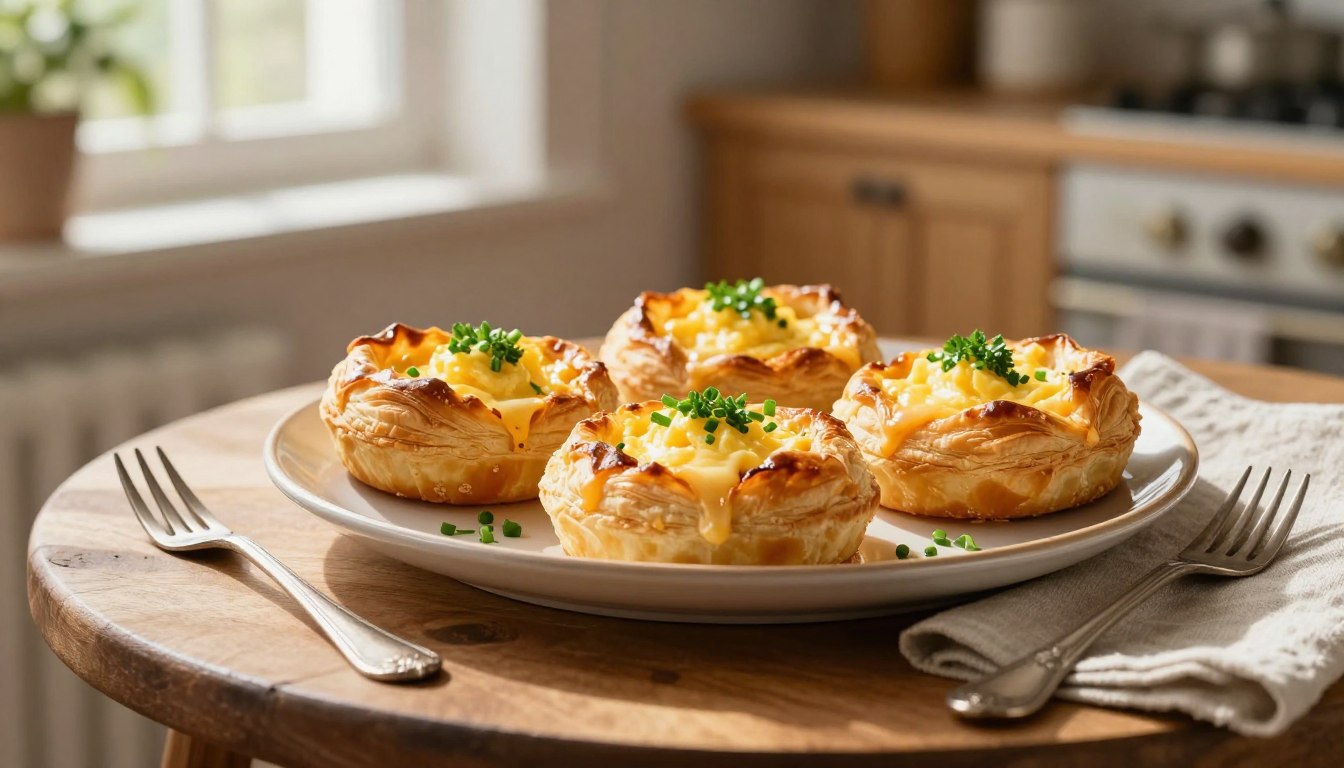
How to Make Puff Pastry Breakfast Tarts

Waking up to the smell of fresh pastries is magical. Watching them turn golden in the oven is amazing. Making puff pastry breakfast tarts at home is easy and quick.
Creating these tarts feels like a secret. They look like they came from a fancy bakery. Your family and guests will be impressed. Making them is simpler than you think.
Homemade breakfast tarts mix flaky layers with tasty fillings. You can use eggs, cheese, bacon, and veggies. It tastes like you spent hours cooking, but it’s quick.
This guide will teach you everything. You’ll learn how to pick the right puff pastry. You’ll get tips for baking that ensure flaky results. These tarts are perfect for brunch or a special breakfast.
Key Takeaways
- Store-bought puff pastry makes homemade breakfast tarts achievable for any skill level
- Proper thawing and handling of puff pastry ensures flaky, crispy results
- Simple egg wash and scoring techniques create professional-looking breakfast tarts
- Easy breakfast pastry recipes allow for endless filling combinations
- Par-baking helps you achieve perfectly cooked eggs and crispy pastry simultaneously
- Puff pastry breakfast tarts can be made ahead and reheated for busy mornings
- Individual tarts impress guests while serving multiple people efficiently
Why Puff Pastry Breakfast Tarts Are the Perfect Morning Solution
Puff pastry breakfast tarts are a mix of great looks and easy making. They’re perfect for any event, from weekend brunches to weekday breakfasts. You can make something that looks like it came from a restaurant in no time.
These tarts are versatile and turn simple ingredients into something amazing. You can make them in under an hour, which is great for busy mornings. Plus, your guests will think you spent all morning cooking when it was really quick.
Flaky Layers Meet Savory Breakfast Flavors
The flaky texture of these pastries is incredibly satisfying. Paired with eggs, cheese, and meats, they offer a special breakfast experience. The outside is golden and crispy, while the inside is soft and flaky.
You can choose your favorite fillings for these pastries. Options include:
- Caramelized onions with goat cheese
- Crispy bacon and sharp cheddar
- Sautéed spinach with feta
- Roasted mushrooms and gruyere
- Smoked salmon with dill cream cheese
Each filling brings out the pastry’s best qualities and adds unique flavors.
Restaurant-Quality Results with Minimal Effort
The best puff pastry breakfast recipe is easy to make. You use store-bought pastry, so you just assemble and bake. This method keeps the taste and look authentic without the hassle.
These tarts are great for parties because they’re easy to serve. Guests can pick up their own, which makes things simple for you. You can relax and enjoy the party instead of worrying about serving food.
“These tarts look super fancy, like you did all this crazy work, but they’re actually simple and quick to make.”
Your tarts will impress everyone, but you won’t stress about making them. Using store-bought ingredients and simple steps means anyone can make these, no matter their baking skills.
Essential Ingredients for Puff Pastry Breakfast Tarts

Before you start making easy puff pastry breakfast tarts with eggs and cheese, gather your ingredients. Having everything ready makes the process smooth and enjoyable. The right combination of components transforms simple puff pastry into a restaurant-quality breakfast dish that tastes homemade.
Your foundation starts with quality puff pastry sheets. You’ll need one to two sheets to create six individual tarts. Store-bought frozen puff pastry works wonderfully and saves you time. Fresh puff pastry from the bakery section also delivers excellent results.
For your breakfast tart with eggs and cheese, gather these core ingredients:
- Eggs — six to seven total (some for the filling, some for egg wash)
- Cheese — half to one cup shredded (sharp cheddar, gruyere, feta, or mozzarella work best)
- Proteins — bacon, prosciutto, or cooked Italian sausage
- Vegetables — asparagus, bell peppers, onions, kale, or arugula
- Seasonings — salt, pepper, fresh herbs like parsley or chives
Choose cheese that melts well without becoming overly greasy. Sharp cheddar and gruyere provide bold flavor without overwhelming the delicate pastry. Skip extra-soft varieties like brie in the filling.
Use pre-cooked proteins since your baking time is short. Raw bacon or sausage won’t cook through properly. Cook your chosen protein ahead and chop it into bite-sized pieces.
Fresh vegetables add nutrition and color to your breakfast tart with eggs and cheese. Chop them small so they cook evenly. Raw vegetables work fine since the oven heat softens them during baking.
Optional flavor boosters include Everything Bagel Seasoning, fresh pesto, hot sauce, or dried herbs. These elevate your easy puff pastry breakfast tarts with eggs and cheese from good to extraordinary.
Choosing Your Puff Pastry and Preparing It Properly
Success with frozen puff pastry recipes starts long before you turn on the oven. Choosing the right dough and thawing it correctly is key. You’ll find frozen puff pastry in the freezer section of your grocery store. Brands like Pepperidge Farm and Pillsbury are reliable choices.
Getting your pastry ready requires patience and planning. The way you prepare your dough affects how it bakes. Let’s explore the best methods to thaw and work with your puff pastry.
Thawing Frozen Puff Pastry the Right Way
The most important rule about frozen pastry is simple: never work with it while frozen. Cold, hard dough will crack and tear when you try to unfold or roll it out, ruining your breakfast tart before baking even starts.
Follow these thawing methods based on your timeline:
- Overnight refrigerator method: Place your pastry sheet in the refrigerator 8 to 12 hours before use. This slow thaw allows even defrosting and actually improves rise during baking, giving you superior flakiness.
- Room temperature method: Leave the pastry on your counter for 20 to 30 minutes, depending on room temperature. This works when you’re short on time but need quick results.
- Quick thaw method: Use your microwave on low power in short 10-second bursts, checking between intervals. This requires close attention to avoid overheating.
Your pastry is ready when it unfolds easily without cracking but still feels cool and firm to the touch. Never let it become warm or overly soft, as this prevents proper layering during baking.
Working with Store-Bought Versus Homemade Dough
Store-bought frozen puff pastry is your secret weapon for creating restaurant-quality puff pastry breakfast tarts. You might worry that using store-bought dough is taking a shortcut, but professional chefs rely on it regularly. Pre-made pastry delivers consistent results and saves you hours of work without sacrificing quality.
| Aspect | Store-Bought Frozen Puff Pastry | Homemade Puff Pastry |
|---|---|---|
| Preparation Time | Minutes to thaw | Several hours or days |
| Skill Level Required | Beginner-friendly | Advanced baking skills |
| Consistency | Reliable, predictable results | Variable based on technique |
| Cost | Budget-friendly | Expensive ingredients |
| Flakiness Level | Excellent when thawed properly | Can be superior if made perfectly |
One sheet of standard puff pastry typically yields 6 individual breakfast tarts. Since boxes contain two sheets, you can double your batch or save the second sheet for another time. Store unused thawed pastry in the refrigerator for up to 3 days or refreeze it for future frozen puff pastry recipes.
Proper selection and preparation of your puff pastry sets the foundation for everything that follows. Take time to thaw correctly, and your pastry will reward you with beautiful texture and taste.
Step-by-Step Instructions for Making Breakfast Tarts

Making puff pastry breakfast tarts is easier than you think. First, preheat your oven to 400-425°F. Then, line a baking sheet with parchment paper. This simple step gets you ready to start.
Next, mix one egg with one tablespoon of water until smooth. This egg wash will make your tarts golden brown. Set it aside for later use.
Place your thawed puff pastry on the baking sheet. Roll it out to about 1.5 times its original size. Cut it into 6 equal rectangles using a sharp knife or pizza cutter. This makes transferring easier and prevents tears.
Now, work on the borders. Fold each rectangle’s edges inward by ¼ to ½ inch. Press them with a fork to seal. This creates a border that holds your fillings and looks good too.
The docking step is key. Use a fork to poke holes in the center of each rectangle. This prevents puffing in the middle, making room for your toppings and eggs.
| Step Number | Action | Time Required | Key Detail |
|---|---|---|---|
| 1 | Preheat oven and prepare baking sheet | 5 minutes | Use parchment paper for easy cleanup |
| 2 | Make egg wash | 2 minutes | Whisk 1 egg with 1 tablespoon water |
| 3 | Roll out puff pastry to 1.5x size | 3 minutes | Work on the baking sheet directly |
| 4 | Cut into 6 equal rectangles | 3 minutes | Use sharp knife or pizza cutter |
| 5 | Create and seal borders with fork | 4 minutes | Fold edges inward ¼ to ½ inch |
| 6 | Dock centers with fork | 3 minutes | Poke holes to prevent puffing |
| 7 | Brush borders with egg wash | 2 minutes | Use pastry brush for even coverage |
| 8 | Add toppings and create wells | 5 minutes | Leave spaces for eggs |
| 9 | Crack eggs into wells and season | 3 minutes | Add salt and pepper to taste |
Brush the borders with egg wash. Sprinkle cheese, proteins, and vegetables across each tart, leaving wells for eggs. Crack an egg into each well and season with salt and pepper.
For a different look, stack two pastry sheets together. Brush one with egg wash before adding the second. Score the borders without cutting all the way through. This creates a stunning presentation when baked.
For more breakfast ideas, check out techniques for fluffy breakfasts that go well with your tarts. Don’t worry about small mistakes. The more you make, the better you’ll get.
- Assemble tarts on the baking sheet to avoid messy transfers
- Fork-crimp your borders for both function and decorative appeal
- Always dock the center to prevent unwanted puffing
- Leave intentional wells for your eggs to sit in
- Season generously with salt and pepper
Creating the Perfect Egg Wash and Scoring Technique
Two key techniques make breakfast tarts stand out. Learning how to apply egg wash and score pastry is crucial. These skills are easy to pick up but make a big difference in your baking.
Making an egg wash is simple. Mix one egg with one tablespoon of water until it’s smooth. This mixture gives your pastries a golden, shiny look. Brush it on the pastry edges before baking.
Next, you’ll learn about creating a frame and avoiding air pockets. These steps are essential for flaky, perfect tarts.
How to Score Borders Without Cutting Through
Scoring makes a beautiful border for your tart. Use a sharp knife to avoid tearing the dough. Cut a ½-inch border around each pastry rectangle.
It’s important to cut through the top layer or both layers without going all the way to the bottom. This creates a frame that puffs up while the center stays flat.
- Position your knife at a 45-degree angle for clean cuts
- Apply steady, confident pressure without sawing motions
- Work from one corner to create a complete rectangle
- Keep your hand stable by bracing your wrist
Docking the Center to Prevent Puffing
Docking involves poking small holes in the center with a fork. This lets steam out during baking, avoiding big air bubbles. Poke about 8-10 times per tart with firm pressure.
Don’t pierce all the way through to the pan. You want to control the venting, not make holes in your pastry.
For more on egg wash and scoring, check out detailed visual tutorials by professionals.
| Technique | Purpose | Application Method | Impact on Final Result |
|---|---|---|---|
| Egg Wash | Golden color and adhesion | Brush on borders before baking | Glossy, professional appearance |
| Scoring Borders | Create raised frame | Cut ½-inch border without cutting through | Dramatic puffing around edges |
| Docking Center | Control steam escape | Poke 8-10 times with fork | Flat, sturdy base for fillings |
These steps work together to create the perfect tart. The egg wash adds shine, scoring helps the pastry rise, and docking keeps the base stable. Master these, and your tarts will be as good as any bakery’s.
Filling Combinations That Work Best
The secret to great puff pastry breakfast ideas is picking the right fillings. You want ingredients that work well together. This way, your tarts will have flavors that pop against the flaky pastry.
Begin with your protein. Bacon works well because it cooks more in the oven. Prosciutto adds elegance when crunched on the pastry. Italian sausage, ham, chorizo, and turkey bacon each bring unique tastes.
Vegetables need different prep methods. Asparagus should be blanched for a minute. Sautéed greens like kale and chard are great. Bell peppers and onions can be raw or lightly cooked. Fresh arugula is best as a topping after baking.
When trying simple brunch pastry ideas, remember mushrooms and cherry tomatoes add flavor and texture easily.
| Ingredient Category | Best Options | Preparation Tips |
|---|---|---|
| Proteins | Bacon, prosciutto, Italian sausage, ham, chorizo, turkey bacon | Par-cook bacon; fully cook sausage; use prosciutto as-is |
| Vegetables | Asparagus, bell peppers, onions, mushrooms, tomatoes, arugula, greens | Blanch asparagus; dice peppers/onions; add arugula after baking |
| Cheeses | Sharp cheddar, gruyere, feta, mozzarella, goat cheese, parmesan, Swiss | Avoid thick creamy cheeses; use moderate amounts |
| Sauces | Pesto, aioli, tomato sauce, salsa verde, hot honey | Spread thin layer on pastry base before toppings |
| Seasonings | Everything Bagel Seasoning, sesame seeds, fresh herbs, red pepper flakes | Sprinkle before baking; add fresh herbs after baking |
Choosing the right cheese is key. Sharp cheddar, white cheddar, and gruyere melt well. Feta, mozzarella, goat cheese, and parmesan each add something special. But avoid thick, salty cheeses like brie.
Adding sauces can enhance your tarts. A thin layer of pesto, aioli, tomato sauce, or salsa verde on the pastry base adds flavor. For breakfast meal prep ideas, these sauces make your tarts taste like they’re from a restaurant.
Proven Flavor Combinations to Try
These tested combinations deliver reliable results every time you bake:
- Asparagus & Prosciutto – Pair blanched asparagus with prosciutto, sharp white cheddar, and Everything Bagel Seasoning for a sophisticated brunch option
- Bacon & Cheddar – Combine par-cooked bacon with sharp cheddar and fresh chives for a classic that never disappoints
- Italian Sausage & Peppers – Mix cooked Italian sausage with diced bell peppers, onions, and a cheddar-gruyere blend, topped with arugula after baking
- Ham & Broccoli – Layer ham with blanched broccoli florets and mild cheddar for a lighter option
- Chorizo & Bell Pepper – Combine spicy chorizo with red bell peppers and pepper jack cheese, finished with fresh cilantro
Feel free to mix and match ingredients based on what you have. Your creativity will lead to signature combinations your family will love. Fresh herbs like parsley, basil, chervil, and green onions add a special touch. Don’t be afraid to add crushed red pepper flakes or hot sauce for extra heat.
Baking Tips for Golden, Flaky Puff Pastry Breakfast Tarts
To make your sheet pan breakfast tarts golden and flaky, pay close attention to your oven. The baking process is where all your prep work comes together. Success depends on the right temperature, timing, and knowing when they’re done.
Most recipes suggest an oven temperature between 400°F and 425°F. 400°F is the standard for reliable results.
There are two main ways to make quick breakfast pastry ideas. The single-stage method bakes everything together for 15–20 minutes. The multi-stage approach gives you more control over your final results. Each method has its benefits, depending on what you want and how much time you have.
Par-Baking for Success
Par-baking means baking your pastry shells partway before adding fillings. This technique gives you better control over your finished tarts. Start by preheating your oven to 400°F. Bake your empty pastry shells for 13–15 minutes until they rise significantly and turn light golden brown.
Remove the partially baked shells from your oven. Use the back of a spoon to gently press down the puffed centers and create a flat surface for your fillings. Add your cheese, bacon, and other toppings at this point. Return the tarts to the oven for another 13–15 minutes. The sheet pan breakfast tarts method ensures even heating across your entire batch when you assemble everything on the baking sheet you’ll use.
- First bake: 13–15 minutes until golden and risen
- Press down centers gently after first bake
- Add cheese and proteins
- Second bake: 13–15 minutes for egg whites
- Final stage: adjust based on yolk preference
Achieving Runny Versus Firm Egg Yolks
The timing of your final bake stage determines your egg yolk consistency. This is where quick breakfast pastry ideas become personalized to your taste. If you want runny, jammy yolks, bake for just 5–6 minutes after adding the eggs. Slightly set yolks need 7–8 minutes. Fully cooked, firm yolks require 8–10 minutes of baking time.
Watch your tarts carefully during the final stage. Your egg whites should transition from clear and jiggly to completely opaque and set. Your pastry edges should be deep golden brown, not pale yellow. If your edges brown too quickly while the eggs still cook, cover the tarts loosely with aluminum foil to slow the browning process.
| Yolk Consistency | Baking Time (Final Stage) | Egg White Appearance | Best For |
|---|---|---|---|
| Runny/Jammy | 5–6 minutes | Just set, barely opaque | Dipping and rich flavor |
| Slightly Set | 7–8 minutes | Fully opaque, slight jiggle | Balanced preference |
| Fully Cooked | 8–10 minutes | Completely set, no movement | Food safety concern, firm texture |
Remember that ovens vary in temperature. Your oven might run hotter or cooler than the dial suggests. Start checking your tarts at the lower end of the recommended time. You can always bake longer, but you cannot undo overcooked eggs. Assemble your tarts directly on the baking sheet to avoid messy transfers. Avoid overfilling because excess weight prevents the bottom from crisping properly and creates a soggy pastry base that no one enjoys.
Creative Variations and Customization Ideas
Your puff pastry breakfast tarts are a blank canvas waiting for your personal touch. This recipe is incredibly flexible. You can make dozens of different creations by swapping ingredients and adjusting flavors.
Playing with proteins and vegetables is a great way to customize your tarts. Try turkey bacon and sausage links for a classic taste. Add chorizo for a spicy kick or ham for a classic touch. For the vegetable layer, swap between mushrooms, fresh tomatoes, various greens, and roasted vegetables.
Cheese selection makes a big difference in flavor. Try pepper jack for heat, mozzarella for mildness, goat cheese for tanginess, or Swiss for a subtle nuttiness. You can also skip cheese and use sauces instead. Spread pesto, aioli, tomato sauce, or salsa verde as your base layer.
For sweet breakfast tarts, try fruit filled puff pastry options. Layer berries, sliced apples, or stone fruits with a sprinkle of cinnamon sugar. Add chocolate-hazelnut spread with sliced bananas for an indulgent morning treat.
| Variation Type | Key Ingredients | Best For |
|---|---|---|
| Mediterranean Style | Feta cheese, sun-dried tomatoes, fresh basil | Light breakfast or lunch |
| Spicy Version | Chorizo, pepper jack cheese, hot sauce drizzle | Bold flavor lovers |
| Vegetarian Option | Roasted vegetables, mushrooms, Swiss cheese | Meat-free diets |
| Sweet Breakfast Tarts | Fresh berries, cinnamon sugar, chocolate-hazelnut | Dessert-style breakfasts |
| Healthy Breakfast Tarts with Puff Pastry | Turkey bacon, leafy greens, low-fat cheese | Lighter eating goals |
Size matters when planning your spread. Cut your puff pastry into smaller squares for mini tarts. These bite-sized versions let you offer multiple flavor combinations without overwhelming your guests.
Get creative with finishing touches. Drizzle hot honey after baking for sweet-and-savory contrast. Add fresh arugula dressed in lemon vinaigrette on top. Finish with a dollop of sour cream or crème fraîche. Sprinkle Everything Bagel Seasoning for unexpected texture and flavor.
- Use basil and chervil for Mediterranean flavors
- Add green onions for a fresh, mild onion taste
- Apply buffalo sauce for spicy breakfast excitement
- Layer fresh herbs right before serving
- Experiment with seasonal vegetables
Consider seasonal variations throughout the year. Spring brings asparagus and tender herbs. Summer welcomes tomatoes and basil. Fall calls for roasted butternut squash and sage. Winter pairs well with heartier ingredients like sausage and kale.
Don’t fear experimentation. Start with one new ingredient addition and build from there. Your signature breakfast tart is waiting to be created through your own creative combinations.
Storage and Reheating Instructions
After baking, your breakfast tarts need the right care to stay fresh. Cool them down completely before storing. This prevents moisture from making them soggy.
Plan ahead with your breakfast tarts. Store them in an airtight container in the fridge for 2-4 days. For longer storage, wrap each tart in foil or use freezer bags. This keeps them fresh for up to 2 months. Don’t forget to label the containers with the freezing date.
Reheating Your Breakfast Tarts the Right Way
Use your oven to reheat these tarts. Set it to 250-350°F. Heat them for 10-15 minutes until warm. Frozen tarts can go straight into the oven without thawing.
Avoid the microwave. It can make the pastry soggy. You want to keep that flaky texture.
| Storage Method | Temperature | Storage Duration | Best For |
|---|---|---|---|
| Airtight Container (Refrigerator) | 35-40°F | 2-4 days | Short-term storage and quick access |
| Aluminum Foil (Freezer) | 0°F or below | Up to 2 months | Long-term storage and meal prep |
| Freezer Bags (Freezer) | 0°F or below | Up to 2 months | Space-saving frozen storage |
| Toaster Oven Reheating | 250-350°F | 10-15 minutes | Restoring crispness and flakiness |
Reheating will firm up the egg yolk. These tarts are best enjoyed straight from the oven. They offer a crispy pastry and warm fillings.
Freeze baked tarts for quick breakfasts. Just pop one in the toaster oven for 15 minutes. It’s a gourmet breakfast without the hassle.
Conclusion
You now have all you need to make amazing puff pastry breakfast tarts. They look like they came from a pro bakery but are easy to make. Just use store-bought puff pastry and basic skills, and you’ll have great results in under an hour. Plus, you don’t need fancy tools or training to do it.
Start with classic combos like bacon-egg-and-cheddar or asparagus-prosciutto-cheddar. These will help you get the hang of it. Then, try your own unique versions. Your puff pastry desserts and brunch recipes can be as simple or creative as you like. Just remember to thaw the pastry right, score and dock it well, avoid overfilling, and bake at the right temperature.
These tarts are great for many occasions. Serve them at Easter brunch, impress guests at a dinner party, or enjoy them on a lazy weekend. You can make bakery-quality breakfasts whenever you want. Your family will be impressed, and you’ll feel proud of serving food from your kitchen. Save this guide for future inspiration.
The mix of flaky pastry and savory breakfast flavors is unbeatable. You have the knowledge and confidence to make these tarts your own. Get baking, adapt the recipe to your taste, and enjoy every bite. Sharing something you made yourself is truly special.