The Best Easy Beer Battered Fish Recipe
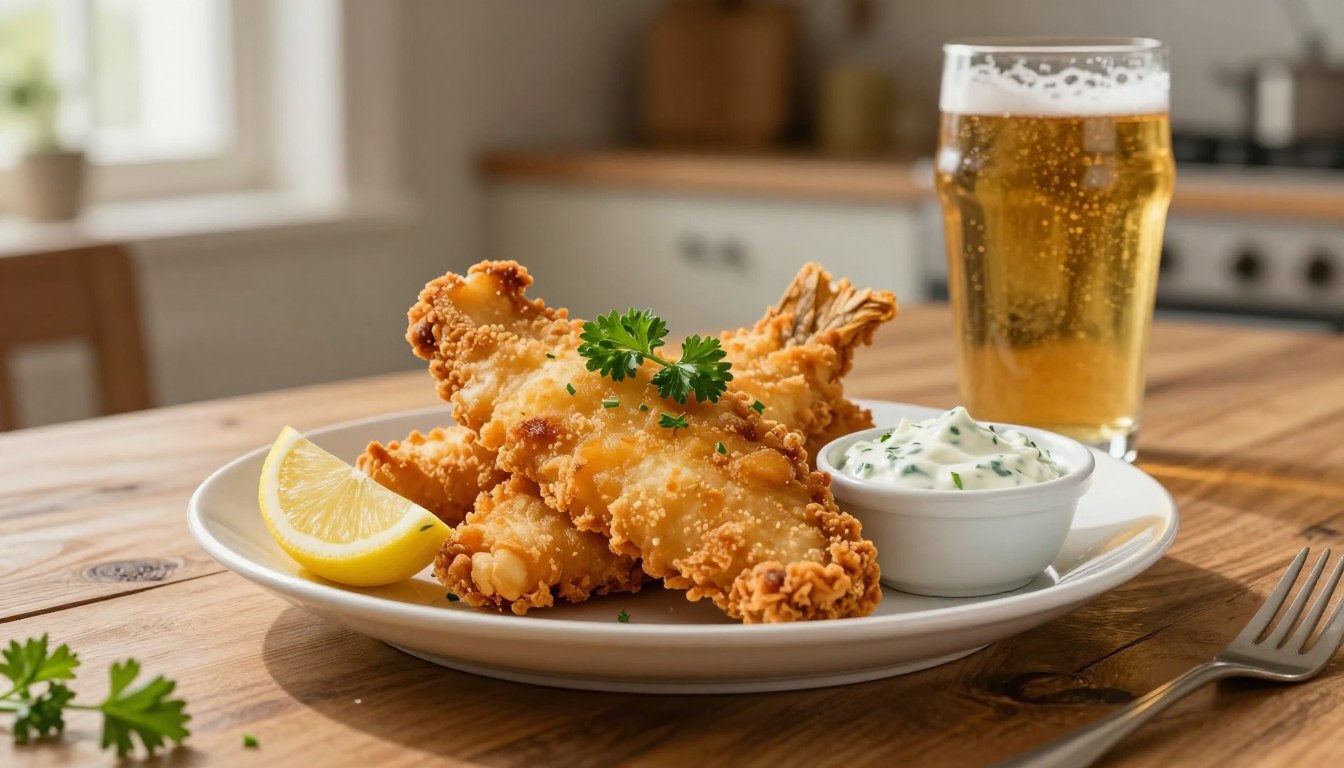
There’s something magical about biting into fish with a golden, crispy exterior. It shatters under your teeth, revealing tender, flaky fish inside. This feeling comes from a simple secret: beer battered fish. If you’ve ever enjoyed fish and chips at your favorite Canadian pub or restaurant, you know that feeling.
You can create that same restaurant-quality crispiness in your own kitchen. Your friends and family will be amazed when you serve them perfectly fried beer battered fish. The crispy coating stays crunchy for minutes, and the taste beats most takeout options.
This recipe takes only about 22 minutes from start to table. You don’t need fancy equipment or professional cooking skills. Whether you’re planning a casual weeknight dinner or impressing guests at your next gathering, this easy beer battered fish recipe delivers results every time. The combination of cold beer, rice flour, and simple technique creates magic on your stovetop.
Key Takeaways
- Beer battered fish gets its crispy coating from ice-cold beer, rice flour, and baking powder working together.
- You can use white fish like cod, tilapia, snapper, or flathead for the best results.
- The batter stays crispy for 15 to 20 minutes after frying, perfect for serving to your family.
- You need oil heated to 190°C (375°F) to achieve that golden, crunchy exterior everyone loves.
- This recipe feeds four people and takes just 22 minutes of total prep and cooking time.
- Your leftover oil can be reused two more times when properly cooled and strained.
- For healthier alternatives, simple fish recipes offer pan-frying and air-frying options with minimal oil.
What Makes Beer Battered Fish So Irresistible
Beer battered fish is a favorite in Canada and worldwide. It’s a mix of science and skill that makes it special. When you dip fish in beer batter, it turns into a dish fit for a restaurant.
The dish is loved for more than just its taste. It gets a golden, crunchy outside that stays crispy. The inside stays tender and juicy. This makes every bite a delight.
The Science Behind the Perfect Crispy Coating
The coating’s crispiness comes from moisture escaping during frying. Water in the batter turns to steam. This steam creates tiny pockets that make the coating crunchy.
The coating works best as a barrier between the hot oil and fish. It keeps the fish moist while the outside gets crispy. The proteins in flour and eggs bond when heated, trapping steam bubbles.
Why Beer Creates a Light and Airy Batter
Beer is the key to a light and airy batter. Here’s how:
- Beer’s carbonation adds bubbles to the batter
- These bubbles expand in hot oil
- This creates an airy, delicate texture
- Alcohol in beer evaporates quickly during frying
- This leaves behind tiny air pockets
The carbonation acts like a natural leavening agent. Your batter rises and becomes fluffy. This makes the coating crispy outside and light inside. It’s why beer battered fish tastes better than regular fried fish.
Essential Ingredients for Easy Beer Battered Fish Recipe
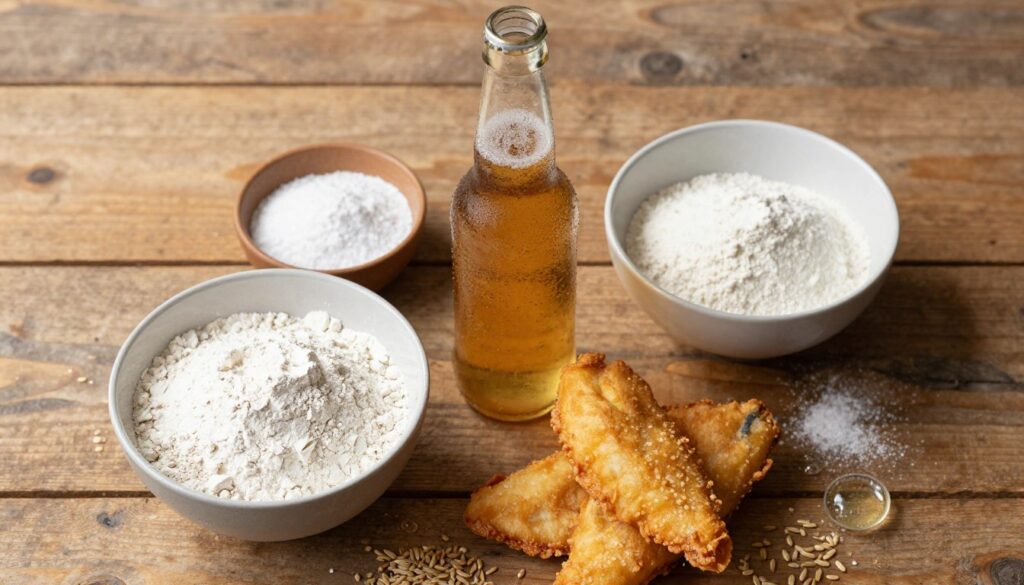
Creating crispy, golden beer battered fish starts with the right ingredients. Mix dry components with very cold beer for magic. You’ll need all-purpose flour as your base, but adding rice flour or cornstarch makes it special.
The right ratio is key. Use ¾ cup all-purpose flour and ¼ cup rice flour or cornstarch. Add 1-1¼ teaspoons baking powder, ½-1 teaspoon salt, and 1-1¼ cups cold beer. This mix stays crispy for 15+ minutes. Without rice flour, your batter will be soggy fast.
Baking powder is your secret ingredient. It adds lift and airiness, working with beer’s carbonation. Don’t add an egg to your batter. Eggs make it chewier, not crispy. You’ll need extra flour for dredging before dipping in batter.
Your Ingredient Checklist
- ¾ cup all-purpose flour
- ¼ cup rice flour or cornstarch for extra crispiness
- 1-1¼ teaspoons baking powder
- ½-1 teaspoon salt
- 1-1¼ cups very cold beer
- Additional flour for dredging
When cooking, knowing versatile fish recipes helps. Keep everything cold and measure carefully for top-notch results at home.
Choosing the Right Fish for Your Beer Batter
The fish you pick is key to making great beer battered fish at home. Look for firm, white-fleshed fish with mild flavor. This ensures your batter stays crispy while the fish inside stays tender.
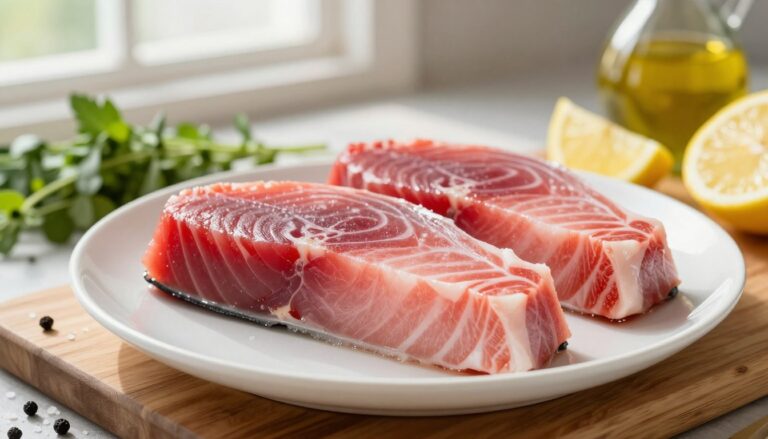
Some fish don’t work well with beer batter. Fish like tuna and swordfish dry out too quickly. Thin fish like flounder and sole get too fragile. Oily fish like salmon make the batter too rich.
Best White Fish Varieties for Frying
In the US, cod and haddock are top picks for beer battered fish. They have firm texture and mild flavor that pairs well with the batter. Halibut adds a sweet taste and large flakes that look great when fried. Tilapia is affordable and works well in batter. In the Southeast, catfish is a favorite.
Canadian seafood fans like pollock and hake as good alternatives. The UK prefers cod and haddock, along with whiting and plaice. For a premium taste, try barramundi and snapper. Flathead and basa are great for frying. Sea bass, mahi, grouper, and ling also fry up well.
According to the best beer battered fish recipe, white fillets are best. Halibut and grouper have large flakes that shine when fried. These fish keep their shape while cooking.
| Fish Type | Flavor Profile | Texture | Best Region |
|---|---|---|---|
| Cod | Mild and sweet | Firm, large flakes | North America, UK |
| Haddock | Delicate, slightly sweet | Firm, medium flakes | North America, UK |
| Halibut | Sweet, buttery | Very firm, large flakes | Pacific Canada, US |
| Tilapia | Mild, neutral | Firm, flaky | Widely available |
| Catfish | Mild, slightly sweet | Firm, tender | Southeast US |
| Barramundi | Mild, clean | Firm, moist | Australia |
| Hake | Mild, delicate | Firm, flaky | UK, Australia |
| Snapper | Sweet, tender | Firm, fine flakes | Australia |
Fresh vs Frozen Fish Fillets
Fresh fish is great when you can get it. Cold-water fish like pollock stay fresh when chilled. Whiting and other premium fish taste best when fresh.
Don’t overlook frozen fish. Properly frozen fillets work well for beer batter. The key is to dry them completely after thawing. This prevents moisture from ruining your crispy coating.
Fillet thickness matters for cooking success. If fillets are over 1.25 inches thick, cut them in half. This ensures even cooking and a better fish-to-batter ratio. Thinner fillets cook faster, so your batter will be golden by the time they’re done.
- Fresh fish is ideal for best flavor and texture
- Frozen fish works well when completely thawed and dried
- Pat fillets dry with paper towels before battering
- Slice thick fillets horizontally into thinner pieces
- Firm, white-fleshed varieties work best
- Avoid oily or delicate fish varieties
Selecting the Perfect Beer for Your Batter
Many think the type of beer is key for beer battered fish. But, the truth is simpler. The alcohol in the beer cooks off, and the flavor mellows during frying. So, you don’t need to spend a lot on fancy beers for your batter.
The beer’s main job is to add carbonation. This makes the batter light and puffy, giving it a crispy coating. The bubbles in the batter create tiny air pockets. These pockets make your fish taste like it’s from a restaurant.
Since flavor isn’t the main goal, save the craft IPAs for drinking. Use an affordable, light-colored beer for frying. Look for standard lagers or pilsners at your local store. Brands like Molson Canadian or Labatt Blue are good choices and won’t break the bank.
Temperature is more important than anything else. Your beer must be ice cold. Chill it in the fridge for at least 2 hours before use. Some even freeze their beer for 15-20 minutes before making batter. This cold temperature is key for that crispy texture.
Don’t worry about the alcohol if you prefer. Ice-cold seltzer water or club soda works great. Just add a bit more baking powder to make up for the yeast. Non-alcoholic beer is also a good choice, offering similar results without alcohol.
- Grab whatever light-colored beer is on sale
- Keep it chilled for at least 2 hours
- Use seltzer or club soda as an alternative
- Make sure everything stays ice cold
Your beer choice won’t ruin your dish. What’s important is keeping it ice cold. This way, you can make perfect pub-style fried fish.
Step-by-Step Instructions for Crispy Beer Battered Fish
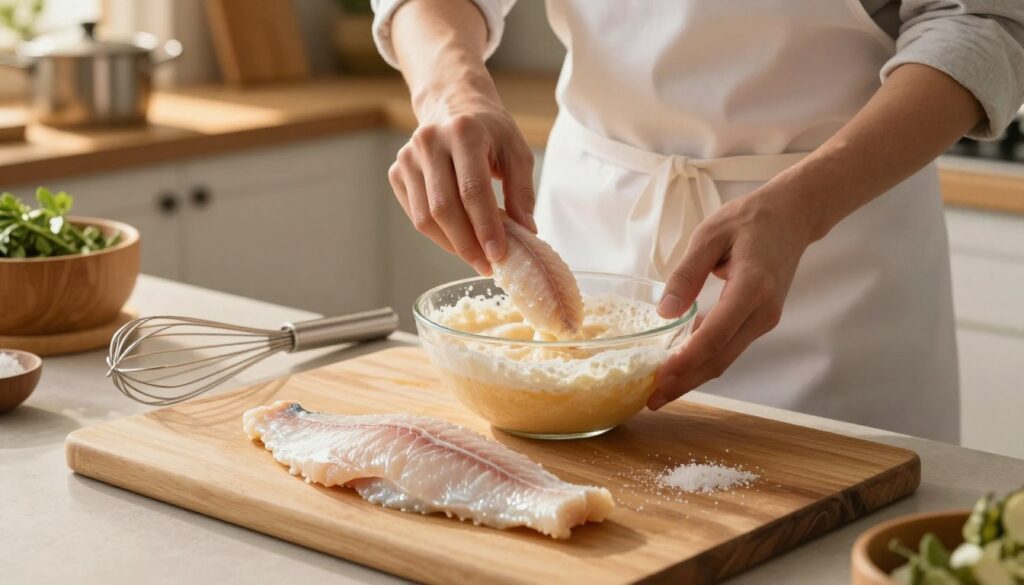
Getting crispy beer battered fish right is all about precision and timing. This guide will walk you through each step, from preparing the fish to achieving that perfect golden finish. You’ll learn the exact techniques that make your fish crispy and delicious, just like in a restaurant.
Preparing Your Fish Fillets
Begin by patting the fish fillets dry with paper towels. This step is crucial because moisture stops the batter from sticking. Spend 20-30 seconds per fillet, using multiple towels if needed. Any moisture can cause oil splatters and ruin your coating.
Season both sides of the fish with salt and pepper. Cut the fillets into your desired size. Smaller batons cook faster and have more crispy surface area. If the fillets are thick, slice them horizontally for even cooking.
Next, place rice flour or extra flour in a shallow bowl for dredging. This initial coating is key because it helps the batter stick to the fish. Without it, the batter will fall off during frying.
Mixing the Perfect Beer Batter Consistency
Timing is everything when making batter. Make it right before frying, not ahead of time. Cold, fizzy batter gives you that light and airy texture everyone loves.
In a bowl, whisk together flour, rice flour or cornstarch, baking powder, and salt. Add cold beer gradually while whisking gently. Aim for a batter that coats the back of a spoon but still runs off easily.
Remember, don’t overmix. Whisk only 5-10 seconds to mix everything. Lumps are okay and even desirable. Overmixing makes the coating tough instead of light and crispy.
| Batter Component | Measurement | Purpose |
|---|---|---|
| All-purpose flour | 1 cup | Base structure and coating |
| Rice flour or cornstarch | 3 tablespoons | Absorbs moisture, prevents gluten |
| Baking powder | 2 teaspoons | Creates lift and airiness |
| Salt | 1 teaspoon | Enhances flavor |
| Cold beer | 1 cup | Carbonation creates crispy coating |
Achieving the Ideal Frying Temperature
Temperature control is crucial for golden, crispy results. Heat oil to 350-375°F (190°C) in a large heavy pot or Dutch oven. Heavy pots keep the temperature steady better than thin ones. You need at least 1-2 inches of oil depth for even cooking.
Use a candy thermometer or instant-read thermometer to check the temperature. Aim for about 360°F. Oil that’s too cool (below 340°F) makes greasy, soggy fish. Oil that’s too hot (above 380°F) burns the outside before the inside cooks.
Once your oil is ready, fry in batches. Dust fish with flour and shake off excess. Dip fish in batter to fully coat, letting excess drip off briefly. Carefully lower into hot oil away from you, one piece at a time. Don’t overcrowd the pot because too many pieces drop the oil temperature.
Fry for 3-6 minutes depending on thickness, flipping halfway through, until deep golden brown. Remove with a slotted spoon, letting oil drip off, then drain on a wire rack or paper towels. The secret to crispy, golden fish is removing all excess moisture both before and after cooking.
- Pat fillets dry before seasoning and cutting
- Keep batter cold and whisk gently to avoid overdevelopment
- Monitor oil temperature constantly with a thermometer
- Fry one piece at a time without overcrowding
- Drain immediately on a wire rack for maximum crispiness
Serve immediately for the best crispiness. The coating stays crispy for 15-20 minutes, but it’s always best fresh from the oil. This best beer batter recipe delivers restaurant-quality results every single time you follow these steps carefully.
Pro Tips for Restaurant-Quality Results at Home
To get that perfect crispy beer battered fish at home, pay close attention to detail. The key is in temperature control, timing, and technique. Start by keeping everything ice cold. Your beer should be ice cold, and on warmer days, chill your batter bowl and flour in the freezer for 15-20 minutes before mixing. This cold start is crucial for restaurant-quality fish.
Timing is key when mixing your batter. Use it right away—don’t let it rest. Resting can make the coating heavy and dense, not light and crispy. Fresh batter gives you the best texture.
When mixing, don’t overdo it. Overmixing activates gluten, making the coating tough. A few small lumps are okay and actually help.
Temperature Control and Oil Management
Get a reliable instant-read thermometer and use it all the time. Keep the oil at 350-375°F for the best results. A heavy-bottomed pot helps with even heat and keeps the temperature steady when adding cold fish.
Don’t overcrowd the pot when frying. Working in batches is better. Overcrowding lowers the oil temperature and prevents crispiness. You’ll end up with greasy, pale fish instead of golden perfection.
The Double-Fry Method for Serving Crowds
Professional kitchens use the double-fry method. Here’s how it works:
- Fry all your fish at 350°F for 2.5 minutes until golden but not deep golden
- Drain and cool completely
- Increase oil temperature to 390°F
- Fry again for 1 minute until deep golden and piping hot
This method lets you cook all fish ahead and serve it hot. Your coating becomes less greasy and more crispy on the second fry.
Draining and Seasoning Strategies
Use a wire rack for draining instead of paper towels. Paper towels trap oil, making the bottoms soggy. A wire rack over a baking sheet prevents this.
Season at every layer for maximum flavor:
- Lightly salt your fish before coating
- Season your batter mixture
- Sprinkle flaky salt immediately after frying
For authentic British pub flavor, fry in beef tallow instead of vegetable oil. This traditional approach adds incredible depth and makes the coating even crisper. These professional techniques will make your home cooking impress every guest.
Serving Suggestions and Traditional Accompaniments
Your beer battered fish needs the right sides and sauces to complete the meal. Serving it well can turn a simple dinner into a memorable one. Whether you prefer authentic British pub style or a creative twist, the right accompaniments enhance your dish’s flavors.
Classic Fish and Chips Pairings
For authentic fish and chips, nothing beats fish with French fries or chips. Double-frying potatoes makes them fluffy inside and crispy outside. This pairs perfectly with your golden-brown fish for a comforting meal.
The British way includes malt vinegar over everything. This tangy vinegar adds brightness to the rich fish. Mushy peas are a great side, offering a creamy contrast to your crispy meal.
Looking for other sides? Consider these excellent options:
- Coleslaw, specially vinegar slaw for added tang
- Hush puppies for Southern American style
- Parmesan truffle fries for something upscale
- Baked potato wedges as a lighter option
Homemade Tartar Sauce and Dipping Options
Tartar sauce, while not traditional in the UK, is loved elsewhere. It’s tangy, creamy, and pairs well with fried fish. Making it at home is easy: mix mayonnaise with pickles, lemon, and herbs.
You have many dipping choices beyond tartar sauce:
| Sauce Option | Flavor Profile | Best For |
|---|---|---|
| Lemon wedges | Bright and citrusy | Cutting through richness |
| Cocktail sauce | Tangy with horseradish kick | Classic seafood pairing |
| Aioli (garlicky mayonnaise) | Creamy and aromatic | Seafood dipping |
| Remoulade sauce | Spicy and complex | Adventurous eaters |
| Yogurt mixed with lemon | Light and fresh | Healthier alternative |
| Ketchup or tomato sauce | Sweet and tangy | Family favorites |
| Jalapeño hot sauce | Spicy and bold | Heat lovers |
Lemon wedges are always welcome—a squeeze of citrus cuts through richness. For any seafood dipping sauce, you’re choosing quality and flavor.
Try a lighter option with yogurt mixed with lemon and herbs. This refreshing sauce pairs well with your crispy fish without the heaviness of mayo.
Get creative by cutting your fried fish into pieces. Serve in warm tortillas with cabbage, pico de gallo, and avocado for amazing fish tacos. This turns your leftovers into a new meal.
Finish your fish dinner with traditional British desserts like sticky toffee pudding or treacle tart. These sweet treats are the perfect end to your seafood meal. Your homemade beer battered fish dinner is now a complete pub-style experience that will impress everyone at your table.
Storage and Reheating Tips for Leftover Fried Fish
Your homemade beer battered fish tastes best when it’s fresh and hot. Leftovers can still be great if you know how to store and reheat them. The secret is to keep that crispy coating intact.
Keep your leftover fried fish in an airtight container in the fridge for up to three days. Use paper towels between layers to soak up moisture. This keeps your fish from getting soggy.
The Right Way to Reheat Your Fish
Never use the microwave to reheat your beer battered fish. It will make the coating soggy and rubbery. Microwaves create steam, which ruins crispiness.
Instead, reheat your fish in the oven. Set your oven to 375°F and place the fish on a wire rack over a baking sheet. This allows air to circulate and prevents a soggy bottom. Heat for 10-15 minutes until the fish is hot and the coating is crispy again.
You can also use an air fryer. Fry at 375°F for 5-8 minutes. This method is great for keeping the fish crispy.
Planning Ahead for Parties and Groups
You can’t make this recipe ahead for a party. Fried fish loses quality when reheated. For a crowd, use the double-fry method to cook ahead and finish when ready.
Never reuse leftover batter. It must be made fresh for safety and to keep it effective. The good news is, this recipe is quick and easy to make fresh whenever you want.
- Store in airtight containers for up to three days
- Use paper towels to absorb moisture between layers
- Reheat at 375°F in your oven for 10-15 minutes
- Try an air fryer for 5-8 minutes for crispy results
- Avoid the microwave at all costs
- Always mix fresh batter for each cooking session
Conclusion
You now have all the tools to make amazing fish and chips at home. The key techniques are simple but powerful. Keep your beer ice cold for temperature shock when the fish hits the oil.
Add rice flour or cornstarch to your batter for lasting crispiness. Maintain proper oil temperature between 350-375°F with a reliable thermometer. Avoid overmixing the batter, and use it immediately after combining your ingredients.
These small details make all the difference. Your ingredient choices matter less than your technique. Any firm white fish like cod, haddock, or pollock works beautifully for this recipe.
Any light-colored beer will do the job perfectly. You don’t need specialized equipment or hard-to-find ingredients. A heavy pot, a thermometer, and basic pantry staples are all you really need.
Fry in uncrowded batches to keep oil temperature stable. The crispy, golden coating shatters with each bite to reveal tender, flaky fish inside. That’s real comfort food at its finest.
Whether you’re making this for a casual weeknight dinner or a special gathering, this beer battered fish delivers impressive results. Once you master this technique, you’ll never need disappointing takeout again.
Your kitchen is about to become the best fish and chips spot in town. Grab your ingredients, heat up that oil, and get ready to experience the satisfaction of creating perfect fried fish at home.