The Best Meaty Vegan Bolognese with TVP (No Lentils)
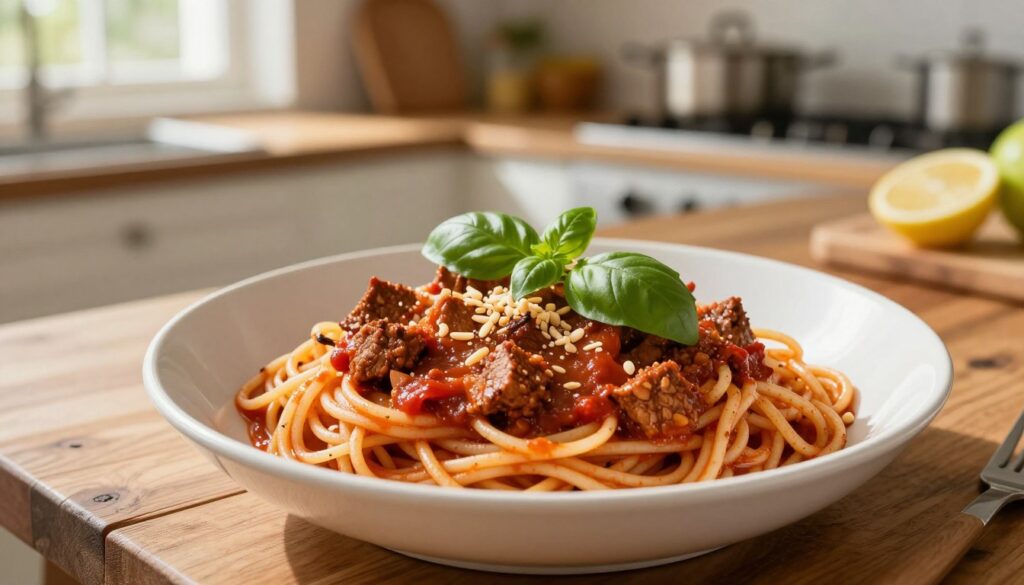
Have you ever tried vegan pasta sauces that tasted more like tomato soup? They lacked the real texture and flavor of a true bolognese. You wanted something that felt like real comfort food, not a compromise.
This vegan bolognese with TVP is different. It uses texturized vegetable protein for a meaty texture. The taste is rich, savory, and full of plant-based protein.
This sauce is special because it honors Italian tradition. It starts with a sofrito base of onion, carrot, and celery. It also has tomato paste and umami-boosting ingredients. Plus, cashew cream adds richness and balances the acidity.
Whether you’re a vegan looking for new comfort food or curious about plant-based options, this recipe is for you. It’s easy to make, delicious, and affordable. You can even pair it with plant-based protein strategies for a nutritious lunch.
Key Takeaways
- TVP creates an authentic meaty texture without lentils or mushrooms
- This vegan bolognese with TVP uses traditional Italian sofrito aromatics for depth
- The sauce is less acidic than standard tomato-based pasta sauces
- You get approximately 30g of plant-based protein per serving from TVP
- Cashew cream adds richness and balances the flavors naturally
- This hearty pasta sauce is budget-friendly and quick to prepare
- The meaty vegan bolognese works as a versatile meal component
What Makes This Vegan Bolognese with TVP So Special
This vegan bolognese recipe is unique. It offers real flavors and textures that make your meal satisfying. The mix of textured vegetable protein and Italian ingredients is special. It’s different from most plant-based versions.
Authentic Meaty Texture Without Lentils or Mushrooms
TVP gives a texture that lentils can’t. Lentils get mushy in sauce, losing their meaty feel. Mushrooms are tasty but don’t have the chewy texture of real meat.
TVP offers a meaty feel at a low cost. You don’t need expensive vegan meats for great results.
High Protein Plant-Based Comfort Food
Your sauce needs lots of protein. A quarter cup of dry TVP has 10 to 12 grams of protein. This is as much as tofu and more than many bean sauces.
- Quarter cup dry TVP provides 10-12g protein
- Comparable to tofu in protein content
- More protein per serving than traditional lentil sauces
- Creates genuinely filling, complete meals
Less Acidic Than Traditional Tomato Sauces
Many find marinara sauces too acidic. This recipe uses strained tomatoes in small amounts. Cashew cream adds a creamy touch, making the sauce milder.
This sauce is gentler and easier to digest. Your vegan dinner won’t upset your stomach.
Understanding TVP: The Secret to Meaty Vegan Bolognese
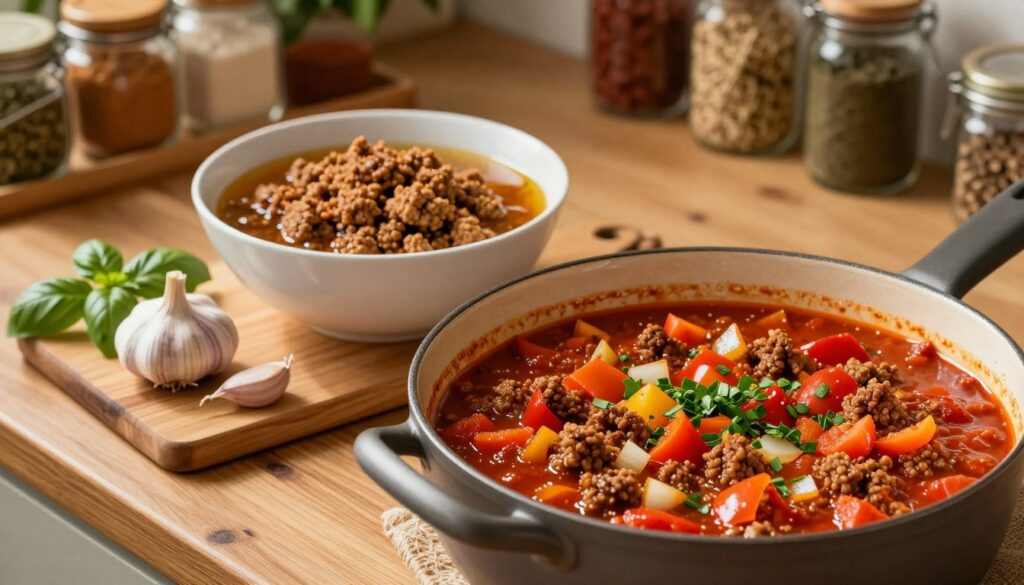
TVP stands for texturized vegetable protein. It’s the key to making your vegan meat sauce taste and feel like real meat. You might think it’s new, but TVP has been around since the 1960s. It’s a classic vegan ingredient, long before Impossible and Beyond products became popular.
TVP is made from soybeans that are roasted, ground into flour, and then dried. This process removes most of the fat. The result is a soy-based meat substitute that looks like bulgur wheat. When you soak TVP in hot liquid, it turns into a texture that really looks like ground beef. This makes it ideal for a soy protein pasta sauce that tastes authentic.
You can buy TVP online at Amazon and Bob’s Red Mill, or in health food stores across the U.S. A quarter cup of dry TVP is packed with nutrition:
- 10-12 grams of protein
- 10% of your daily iron needs
- 15% of your daily potassium
- Nearly zero fat content
- Low sodium until you season it
TVP is a nutritional powerhouse compared to packaged vegan meats. It offers a lot of protein and minerals without the fat. Plus, it’s naturally low in sodium, letting you control the seasoning. This makes your meatless sauce hearty and satisfying for family dinners.
Why This Recipe Skips Lentils and Mushrooms
Most plant-based cooks use lentils or mushrooms for bolognese sauce. They taste good but don’t give the right texture. This recipe uses TVP instead, after trying many ingredients to find the best.
The Problem with Lentil-Based Bolognese
Lentils add nutrition and flavor but fall apart when cooked. They become soft and mushy, turning the sauce into a thick soup. This texture loss is a problem when you want a meaty chew.
Lentils are great in soups and salads, but vegan bolognese without lentils offers a unique texture. It’s that hearty, chunky feel that sticks to your pasta.
How TVP Creates a More Authentic Texture
TVP, or textured vegetable protein, is a soy-based ingredient that doesn’t turn mushy. It stays firm and chewy, absorbing all the flavors. This makes how to make vegan bolognese with TVP very satisfying.
While TVP doesn’t fool meat eaters like some plant-based beef products do, it gives the texture people love in bolognese.
Nutritional Benefits of Texturized Vegetable Protein
TVP is not just about texture; it’s also packed with protein, iron, and potassium. It’s low in fat and sodium, making it a nutritious choice. Choosing vegetarian bolognese alternative recipes with TVP means you get a meal that’s good for you and your wallet.
| Ingredient | Texture Quality | Nutrition Level | Cost | Shelf Life |
|---|---|---|---|---|
| Lentils | Becomes soft and mushy | High protein and fiber | Budget-friendly | 12 months dry |
| Mushrooms | Shrinks and gets watery | Moderate protein | Moderate cost | 5-7 days fresh |
| TVP | Stays firm and chewy | High protein, iron, potassium | Very affordable | 24+ months dry |
| Beyond Meat | Very realistic ground texture | High protein | Premium price | Requires refrigeration |
Knowing why you skip traditional ingredients makes TVP bolognese exciting. You’ll notice the difference in every bite. This choice isn’t settling for less; it’s getting exactly what you want from your vegetarian bolognese alternative.
Essential Ingredients for Plant-Based Bolognese Sauce
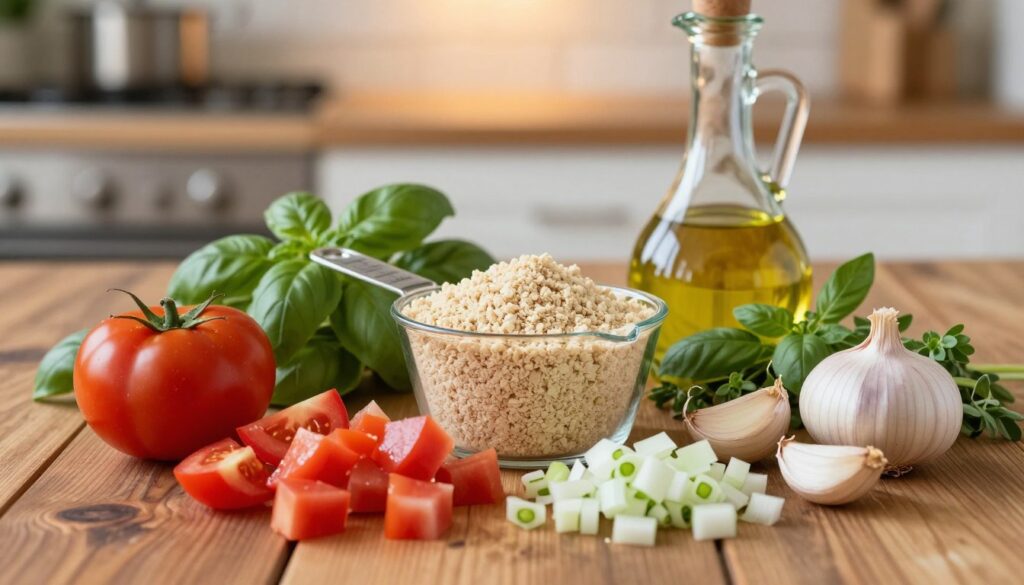
Creating an authentic italian vegan bolognese recipe begins with knowing each ingredient’s role. Your shopping list is key to a rich, satisfying plant-based bolognese sauce. It ensures your sauce tastes like it came from a restaurant. Let’s explore what you need and why each part is crucial for your dairy-free sauce.
The recipe starts with one cup of TVP (textured vegetable protein) and two cups of water. This makes your meaty base. Your garlic and onion base includes one small yellow onion, two carrots, and two celery stalks, all finely diced. These vegetables are the sofrito, the classic Italian start that adds incredible depth.
Your Core Flavor Components
Next, you add your flavor builders. Use two tablespoons of tomato paste for intense tomato sauce flavor. Add 1.5 tablespoons of Bragg Liquid Aminos or tamari for savory umami. The carrots add natural sweetness that balances the acidity of tomatoes.
- 1.5 cups strained tomatoes or passata
- 3/4 cup cashew cream for dairy-free richness
- 1 tablespoon nutritional yeast for subtle umami
- 1/2 cup dry white wine or vegetable broth
- Olive oil for cooking
- Dried italian herbs: rosemary, oregano, thyme, and bay leaves
The cashew cream replaces traditional dairy, adding smoothness and mellowness. Your italian herbs—rosemary, oregano, thyme, and bay leaves—give authentic flavor. This makes your dairy-free recipe taste truly Italian.
How to Rehydrate and Prepare TVP for Bolognese
Getting your TVP ready is key to a great tvp bolognese recipe. This step takes just minutes but is crucial for a perfect vegan bolognese. The right technique for rehydrating your texturized vegetable protein is essential.
Proper preparation turns dry TVP granules into tender, meat-like pieces. These pieces soak up all the flavors of your sauce. Knowing how to cook tvp bolognese correctly makes this plant-based protein a kitchen star. Let’s go through each step to make an easy vegan bolognese recipe that wows everyone.
The Correct Water-to-TVP Ratio
The secret to rehydrating TVP is simple: use 2 cups of boiling water for every 1 cup of dry TVP granules. Pour boiling water over your TVP and let it sit for exactly 10 minutes. This timing is key for the perfect texture.
Hot water works faster than room-temperature water, making it perfect for quick vegan bolognese for meal prep. If you’re planning ahead, cool water can soak TVP for 20-30 minutes. But boiling water cuts your prep time significantly. Either way, your TVP will absorb the liquid and be ready for cooking.
Adding Flavor During the Rehydration Process
Here’s a pro tip: flavor your TVP from the inside out during rehydration. Instead of using plain boiling water, add one of these ingredients:
- Vegetable bouillon cubes
- Miso paste (1-2 tablespoons)
- Soy sauce (2-3 tablespoons)
- Olive oil (1-2 tablespoons)
These additions season the TVP granules throughout, creating deeper, richer flavor in your final dish. This technique makes a big difference in your tvp bolognese’s authentic taste.
Draining and Preparing TVP for Cooking
After your 10-minute soak, place your TVP in a fine-mesh strainer. Regular colanders have holes too large and will let TVP granules slip through. Press gently on the TVP using a measuring cup or spoon to squeeze out excess moisture. This step prevents your easy vegan bolognese recipe from becoming watery and runny.
Once drained, your TVP is ready to season and cook with. It should feel moist but not soggy. From this point forward, you’re ready to build your bolognese sauce with confidence. Proper drainage ensures your quick vegan bolognese for meal prep has the right consistency and texture.
| Step | Action | Time | Tips |
|---|---|---|---|
| Measure | Use 1 cup dry TVP and 2 cups boiling water | 1 minute | Keep ratio exact for best results |
| Soak | Pour boiling water over TVP; let sit undisturbed | 10 minutes | Add flavor during this step if desired |
| Drain | Use fine-mesh strainer and press gently | 2 minutes | Remove as much liquid as possible |
| Cook | Add drained TVP to your sauce base | 15-20 minutes | Your tvp bolognese recipe is now complete |
Step-by-Step Guide to Making Vegan Bolognese with TVP
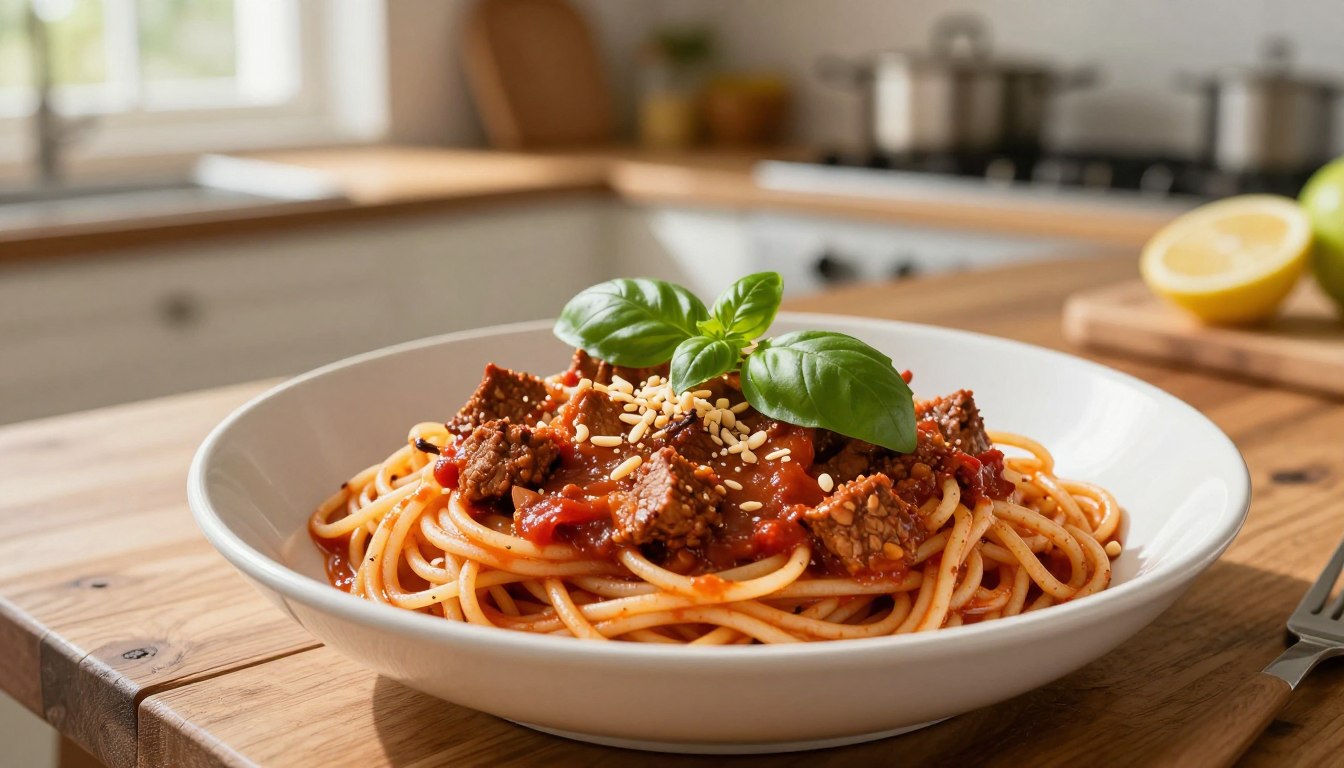
To make a tasty vegan spaghetti bolognese with TVP, start by getting all your ingredients ready. This easy vegan pasta recipe comes together fast once you start cooking. Just follow each step carefully to get deep, rich flavors like traditional meat-based sauces.
First, heat three tablespoons of olive oil in a large, deep skillet over medium heat. The size of your pan is important because you’ll stir often without splashing. Add diced onion, carrot, and celery to the warm oil. Cook these vegetables for six to seven minutes until they’re tender and slightly translucent.
When your vegetables are soft, add one cup of white wine to deglaze the pan. This step lifts all the flavorful browned bits stuck to the bottom. Let the wine simmer for three to four minutes until it reduces by half. This step makes your sauce foundation rich and budget-friendly.
Building Your Sauce Layer by Layer
Next, stir in three tablespoons of tomato paste and two tablespoons of Bragg Liquid Aminos into your vegetable mixture. Mix these concentrated ingredients well into the warm vegetables. This creates a base that makes your sauce taste authentic and satisfying.
Add your rehydrated TVP to the pan and sprinkle two tablespoons of nutritional yeast over the top. Stir everything together until well combined. Pour in your canned strained tomatoes (about 28 ounces) and bring the mixture to a gentle simmer. Let it bubble away on low heat for three to five minutes until the sauce thickens nicely.
Remove your pan from heat and stir in half a cup of cashew cream. This ingredient makes your sauce silky and luxurious. Simmer for two more minutes. Taste your sauce and adjust the seasoning with black pepper and extra liquid aminos if needed.
Finishing and Serving Your Vegan Pasta
Cook your pasta separately according to package directions. Drain it well but don’t rinse. Place your cooked pasta in a large bowl, then pour your warm sauce over it. Toss everything together for one to two minutes so the pasta absorbs the flavors.
| Step | Ingredients | Time | Key Action |
|---|---|---|---|
| 1 | Olive oil, onion, carrot, celery | 6-7 minutes | Cook vegetables until tender |
| 2 | White wine | 3-4 minutes | Deglaze pan and reduce liquid |
| 3 | Tomato paste, Bragg Liquid Aminos | 1-2 minutes | Stir thoroughly into vegetables |
| 4 | Rehydrated TVP, nutritional yeast | 1 minute | Mix until well combined |
| 5 | Strained tomatoes | 3-5 minutes | Simmer until bubbly and thick |
| 6 | Cashew cream | 2 minutes | Stir gently and simmer |
| 7 | Cooked pasta | 1-2 minutes | Toss pasta with sauce thoroughly |
Serve your vegan spaghetti bolognese immediately while it’s warm. This recipe feeds four people generously. Store leftovers in an airtight container in your fridge for up to four days. You can also freeze portions for quick meals later.
Creating the Perfect Vegetable Base with Sofrito
The foundation of any authentic italian vegan bolognese recipe starts with sofrito. This classic Italian vegetable base builds the aromatic layers that make your sauce taste rich and complex. Taking time to prepare your vegetables properly transforms a simple how to make vegan bolognese with tvp dish into something truly special. The sofrito acts as your flavor foundation, creating depth before you even add the tomatoes.
Why Carrot, Celery, and Onion Matter
Your sofrito starts with three essential vegetables that work together to create balanced flavor and texture:
- Onions provide savory sweetness and aromatic depth that forms the base of your sauce
- Carrots add natural sugars that balance tomato acidity and are absolutely non-negotiable for proper flavor
- Celery contributes subtle bitter notes and aromatic qualities that round out the overall profile
Dice all three vegetables uniformly into small pieces. Cook them together in olive oil for 6 to 7 minutes until they become tender. This isn’t about barely softening them—true tenderness develops the natural sugars and creates a cohesive base. When vegetables are properly cooked, they practically melt into your sauce, creating a smooth texture that supports your rehydrated TVP.
Building Umami with Tomato Paste and Liquid Aminos
After your vegetables are tender, the real magic happens. Add 2 tablespoons of tomato paste directly to your pan and let it cook briefly in the heat. This caramelization concentrates natural glutamates, intensifying the umami flavor that makes your simmered tomato ragù taste deeply satisfying.
Next, stir in 1.5 tablespoons of Bragg Liquid Aminos or tamari. These fermented ingredients deliver salty-savory notes that replicate the complexity you’d find in meat-based sauce. Add 1 tablespoon of nutritional yeast for additional umami and a subtle cheesy quality. When you combine these three ingredients together, they create layers of savory depth that transform your how to make vegan bolognese with tvp into a rich, meaty experience.
This umami flavor acts as your secret weapon. Plant-based ingredients need this concentrated savory element to feel complete. Your vegetables, tomato paste, and liquid aminos work together to build authentic that satisfies without any animal products. Every layer you build at this stage carries forward into your final sauce, making this the most important step in creating restaurant-quality vegan bolognese.
The Role of Cashew Cream in Authentic Bolognese
Traditional Italian bolognese isn’t just about tomatoes and meat. It also has a creamy component that makes it special. For a plant-based version, cashew cream is the perfect dairy-free substitute.
Real bolognese recipes add milk or cream towards the end. This step makes it different from marinara sauce. The cream softens the acidity and adds a silky texture to your pasta. In this vegan version, 3/4 cup of cashew cream does the trick.
Cashew cream is naturally rich and smooth. You can make it by blending soaked cashews with water, or buy it pre-made. Either way, it makes your vegan dinner feel indulgent but not heavy.
When you mix the cashew cream into your sauce, it changes color. It turns from deep red to orange-pink. This color change means you’ve got authentic bolognese. The sauce becomes smooth and coats your pasta beautifully.
- Reduces tomato sauce acidity naturally
- Creates a rich, creamy texture
- Changes sauce color to orange-pink
- Makes the sauce less heavy than dairy cream
The cashew cream is not optional. It’s key to making this sauce into real bolognese. If you’re sensitive to acidic tomato sauces, this element is a game-changer. It makes the meal comforting and satisfying.
Best Pasta Pairings and Serving Suggestions
Choosing the right pasta shape is key when serving vegan comfort food. Your hearty pasta sauce needs a pasta that can hold all those delicious flavors. The way you combine your pasta with sauce is just as important as the sauce itself. Let’s explore how to make your easy vegan pasta recipe into a restaurant-quality meal.
Traditional Italian Pasta Choices
When making vegan spaghetti bolognese, many Americans choose spaghetti. But, it’s not the traditional Italian choice. The authentic option is tagliatelle—wide, flat ribbons that catch and hold sauce beautifully. These long, broad noodles let the sauce cling to every strand.
You have excellent alternatives beyond tagliatelle. Consider these pasta shapes for your next meal:
- Pappardelle (the widest flat pasta option)
- Fettuccine (slightly narrower ribbons)
- Rigatoni (tube-shaped pasta that traps sauce inside)
- Penne (another tube option with angled cuts)
Avoid thin, delicate pastas like angel hair. Your thick, meaty bolognese sauce is too heavy for fine noodles. Fresh tagliatelle often contains eggs, so check ingredient labels if you’re purchasing it at your local grocery store.
Always cook your pasta al dente—tender but still with a slight bite. Mushy pasta won’t properly absorb your sauce or create the right texture.
How to Properly Combine Sauce and Pasta
Many home cooks make a common mistake: plating naked noodles and topping them with sauce. This isn’t how you create authentic vegan comfort food. When you’re ready to serve, combine your pasta directly with the sauce in the pan for one to two minutes. This crucial step lets the pasta absorb flavors and the sauce coat every piece.
Here’s the proper technique for your easy vegan pasta recipe:
- Drain your al dente pasta
- Add drained pasta directly to your sauce pan
- Toss gently for 1-2 minutes
- Plate the combined mixture
- Garnish with fresh basil and vegan parmesan
Use 8 to 12 ounces of dry pasta for 4 to 6 servings, depending on how saucy you prefer your meal. This ratio ensures your hearty pasta sauce coats everything evenly.
| Pasta Type | Width/Shape | Best For Bolognese | Cooking Tips |
|---|---|---|---|
| Tagliatelle | Wide, flat ribbons | Excellent choice | Cook al dente for 8-10 minutes |
| Pappardelle | Extra-wide ribbons | Excellent choice | Cook al dente for 8-10 minutes |
| Fettuccine | Medium-width ribbons | Good option | Cook al dente for 8-9 minutes |
| Rigatoni | Tube-shaped ridged | Good option | Cook al dente for 10-12 minutes |
| Penne | Diagonal tube-shaped | Good option | Cook al dente for 9-11 minutes |
| Spaghetti | Thin round strands | Acceptable choice | Cook al dente for 8-10 minutes |
| Angel Hair | Very thin strands | Not recommended | Too delicate for thick sauce |
Your vegan spaghetti bolognese becomes exceptional when you pay attention to these details. The marriage of perfectly cooked pasta with rich, meaty sauce creates a truly satisfying vegan comfort food experience that rivals any traditional version.
Conclusion
You now have all you need to make a meaty vegan bolognese that’s just as good as the real thing. This recipe uses TVP to give you a hearty, meaty texture without any animal products. Your family and friends will be impressed by what you can make at home.
This vegan pasta recipe is also very affordable. TVP is very cheap, making this meal budget-friendly. You can freeze the sauce for up to six weeks or keep it in the fridge for four days. This means you always have a tasty meal ready.
TVP is not just for bolognese. You can use it in tacos, stir-fries, chili, and more. It’s a versatile ingredient that makes plant-based cooking easy. With TVP, you can make a week’s worth of dinners with just one ingredient.
Now you’re ready to cook something amazing. This vegan bolognese brings restaurant-quality taste to your home. Your cooking skills have just improved with one simple technique and ingredient. Start cooking and enjoy the delicious meals that await you.